
Bar in Santa Fe, United States
Paloma Restaurant
100ptsRailyard-Rooted New American
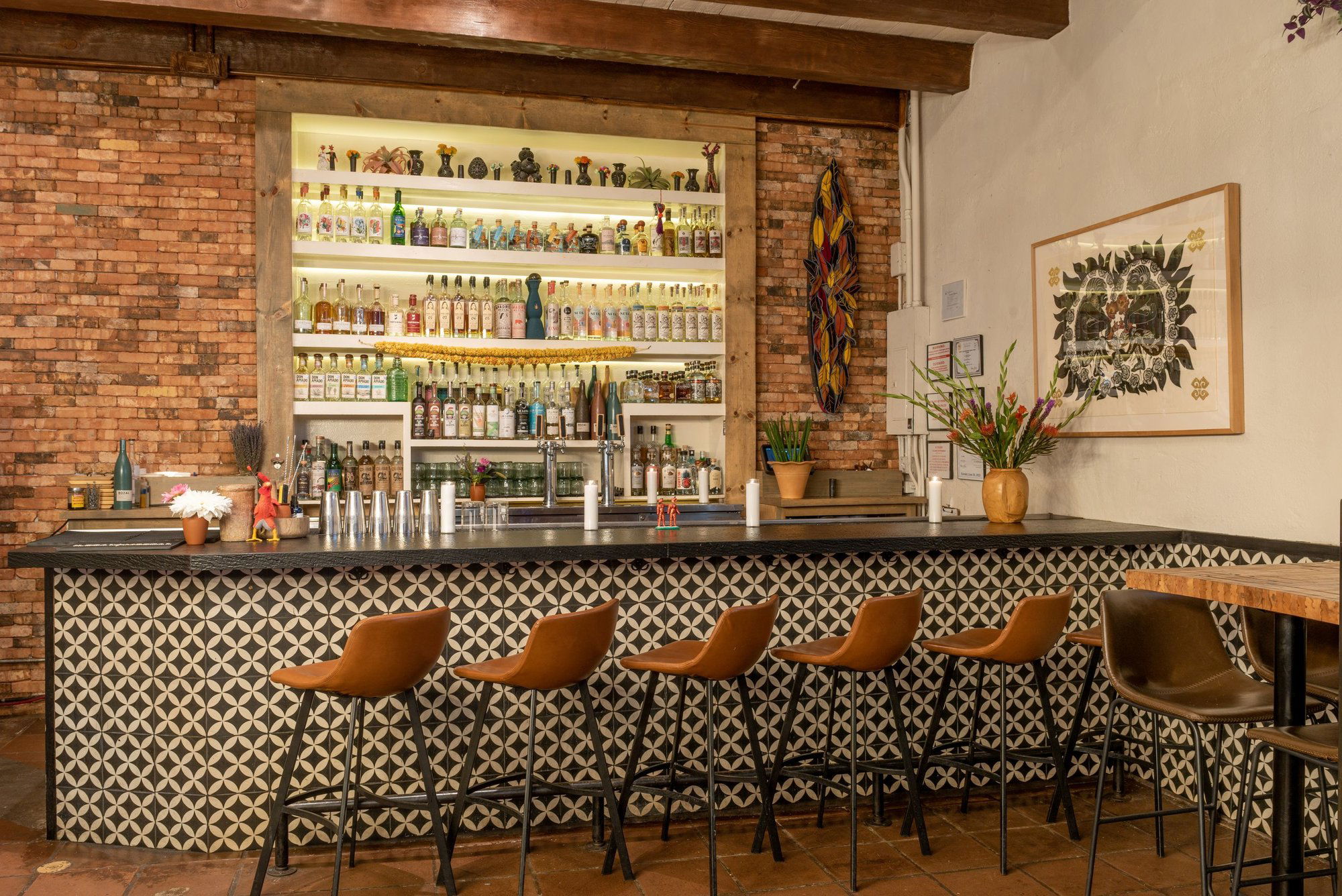
About Paloma Restaurant
Paloma Restaurant sits on South Guadalupe Street in Santa Fe's Railyard district, a neighbourhood that has become one of the city's more considered addresses for food and drink. Positioned at the intersection of New Mexican culinary tradition and contemporary Southwest cooking, it draws visitors navigating Santa Fe's increasingly selective dining scene alongside regulars from the broader arts and gallery crowd that defines the area.
Where the Railyard Meets the Table
South Guadalupe Street runs through Santa Fe's Railyard Arts District with a different energy than the Plaza-adjacent blocks a few minutes north. The architecture here is lower and more industrial, the foot traffic more deliberate, the galleries and restaurants serving a crowd that tends to know why it came. Paloma Restaurant at 401 S Guadalupe sits inside that neighborhood logic: a destination address in a district that rewards the walk.
Santa Fe's dining scene has been sorting itself into two broad camps over the past decade. One camp trades on legacy: the canyon-view terraces, the chile-forward traditions that have defined New Mexican cooking since long before Michelin sent anyone west of Denver. The other is more recent and harder to categorize, composed of restaurants that treat the city's location at the intersection of Indigenous, Spanish colonial, and contemporary American foodways as a starting point for more deliberate, architecturally minded cooking. Paloma belongs to the conversation happening in the second camp.
Reading the Menu as a Document
The way a menu is structured tells you more about a restaurant's ambitions than almost any other single signal. A menu that begins with raw preparations before moving through vegetables, proteins, and composed plates in a logical sequence is making an argument about pacing and intention. A menu that groups by price point is making a different argument entirely, usually about accessibility. Santa Fe has examples of both, from the market-driven small-plate formats at places like Coyote Cafe and Rooftop Cantina to the looser, communal approach you find further down Guadalupe at Cowgirl.
At Paloma, the menu architecture signals a kitchen that thinks in sequences rather than categories. This approach, increasingly common in American restaurants with serious culinary ambitions, treats dinner as a structured experience with a beginning, middle, and conclusion rather than a matrix of interchangeable options. It is a format that puts pressure on sourcing and on execution, because there is less room to obscure weakness when each course is expected to carry narrative weight.
New Mexico's larder gives any attentive kitchen a strong foundation to work from. Hatch green chile, posole, local lamb from the high desert plateau, blue corn from Indigenous agricultural traditions, red chile from the Chimayo valley: these are not decorative ingredients. They carry specific flavor profiles and regional histories that reward cooks who understand them and penalize those who treat them as garnish. A restaurant on South Guadalupe has both the proximity to producers and the audience pressure to get this right. Santa Fe visitors in the Railyard district tend to be more food-literate than average, which raises the threshold for what the kitchen needs to deliver.
The Cocktail Program in Context
Santa Fe's bar scene has matured considerably, moving from margarita-dominant lists toward programs that reflect the same ingredient seriousness visible in the kitchen. The shift mirrors what has happened in other mid-sized American cities with strong culinary identities: regional spirits, local produce infusions, and a willingness to look beyond standard agave and grain categories. Nationally, bars like Kumiko in Chicago, Jewel of the South in New Orleans, and Bar Leather Apron in Honolulu have demonstrated that technically rigorous cocktail programs can anchor a restaurant's identity as firmly as the food menu. Closer to home, Del Charro and Ecco Espresso and Gelato show how Santa Fe venues build beverage identities that complement their food positioning.
At a restaurant named Paloma, the house cocktail question writes itself. The paloma, built on tequila and grapefruit, sits in a different register than the margarita: drier, more bitter, less dependant on sweetness to carry it. A kitchen-forward restaurant with this name has an obvious opportunity to let the bar program use regional citrus, local spirits, or unexpected modifiers to make the signature drink worth ordering. Whether Paloma Restaurant has made that choice with precision is the kind of question answered by visiting, not by reading a menu description.
Positioning Inside the Santa Fe Tier
Santa Fe operates as an unusual market for restaurants. The city has a permanent population of roughly 85,000, but its visitor economy punches significantly above that residential base. The arts-and-culture visitor demographic tends to be older, financially established, and culinarily experienced, which creates sustained demand for restaurants operating above the casual tier. That demand explains why the city supports a restaurant culture denser and more technically ambitious than comparably sized American cities without its cultural gravity.
In that context, the Railyard district functions as a secondary dining hub to the Plaza's concentration, with a slightly younger and more local-leaning crowd but comparable expectations for quality. Restaurants in this zone, whether food-focused like Paloma or more drink-forward like the bars scattered along Guadalupe, succeed by earning repeat visits from locals as much as by capturing first-time tourist attention. That dual-audience pressure produces better restaurants than tourist-only economics would.
For comparison across American bar and restaurant programs worth benchmarking, the broader peer conversation includes Julep in Houston, Superbueno in New York City, ABV in San Francisco, and The Parlour in Frankfurt, each of which demonstrates how a focused beverage or food concept builds authority within its local tier. Paloma is playing a version of that game in a city where the stakes are real and the audience is paying attention.
Planning a Visit
Reaching Paloma requires no navigation complexity. The address at 401 S Guadalupe is walkable from the Plaza in under fifteen minutes, and the Railyard district has ample parking for those arriving by car. Santa Fe's peak dining season runs from late spring through early fall, when the city's art market, opera season, and gallery circuit drive visitor numbers sharply upward. Booking in advance during those months is the logical move; the city's better restaurants fill faster than their size might suggest, and walk-in availability on a July Saturday is not something to count on. See our full Santa Fe restaurants guide for broader planning context across neighborhoods and price tiers.
Frequently Asked Questions
- What is the must-try cocktail at Paloma Restaurant?
- Given the restaurant's name, the house take on the paloma is the natural reference point. The classic format, tequila cut with grapefruit and a touch of salt, is simple enough that variation reveals kitchen-bar alignment quickly. Whether the version here uses regional citrus, local spirits, or an unusual modifier is worth asking the bar team directly, as that answer signals how seriously the program takes its namesake drink. For broader context on technically rigorous cocktail programs, Kumiko in Chicago and Jewel of the South in New Orleans represent the national tier this format aspires toward.
- What is Paloma Restaurant leading at?
- Based on its Railyard district address and the dining culture of Santa Fe, Paloma operates in a segment that rewards ingredient-focused, regionally grounded cooking. The city's food-literate audience and proximity to northern New Mexico producers create conditions where a kitchen that sources and sequences thoughtfully has a clear advantage. Awards and critic recognition, where available, would sharpen this answer considerably, but the neighborhood positioning and format signal a kitchen with genuine ambitions rather than tourist-driven volume.
- Should I book Paloma Restaurant in advance?
- During Santa Fe's high season, which runs roughly from May through September and intensifies around the July Spanish Market and Indian Market weekends, advance booking at the city's better restaurants is the safe approach. The Railyard district draws both visitors and locals, and a restaurant with a focused concept fills faster than its neighborhood profile might suggest. If website or phone booking details are not immediately available, contacting the restaurant directly or checking third-party reservation platforms is the practical fallback.
- What kind of traveler is Paloma Restaurant a good fit for?
- Paloma suits the visitor who came to Santa Fe for its cultural depth and wants a dinner that reflects that same seriousness. If your itinerary already includes SITE Santa Fe, the Railyard farmers market, or the Georgia O'Keeffe Museum, a restaurant on South Guadalupe fits the arc of the day without backtracking. It is less suited to travelers who prioritize old-Santa-Fe atmosphere and long chile-relleno traditions over a more contemporary menu logic, for whom the Plaza-area establishments offer a different kind of experience.
- Does Paloma Restaurant live up to the hype?
- Without current awards data or critic citations on record, the honest answer is that the hype, if it exists, is audience-generated rather than institution-validated. That is not automatically a negative signal; some of Santa Fe's most consistent performers operate below the formal recognition radar. The address on South Guadalupe, the Railyard audience, and the name-driven cocktail opportunity are all conditions that support a restaurant capable of delivering. Visiting with calibrated expectations and ordering around the bar program as well as the kitchen is the approach most likely to yield a clear verdict.
- How does Paloma Restaurant connect to New Mexico's regional food traditions?
- Santa Fe restaurants in the Railyard district tend to engage New Mexico's ingredient traditions more selectively than the red-and-green-chile-forward menus closer to the Plaza. Paloma's address places it in a neighborhood where diners expect regional ingredients, particularly Hatch chile, local lamb, blue corn, and Chimayo red chile, to appear in preparations that reflect culinary understanding rather than decorative local color. That expectation, combined with the city's position at the crossroads of Indigenous, Spanish colonial, and contemporary American foodways, gives any attentive kitchen at this address a strong argument for why northern New Mexico is one of the most distinctive ingredient regions in the American Southwest.
Related editorial
- Best Fine Dining Restaurants in ParisFrom three-Michelin-star icons to the next generation of Parisian chefs pushing boundaries, these are the restaurants that define fine dining in the world's culinary capital.
- Best Luxury Hotels in RomeFrom rooftop terraces overlooking ancient ruins to Michelin-starred hotel dining, these are the luxury hotels that make Rome unforgettable.
- Best Cocktail Bars in KyotoFrom sleek lounges to hidden speakeasies, Kyoto's cocktail scene blends Japanese precision with global influence in ways you won't find anywhere else.
Save or rate Paloma Restaurant on Pearl
Keep this venue in your Pearl passport, rate it after you visit, and track it alongside every other place you collect.