
Bar in Santa Fe, United States
Del Charro
100ptsFood-Forward Bar Programming
About Del Charro
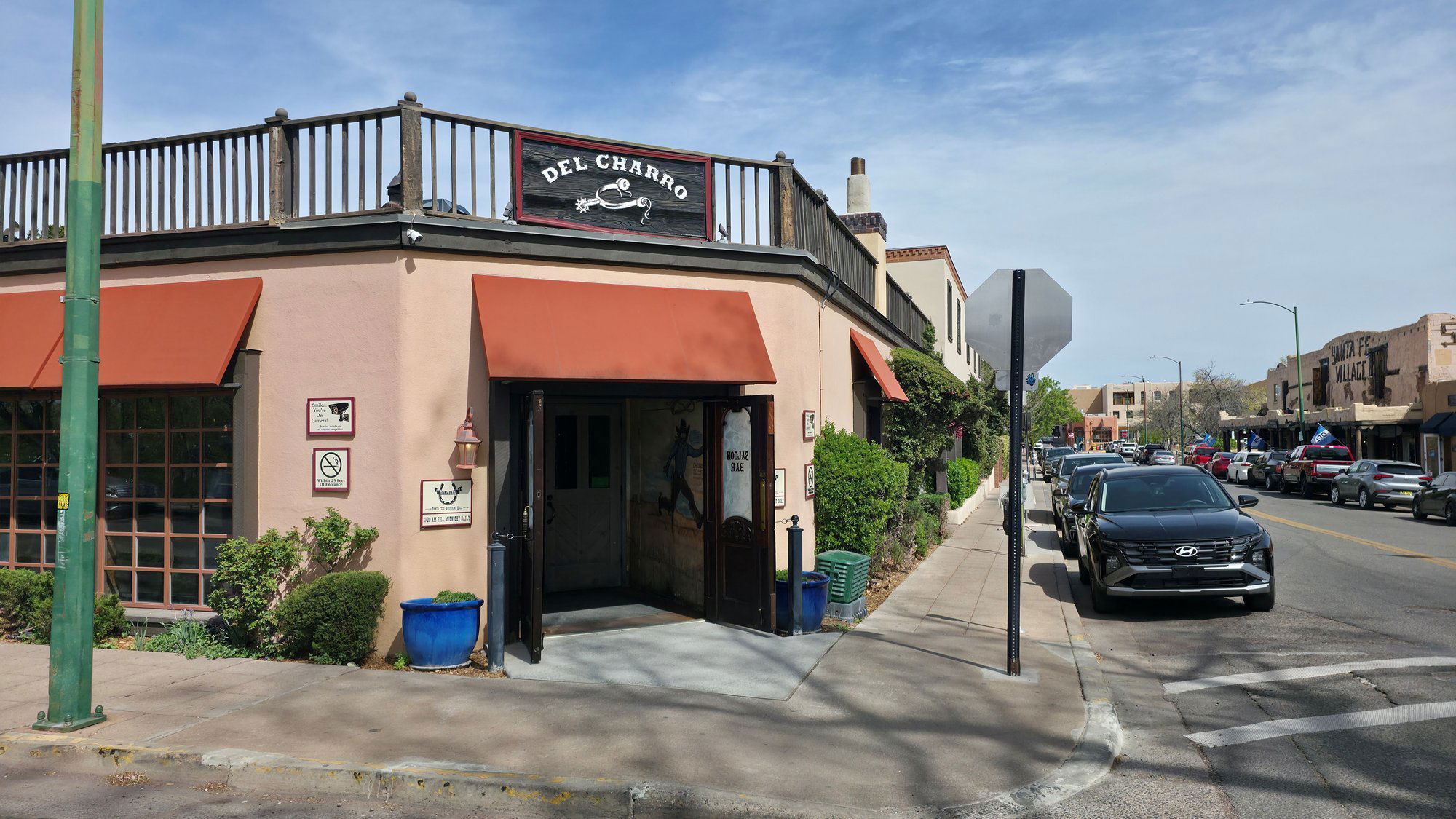
Del Charro occupies a corner address at 101 W Alameda St in central Santa Fe, positioning it squarely in the city's downtown bar circuit. The draw here is the intersection of the drinks list and bar food programme, a pairing culture that sits comfortably within Santa Fe's broader tradition of casual-serious hospitality. It is the kind of place where the food order shapes the drink order, and vice versa.
Where the Drink and the Dish Share Equal Billing
Santa Fe's bar culture has never mapped neatly onto the formats that define cocktail programs elsewhere in the American Southwest. The city sits at high altitude, runs on a tourist economy with a strong local anchor, and carries a hospitality tradition shaped as much by New Mexican cuisine as by any imported cocktail convention. What that produces, across the better downtown bars, is a tendency to treat the food programme as structural rather than incidental. Del Charro, at 101 W Alameda St, operates inside that tradition. The address puts it at the edge of downtown Santa Fe, close enough to the Plaza to catch foot traffic but set back far enough to function as a destination in its own right.
The physical approach matters here. W Alameda runs parallel to the Santa Fe River, and the block carries a different register than the gallery-and-souvenir stretch of Canyon Road or the polished northern end of the Plaza. The bar occupies a position in the neighbourhood that signals regularity over spectacle, the kind of corner presence that Santa Fe's working hospitality tends to prefer over the theatrical room formats you find at Coyote Cafe and Rooftop Cantina further north.
The Pairing Logic That Drives the Menu
The broader argument in American bar programming over the last decade has moved away from drinks-only identities toward integrated food-and-drink operations. Bars like Kumiko in Chicago and Jewel of the South in New Orleans have demonstrated that a well-calibrated bar food programme can define a venue's identity as clearly as the cocktail list itself. The logic is simple: food affects how spirits are perceived on the palate, and a kitchen that understands that relationship produces pairings that make both sides stronger.
In Santa Fe, the local food tradition provides a pairing framework that is already highly specific. New Mexican cuisine, with its red and green chile sauces, its earthy posole, its preference for roasted and dried chile heat rather than fresh, creates particular demands on the drinks list. A bar operating seriously in this context has to decide whether its cocktails complement that heat profile, cut through it, or stand apart from it entirely. The choices a programme makes on that question define where it sits in the city's broader hospitality picture. Del Charro's Alameda address places it in a neighbourhood where that question gets answered practically, by local drinkers who know the food tradition well, rather than by visitors encountering it for the first time.
For comparison, consider how Julep in Houston has built its identity around Southern food-and-drink pairings, or how ABV in San Francisco treats its food programme as a deliberate counterpart to the spirits focus. These are bars where the kitchen and the bar work from the same brief. That integration, rather than the size or the budget of the operation, is what separates a serious bar food programme from a menu that happens to exist in a bar.
Del Charro in the Santa Fe Bar Circuit
Santa Fe's downtown bar circuit is compact but layered. El Farol on Canyon Road holds the longest-running position in the city's bar culture and anchors the arts district end of the drinking map. Cowgirl operates at a higher volume with a broader demographic reach. The Ecco Espresso and Gelato address serves a different part of the daily hospitality arc. Del Charro's Alameda position sits between the high-traffic Plaza zone and the quieter residential grid, which tends to produce a clientele mix that tilts more local than the blocks immediately adjacent to the Palace of the Governors.
That local tilt matters for how a bar food programme operates. Repeat visitors know the menu, develop preferences, and tend to order in combinations that reflect accumulated experience rather than first-visit curiosity. A bar that earns that kind of regular return builds its food-and-drink pairing culture from the bottom up, through the habits of people who come back rather than through any single showcase moment. It is a different hospitality model than the destination-bar format you find at Bar Leather Apron in Honolulu or Superbueno in New York City, both of which operate with a stronger emphasis on the visitor and the occasion drinker.
Within the Southwest bar context, the seasonal dimension is worth noting. Santa Fe draws peak visitation in summer through the opera and arts festival season, and again during the late summer chile harvest period when green chile defines the food culture of the entire region. A bar food programme that engages with that harvest calendar, whether through preparations that feature fresh Hatch green chile or through drinks calibrated to the heat profiles of late-season chiles, signals an integration with the city's food identity that generic programming does not achieve. Visitors arriving between July and September will find the city's food culture at its most specifically New Mexican, and a bar that reflects that in its kitchen is positioned to offer something the broader American bar circuit cannot replicate. For a fuller orientation to the city's dining and drinking options, see our full Santa Fe restaurants guide.
Planning Your Visit
Del Charro sits at 101 W Alameda St, a walkable distance from the Plaza and from the major downtown hotel cluster. The Alameda address is accessible on foot from most central Santa Fe accommodation, which makes it a practical stop within a broader evening that might include dinner elsewhere in the downtown grid. For context on what the city's bar and cocktail programmes look like at the technically ambitious end of the spectrum, The Parlour in Frankfurt on the Main offers a useful international reference point for how a bar food programme can be built around a specific culinary identity, even in a market that differs sharply from Santa Fe's. Phone contact and booking details are not currently published in a verified form, so visiting in person or checking the venue's current channels directly is the most reliable approach.
Frequently Asked Questions
- What cocktail do people recommend at Del Charro?
- Del Charro operates within Santa Fe's bar culture, where New Mexican flavour profiles, particularly chile heat and earthy regional ingredients, tend to influence what works leading at a given table. Locally, margarita variations and spirits-forward cocktails that complement the food programme draw consistent mention. The most reliable approach is to ask what is current on the drinks list and cross-reference it with whatever you are eating, since the pairing logic here is the point.
- What is Del Charro leading at?
- Del Charro's position in central Santa Fe, at 101 W Alameda St, places it in the city's everyday bar circuit rather than the destination-occasion tier. Its strength is in the integration of bar food and the drinks list, a model that suits repeat visits and local use as much as single-occasion dining. It is not competing for the same position as the city's formal restaurant programmes.
- Is Del Charro reservation-only?
- No verified booking policy is currently on record for Del Charro. Given its bar format and central Santa Fe address, walk-in access is generally consistent with how comparable venues in the city operate, but during the summer arts festival season or peak autumn visitation, arriving early in the evening is a practical hedge. Confirming current practice directly with the venue before a visit is advisable if timing is a constraint.
- Does Del Charro's bar food programme reflect New Mexican cuisine traditions?
- Santa Fe bars that operate with a serious kitchen tend to engage with the regional food tradition, where red and green chile preparations, posole, and locally sourced ingredients define the character of the menu. Del Charro's Alameda address and its position within the local bar circuit suggest a kitchen that responds to that tradition rather than importing a generic bar food template. For a city where the harvest calendar shapes the food culture as specifically as it does in New Mexico, that regional engagement is what differentiates a bar food programme from a placeholder menu.
Related editorial
- Best Fine Dining Restaurants in ParisFrom three-Michelin-star icons to the next generation of Parisian chefs pushing boundaries, these are the restaurants that define fine dining in the world's culinary capital.
- Best Luxury Hotels in RomeFrom rooftop terraces overlooking ancient ruins to Michelin-starred hotel dining, these are the luxury hotels that make Rome unforgettable.
- Best Cocktail Bars in KyotoFrom sleek lounges to hidden speakeasies, Kyoto's cocktail scene blends Japanese precision with global influence in ways you won't find anywhere else.
Save or rate Del Charro on Pearl
Keep this venue in your Pearl passport, rate it after you visit, and track it alongside every other place you collect.