
Bar in Santa Fe County, United States
Arroyo Vino
100ptsHigh Desert Wine-Forward Dining
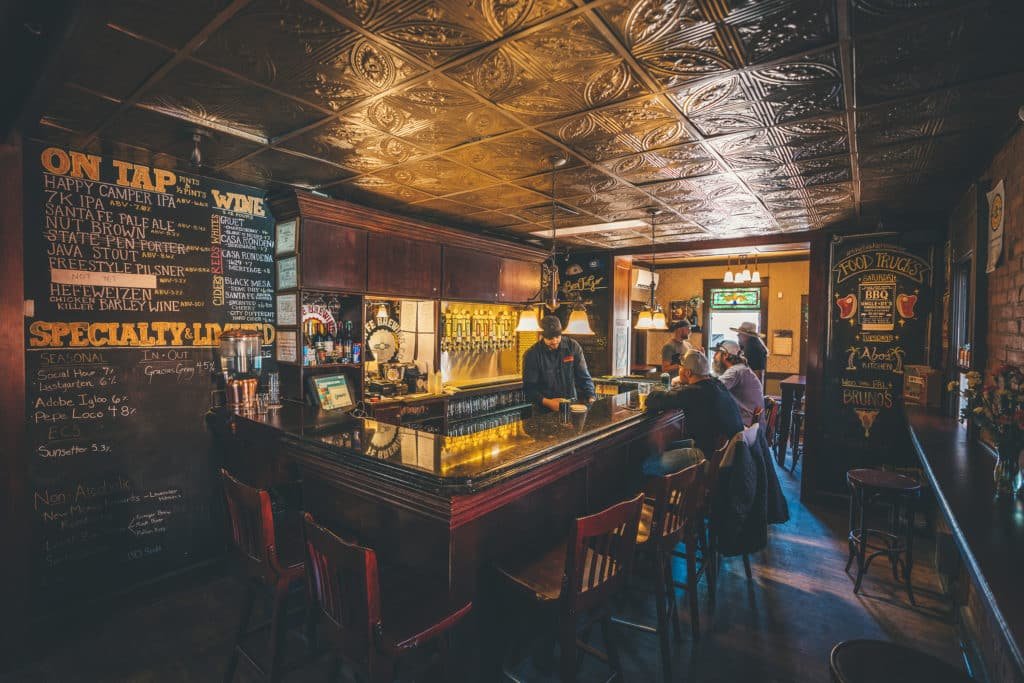
About Arroyo Vino
Arroyo Vino sits along Camino La Tierra on Santa Fe's quieter northwestern edge, where the wine program and cocktail list operate at a remove from the downtown tourist circuit. The setting — open land, high desert light, adobe-adjacent architecture — shapes the pace of a meal here as much as what arrives in the glass. For drinkers who cross-reference producers before ordering, it earns consistent local attention.
Where the High Desert Sets the Pace
The drive out to 218 Camino La Tierra tells you something before you arrive. Santa Fe's northwest corridor is not the Plaza, not Canyon Road, not the compressed gallery district where most visitors spend their time. The road opens up, the city thins out, and the land reasserts itself in the way that distinguishes northern New Mexico from almost every other wine-and-dining destination in the American Southwest. Arroyo Vino sits in that context: a property where the physical environment is not backdrop but operating condition, shaping what gets poured, how long guests linger, and what kind of drinking occasion the room actually rewards.
That positioning matters when you consider how Santa Fe's bar and restaurant scene has developed. The city's drinking culture has always tilted toward wine, partly because the altitude — Santa Fe sits above 7,000 feet — changes how alcohol lands, and partly because the clientele, a mix of serious collectors, artists, and second-home owners with coastal references, arrived expecting programs with genuine depth. Arroyo Vino built its identity to serve that expectation, operating on the quieter fringes of town where the square footage allows for a different kind of hospitality than the compressed storefronts along Guadalupe Street.
The Cocktail Program in Context
Across the American Southwest, cocktail programs at wine-forward properties tend to fall into one of two modes: the obligatory short list of classics maintained as an afterthought, or a genuinely considered program that earns space alongside the bottle list. The distinction matters because it determines whether a bar guest feels accommodated or actually served. Arroyo Vino operates in the latter register, where the cocktail offering reflects the same orientation toward sourcing and restraint that defines the wine side of the program.
That approach connects Arroyo Vino to a broader shift in American bar culture over the past decade. Programs at venues like Kumiko in Chicago, Jewel of the South in New Orleans, and Bar Leather Apron in Honolulu have demonstrated that rigorously considered cocktail lists can anchor a room's identity as firmly as any kitchen. In each case, the signal is similar: ingredient sourcing is treated seriously, the format is disciplined, and the list does not try to be everything. At Arroyo Vino, the high desert setting adds a regional layer to that logic, with the New Mexico environment providing a frame for what flavors make sense here , herbal, earthy, dry , rather than simply importing a coastal template.
Compared to ABV in San Francisco or Allegory in Washington, D.C., which operate inside densely competitive urban bar markets, Arroyo Vino occupies a different competitive position. Santa Fe is a smaller city with fewer direct comparators, which means a program of genuine seriousness reads more clearly against its surroundings. The relevant peer set is not the local dive or the hotel lobby bar, but venues across the region , including Bitter and Twisted in Phoenix and Julep in Houston , that have built reputations on deliberate, technique-forward drinking programs. Within Santa Fe itself, Terra represents the other end of the local fine-drinking spectrum, giving guests a meaningful point of comparison.
Wine and Spirits as a Unified Argument
At properties where wine is the primary identity, the cocktail program often reads as concession rather than conviction. The interest in Arroyo Vino's approach is that both sides of the glass program appear to answer the same question: what does serious, place-aware drinking look like at this altitude, in this landscape, at this remove from the coasts? That is a harder question to answer than it sounds, because northern New Mexico sits outside the obvious reference points for American fine dining and drinking. It is not Napa, not Manhattan, not New Orleans. Its traditions are distinct, its growing conditions severe, and its food culture anchored in Pueblo and Spanish colonial inheritance rather than European fine-dining orthodoxy.
Programs that acknowledge that context, rather than simply importing a metropolitan format, tend to earn the sustained attention of the Santa Fe audience. That audience is smaller than in major cities but often more demanding about authenticity , collectors, artists, and longtime residents who have enough reference points to notice when a program is genuinely considered versus when it is performing consideration. Arroyo Vino's position on Camino La Tierra, away from the tourist concentration, suggests it is pitching to the latter group rather than the former.
For readers mapping the broader American bar scene, venues like Superbueno in New York City, Bar Kaiju in Miami, and The Parlour in Frankfurt illustrate how a strong point-of-view program can define a room's identity across very different city contexts. Arroyo Vino makes the same argument in a setting where the physical landscape does a significant share of the editorial work.
Planning a Visit
Arroyo Vino sits outside Santa Fe's walkable center, which means arriving by car is the practical reality for most guests. The address at 218 Camino La Tierra places it in the city's northwest, a drive of roughly ten to fifteen minutes from the Plaza depending on traffic. That remove is worth factoring into an evening's plan: this is not a stop between gallery and dinner, but a destination that rewards a dedicated visit. For current hours, reservation availability, and any seasonal adjustments to the program, checking directly with the venue is advisable, as details shift with season. Santa Fe's shoulder seasons , spring and fall , tend to offer the most comfortable outdoor conditions, which matters at a property where the outdoor experience connects the architecture to the surrounding land. Those planning around major Santa Fe events, including Indian Market in August or the Opera season running through summer, should account for tighter availability across the city's better rooms.
For a fuller picture of where Arroyo Vino sits within the city's dining and drinking options, our full Santa Fe County restaurants guide maps the broader scene across neighborhoods, price points, and program types.
Frequently Asked Questions
- What cocktail do people recommend at Arroyo Vino?
- Specific current menu items are not confirmed in our database, so we are not in a position to name a particular drink with confidence. What the program's structure suggests is that cocktails with regional botanical or herbal references will reflect the property's broader sourcing philosophy. Guests who have come from the wine list side of the menu typically note that the spirits program shares the same restraint-led logic. For current recommendations, checking with the bar team directly on arrival is the most reliable approach.
- What is the main draw of Arroyo Vino?
- The combination of a serious wine program and a considered cocktail list, set against a high desert property outside Santa Fe's downtown concentration, is the consistent draw reported by the city's dining community. The location filters for guests who are making a deliberate choice rather than a convenient one, which shapes the room's character. For a city that skews toward wine collectors and food-literate visitors, that positioning connects clearly to the audience that drives the most sustained attention.
- Do I need a reservation at Arroyo Vino?
- Given the property's location outside the downtown core and its reputation within Santa Fe's relatively small fine-dining circuit, booking ahead is the prudent approach, particularly during the summer Opera season and Indian Market weekend in August when the city's better rooms fill quickly. Contact details are not confirmed in our current database, so reaching out via a direct web search for current booking information is advisable before a visit.
- What is Arroyo Vino a strong choice for?
- It suits guests who want a wine and cocktail program that reflects genuine regional awareness rather than a metropolitan template, in a setting that separates itself physically from the tourist core. If the goal is a deliberate, unhurried drinking occasion with a program that rewards attention, the property's northwest location and dual wine-spirits identity position it well. It is less suited to guests looking for a quick walk-in experience in the middle of a gallery crawl.
- How does Arroyo Vino compare to other wine-focused properties in the Southwest?
- Among wine-forward properties in the American Southwest, Arroyo Vino occupies a niche defined by its high desert setting and the specific Santa Fe audience it serves: collectors, seasonal residents, and visitors with enough regional context to value a program that does not simply mirror coastal models. That peer set is small, which means the venue operates with fewer direct local comparators than it would in a larger city, and its dual wine-and-cocktail identity gives it a broader appeal than a wine bar with a purely bottle-focused format.
Related editorial
- Best Fine Dining Restaurants in ParisFrom three-Michelin-star icons to the next generation of Parisian chefs pushing boundaries, these are the restaurants that define fine dining in the world's culinary capital.
- Best Luxury Hotels in RomeFrom rooftop terraces overlooking ancient ruins to Michelin-starred hotel dining, these are the luxury hotels that make Rome unforgettable.
- Best Cocktail Bars in KyotoFrom sleek lounges to hidden speakeasies, Kyoto's cocktail scene blends Japanese precision with global influence in ways you won't find anywhere else.
Save or rate Arroyo Vino on Pearl
Keep this venue in your Pearl passport, rate it after you visit, and track it alongside every other place you collect.