Ichifuji Sushi
Clairemont Mesa, San Diego
Bar in San Diego, United States
 Book with Pearl
Why go
Ichifuji Sushi is worth considering for an easy San Diego dinner when convenience matters more than awards, chef pedigree, or a high-production room. Go early in the evening, skip Tuesday, and choose it for a casual sushi plan rather than a late-night or cocktail-led outing.
About Ichifuji Sushi
For a straightforward dinner plan in San Diego, Ichifuji Sushi is open 5–10 PM on Monday, Wednesday, Thursday, Friday, Saturday, and Sunday, and it is closed Tuesday. The dress code is smart casual, so plan for a polished but not formal evening.
Beyond those basics, keep expectations grounded. Details such as menu format, chef background, awards, seating layout, pricing, beverage program, and reservation difficulty are not available. It is a practical San Diego dinner option when the hours and dress code fit your plans.
A practical San Diego dinner option with simple evening hours
Ichifuji Sushi works well for plans that fit a direct 5–10 PM dinner window. If the night is built around comparing several options, Convoy Music Bar or Realm of the 52 Remedies may also be worth considering. If dinner is the anchor, Ichifuji Sushi is worth considering when its evening schedule works for the group.
For a different kind of plan, you may also compare it with another option such as 356 Korean BBQ & Bar. The key is to choose based on the kind of evening you want, with Ichifuji Sushi's hours and smart-casual dress code as its main characteristics.
Know Before You Go
- Best timing: Dinner between 5–10 PM on Monday, Wednesday, Thursday, Friday, Saturday, or Sunday.
- Closed: Tuesday.
- Late-night fit: Not ideal. Closing time is 10 PM.
- Dress code: Smart casual.
- Good for: A San Diego dinner plan that fits its evening hours.
- Less suited for: Plans that need lunch service, post-10 PM dining, or specific details on menu format, pricing, or awards.
For broader planning, use Our full San Diego restaurants guide if dinner is the anchor, or Our full San Diego bars guide if the night should center on bars. Travelers building a full trip can also cross-check Our full San Diego hotels guide, Our full San Diego wineries guide, and Our full San Diego experiences guide.
Planning details
- Location
- 7530 Mesa College Dr B, San Diego, CA 92111
- Website
- ichifujisushi.com
- Phone
- +1 858 565 1179
The take
The Take
The Vibe
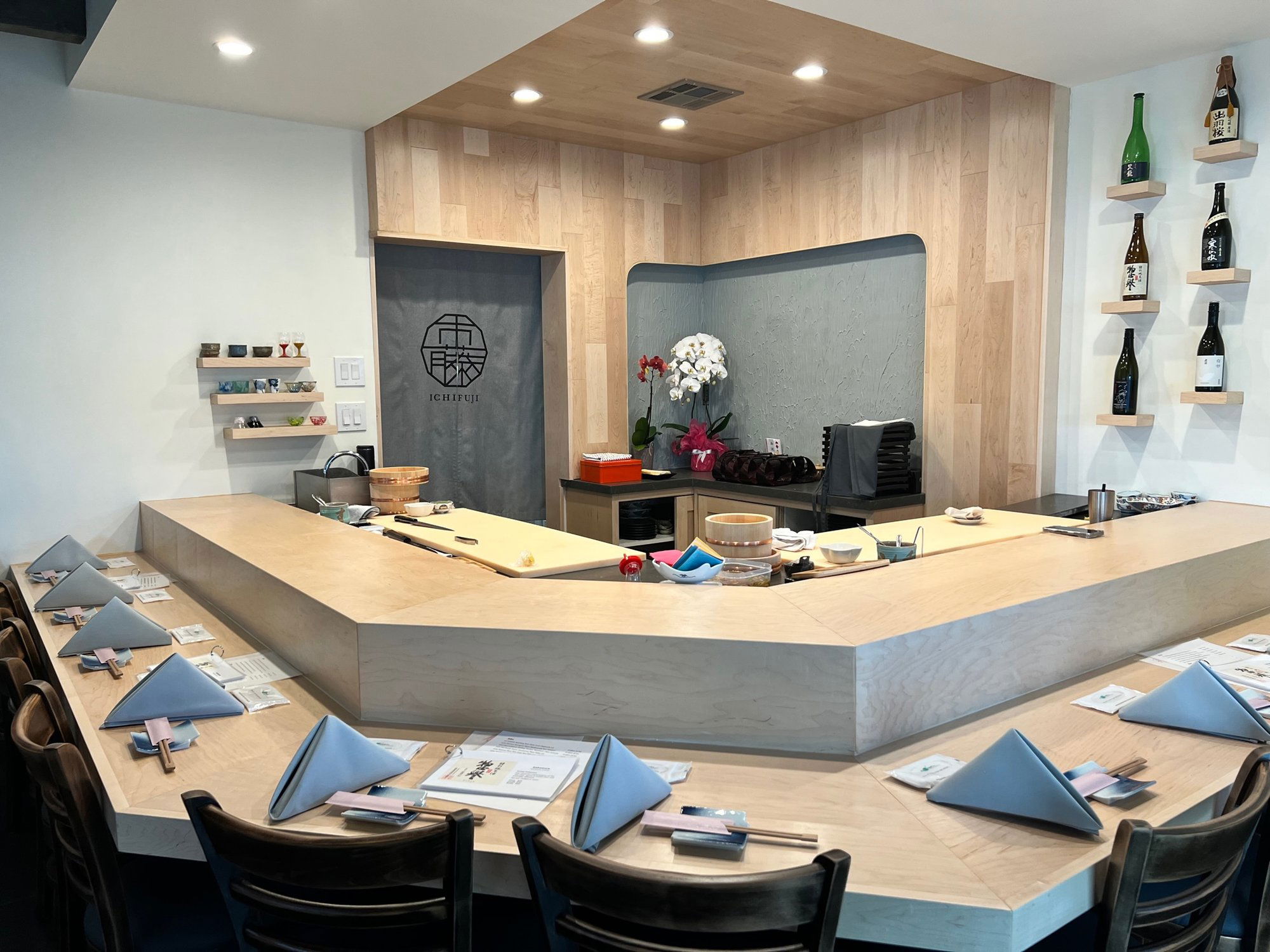
Ichifuji Sushi presents a quietly focused omakase counter tucked into a strip-mall frontage—its unassuming exterior is part of the point. The room favors close chef-to-guest interaction over theatrics, and the experience rewards repeat custom and an appreciation for ritualized, course-by-course service. Rather than signaling prestige from the street, the place cultivates an insider sensibility: restrained, attentive, and deliberately low-key. Regulars value the intimacy and the sense that the meal is curated at the counter, where skill and consistency matter more than location or flash.
Best For
This is a place for diners who prioritize the omakase ritual and for small groups or couples marking a special moment with focused, chef-led service. The narrative emphasizes repeat customers and reservation-driven seating, so it’s especially well suited to locals and visitors who book ahead and want a composed, meditative dining experience rather than a loud, tourist-oriented night out. If you prize technical precision, quiet conversation, and a counter-centered evening, Ichifuji is built for those meals.
Ordering Tips
Treat Ichifuji as an omakase counter: reserve well in advance and expect the chef to guide the progression of courses. The write-up stresses that reservation slots are prized by regulars, so plan ahead and be prepared to take the chef’s choices rather than ordering à la carte. Note the discreet strip-mall location—don’t judge by the exterior—and arrive ready for counter seating and direct interaction with the chef. This is not the spot for casual roll-sampling; it rewards patience, curiosity, and repeat visits.
Venue details
Tags
Vibe
Best For
Experience
Format
At the Bar
- Late Night
- Closes by 10pm
Know before you go
Know Before You Go
- Getting there
- 7530 Mesa College Dr B, San Diego, CA 92111
Planning details
Location
Also consider
If You Can't Make This Work
For a nearby group dinner, try Dumpling Inn & Shanghai Saloon or 356 Korean BBQ & Bar. For a drinks-led alternative, choose Convoy Music Bar or Realm of the 52 Remedies instead.
Bar context
How It Compares
Choose Ichifuji Sushi when the night needs an easy dinner plan and a lower-maintenance booking. Dumpling Inn & Shanghai Saloon is the better fit for a broader group meal with more shared-table energy, while Yakyudori is the closer peer if the group wants Japanese comfort food in a more casual, snackable format.
For drinks, the comparison is less close. Convoy Music Bar and Realm of the 52 Remedies make more sense when cocktails define the night; Ichifuji Sushi is better used as the dinner piece before or instead of that plan. If the group is larger or wants a louder, meat-forward night, 356 Korean BBQ & Bar is the more natural choice.
Explore San Diego
Around this place
Discover more on Pearl
Unlock the full Ichifuji Sushi guide in Pearl, including awards, comparisons, FAQs, planning details, and nearby places.
Compare Ichifuji Sushi
| Venue | Location | Awards |
|---|---|---|
| Ichifuji Sushi | San Diego | No published awards |
| Dumpling Inn & Shanghai Saloon | San Diego | No published awards |
| Convoy Music Bar | San Diego | No published awards |
| Realm of the 52 Remedies | San Diego | No published awards |
| Yakyudori | San Diego | No published awards |
| 356 Korean BBQ & Bar | San Diego | No published awards |
How Ichifuji Sushi San Diego compares with similar nearby venues.
FAQ
Frequently Asked Questions
What's the crowd like at Ichifuji Sushi?
Specific crowd details are not available. Ichifuji Sushi is open in the evening from 5–10 PM on Monday, Wednesday, Thursday, Friday, Saturday, and Sunday, and is closed Tuesday.
Is Ichifuji Sushi open late?
Not especially. Service runs 5–10 PM on the days it opens, which works for a standard dinner but not for a post-10 PM meal in San Diego.
Is Ichifuji Sushi good for a date?
It can fit a date plan if its 5–10 PM dinner window and smart-casual dress code match what you want. More specific details about atmosphere, seating, or menu format are not available.