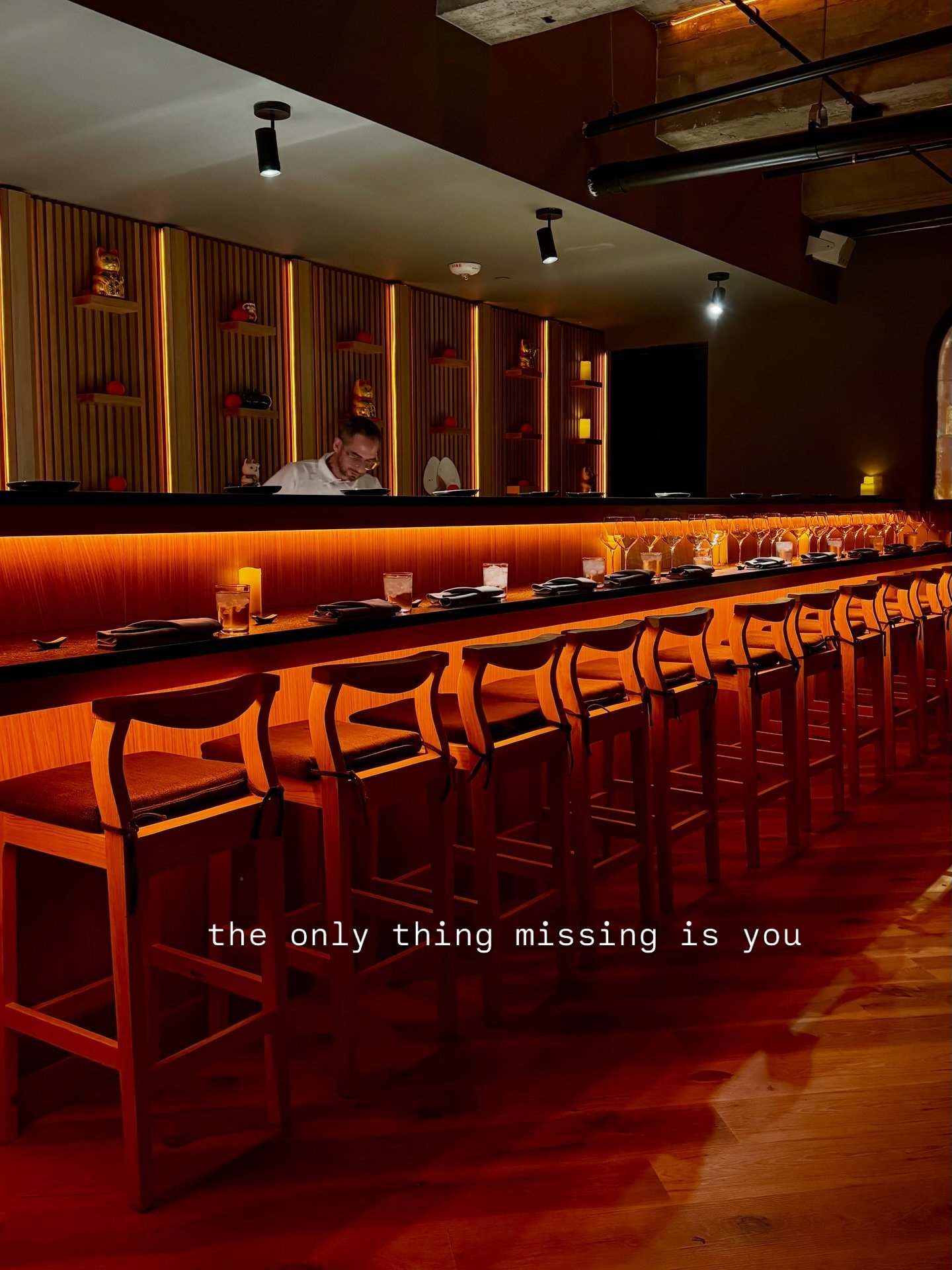
    Bar in San Antonio, United States

    Chika - Omakase

    100pts

    Residential Counter Omakase

    Chika - Omakase, Bar in San Antonio

    About Chika - Omakase

    San Antonio's omakase format arrives at 875 E Ashby Pl in the city's Tobin Hill neighbourhood, where Chika offers a chef-driven counter experience structured around the pacing and ritual of Japanese tasting cuisine. For a city whose dining scene has historically leaned toward Tex-Mex and regional barbecue, a dedicated omakase counter represents a distinct and relatively recent category addition.

    Omakase Comes to the Tobin Hill Corridor

    At 875 E Ashby Place, Chika sits in Tobin Hill, one of San Antonio's older residential neighborhoods threading north from the Pearl district. The building address puts it close to the creative corridor that has drawn independent restaurants and bars away from downtown's tourist-facing strips. Approaching a small-format omakase room in this context carries a specific charge: the expectation is intimacy over spectacle, counter discipline over dining-room theater, and a kitchen that earns attention through precision rather than scale.

    Omakase as a format carries its own logic regardless of geography. The chef determines the sequence, the pacing, and the proportion. The guest surrenders the menu. That exchange, common in Tokyo's counter culture for decades, has spread into American cities at a rate that roughly tracks the premium dining market's appetite for structured experiences over a la carte browsing. San Antonio's position in that shift is still early, which is part of what makes a dedicated omakase address on Ashby Place a notable data point in the city's dining arc.

    The Counter Format and What It Demands

    Counter omakase separates itself from tasting-menu restaurants through physical proximity and sequential exposure. Guests at a sushi or kaiseki counter watch preparation unfold in real time. There is no kitchen behind closed doors, no moment when a server ferries a composed plate from an unseen space. The counter collapses the gap between production and consumption, and that compression changes the guest experience fundamentally. It is a format that rewards attention and penalizes distraction.

    American cities that have developed strong omakase cultures, including New York, Los Angeles, and Chicago, have done so by layering independent operators at different price points. Entry-level counters set a floor; Michelin-recognized rooms like Kumiko in Chicago demonstrate what a technically ambitious counter program can achieve within a specific discipline. San Antonio's equivalent layering is less developed, which means that a dedicated omakase room here occupies a relatively uncrowded tier, facing fewer direct competitors than a comparable concept would in a larger market.

    The Cocktail Program in an Omakase Setting

    The drink program at a counter omakase is not incidental. In Japan, the pairing tradition runs toward sake and whisky; in American adaptations, the question of how cocktails integrate with a chef-driven tasting sequence has produced genuinely interesting results. Bars operating at the intersection of technical cocktail craft and food-forward thinking, such as Bar Leather Apron in Honolulu and Jewel of the South in New Orleans, have demonstrated that clarified builds, low-dilution spirits, and umami-adjacent ingredients can work alongside delicate food without overwhelming it. The principle applies directly to the omakase counter: a cocktail program that respects the food's pacing and flavor register is an asset; one that doesn't is a liability.

    San Antonio has its own cocktail reference points worth mapping. Bar 1919 operates as one of the city's more technically serious programs, while 1Watson and Aleteo, a Yucatán-inspired rooftop bar and restaurant, show the range from classic-leaning to regionally inflected builds. At an omakase counter, the cocktail selection, whether it runs to clean, mineral spirits or more complex constructed drinks, ideally tracks alongside the kitchen's register rather than competing with it. Programs at places like ABV in San Francisco and Superbueno in New York City have shown that deliberately curated drink lists, rather than exhaustive menus, serve counter dining better. The same discipline that defines the food sequence should, by extension, define what appears in the glass.

    Regional Southern cocktail traditions also provide useful framing. Julep in Houston built its identity around Southern whiskey culture, while The Parlour in Frankfurt demonstrates how a deliberately narrow stylistic focus can generate a stronger program than breadth alone. For a counter that asks guests to trust the chef's sequence completely, a drink program with that same editorial conviction, fewer options, higher confidence, is the logical counterpart.

    San Antonio's Premium Dining Position

    Texas's major cities have developed distinct premium dining identities. Houston's restaurant culture is dense and internationally diverse; Dallas operates a competitive fine-dining market with significant Michelin attention; Austin has absorbed a wave of chef-driven investment over the past decade. San Antonio, despite its size, has historically punched below its weight in the formal tasting-menu tier. The Pearl district's development shifted some of that, concentrating independent hospitality around a walkable corridor, but dedicated counter omakase has remained sparse.

    That sparseness matters for how a concept like Chika positions itself. In cities with established omakase markets, a new counter entry competes against a known set of reference points. Guests arrive with calibrated expectations built from prior visits. In a market where counter omakase is genuinely uncommon, the room defines the standard rather than responding to one. That is both an opportunity and a pressure: the format carries its own expectations regardless of local context, and guests who have experienced omakase elsewhere will apply those standards.

    San Antonio's food culture draws on several distinct streams: the deep Tex-Mex tradition rooted in the city's demographics, the barbecue circuit that connects the city to Central Texas, and a growing independent restaurant scene with wider culinary references. Venues like Alamo Beer Company illustrate the local craft production angle; the full range of San Antonio dining can be traced through our full San Antonio restaurants guide. Omakase sits at some distance from those dominant traditions, which is precisely why its presence signals something about where the city's premium dining appetite is moving.

    Planning Your Visit

    Chika operates at 875 E Ashby Place, in Tobin Hill, accessible from the Pearl district on foot or by a short drive from downtown San Antonio. For an omakase format, advance reservation is standard practice: counter seats are finite and the kitchen sequences production around a fixed guest count. Checking directly with the venue for current availability and booking windows is the appropriate first step; omakase rooms in comparable markets typically require lead times of several weeks for preferred seatings. Arriving slightly early is practical given that counter formats often begin on schedule, and late arrivals disrupt a sequenced service in ways that a conventional restaurant can absorb more easily.

    Dress code expectations at American omakase counters are generally smart casual, though the specific ethos of the room is worth confirming. The counter format is intimate enough that presentation registers, even without a formal code in place.

    Frequently Asked Questions

    What should I try at Chika - Omakase?
    At a dedicated omakase counter, the defining premise is that the chef determines the sequence, so ordering a la carte is not the format here. The counter experience works leading when approached with openness to whatever the kitchen is running that session, as the menu typically responds to seasonal availability and the chef's current emphasis. If there is a cocktail or sake pairing option available, counter omakase is one of the few formats where a curated drink pairing genuinely serves the food rather than distracting from it.
    What is the main draw of Chika - Omakase?
    In a city where counter omakase remains a genuinely sparse format, Chika occupies a tier that has few direct competitors in San Antonio. The draw is the format itself: a sequenced, chef-directed experience in an intimate counter setting, which sits at measurable distance from the dominant Tex-Mex and barbecue traditions that define the city's broader restaurant identity. For guests familiar with omakase counters in larger markets, the interest is in seeing how the format translates to a Texas city still developing its premium dining range.
    Is Chika - Omakase a good choice for first-time omakase guests in San Antonio?
    San Antonio has limited counter omakase options, which means Chika represents one of the few opportunities in the city to experience the format without traveling to Houston, Dallas, or Austin. For guests new to the omakase structure, the key preparation is practical: book ahead since counter seats are finite, arrive on time as the kitchen sequences service for a fixed guest count, and come prepared to trust the chef's selection rather than customizing it. The Tobin Hill location also places it within reach of the Pearl district's wider dining and bar options, which makes it a workable anchor for a longer evening in the area.
    Keep this place

    Save or rate Chika - Omakase on Pearl

    Keep this venue in your Pearl passport, rate it after you visit, and track it alongside every other place you collect.