
Bar in Rooney Valley, United States
The Fort
100ptsMountain West Trading Post
About The Fort
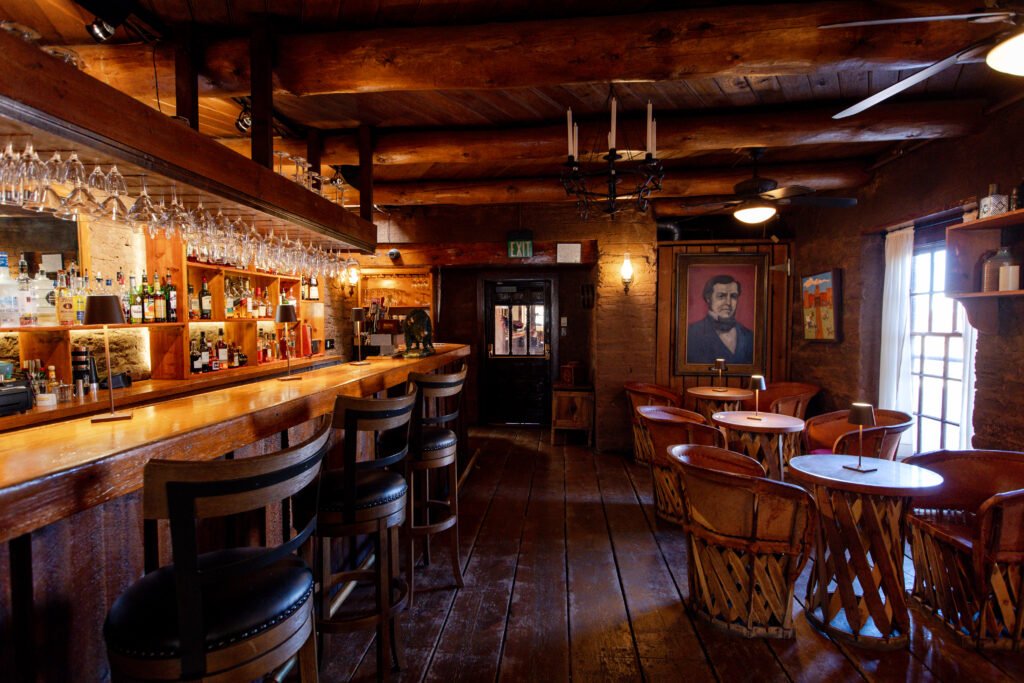
Set along a stretch of Colorado highway outside Morrison, The Fort occupies a adobe-style building that signals something deliberately apart from the urban bar circuit. The cocktail program draws on the American West's historical foodways and spirits traditions, placing it in a small category of destination bars where geography and concept are inseparable. Plan the drive — this is not a spontaneous stop.
Approaching along CO-8 through the high scrub of the Rooney Valley, the building registers before the sign does. The adobe architecture sits against the Colorado foothills with enough visual weight to suggest it has been there for decades, which is largely the point. The Fort sits at 19192 CO-8 in Morrison, roughly a half-hour southwest of Denver, and that distance from the city is not incidental — it shapes the entire register of a visit. You are not dropping in after work. You are making a trip, and the program inside is calibrated accordingly.
The American West as a Cocktail Premise
A small number of American bars have moved beyond craft technique to stake out a specific cultural or historical identity as their organizing principle. Jewel of the South in New Orleans anchors its program in 19th-century cocktail history. Julep in Houston treats Southern spirits traditions as a living document. The Fort occupies a comparable position in the Mountain West: the cocktail program draws on frontier-era American drinking culture, indigenous ingredients from the high plains and Rocky Mountain corridor, and the kind of historical specificity that separates a concept bar from a themed one.
That distinction matters. A themed bar applies visual codes — exposed brick, taxidermy, sepia photographs , to a generic drinks list. A concept bar builds the menu from the premise outward, so that each drink reflects actual research into a time, place, or tradition. The Fort's physical setting in a replica 1830s trading post creates an expectation that the beverage program either has to honor or abandon. The evidence suggests it chooses the former.
Spirits, Bitters, and the Mountain West Tradition
The American bar scene has, in the past decade, developed genuine sophistication around regional spirits. Producers in Colorado, New Mexico, and Utah have brought rye whiskeys, agave spirits, and botanical gins to market that reflect local terroir in ways that were commercially negligible twenty years ago. Bars with strong editorial points of view , ABV in San Francisco, Kumiko in Chicago , have demonstrated that a tightly curated spirits library, built around a thesis rather than a catalog, produces more coherent drinking experiences than sheer volume.
The Fort's program fits that pattern. The geographic and historical frame provides a natural filter: what would have been available, or what can be sourced now that reflects a comparable spirit of place? Bitters made from Rocky Mountain botanicals, whiskeys from Colorado distilleries, and spirits drawn from the agave traditions that predate the Mexican border's current position all become ingredients with argumentative force rather than decorative flair. This is the difference between a bartender who reads cocktail history and one who uses it as a design brief.
For context on how dedicated American cocktail programs handle regional identity, the comparison set includes Canon in Seattle, which treats spirits depth as its primary credential, and Bitter & Twisted in Phoenix, which operates from a Southwest position not entirely dissimilar from The Fort's Mountain West frame. Allegory in Washington, D.C. and Bar Leather Apron in Honolulu represent the broader American creative bar tier that The Fort participates in from an unusual geographic remove.
Food and the Trading Post Format
The Fort is not a bar with food. It is, by its own historical model, a trading post and restaurant where the bar program operates as one part of a fuller hospitality format. That distinction matters for how you plan a visit. The bison, elk, and game dishes on the menu are not afterthoughts arranged around a drinks program , they reflect the same research-driven premise as the cocktails. Buffalo tongue, rattlesnake, and Rocky Mountain oysters have appeared on the menu historically, reflecting the actual provisions of 19th-century mountain trade rather than novelty for its own sake. The food and drink function as a coherent argument about a place and period.
This format , where the drinks program and the kitchen share a single animating concept , is rarer than it should be. Superbueno in New York City and Bar Kaiju in Miami each integrate food and drink within a strong visual and conceptual identity, though neither operates from a historical reconstruction premise. The Fort's commitment to that premise across both departments is what places it outside the standard bar category entirely.
Getting There and Planning the Visit
The address at 19192 CO-8, Morrison, CO 80465 places The Fort roughly 25 miles from central Denver, accessible by car along US-285 south to CO-8 west. There is no practical public transit option. The drive through the foothills on CO-8 is part of the experience , the restaurant's position in the Rooney Valley makes the approach deliberate in a way that a downtown Denver address never could. Evening visits benefit from the setting sun on the adobe walls and the mountain backdrop, which is not incidental to the atmosphere the format creates.
Given the destination-dining model, reservations are strongly recommended, particularly on weekends and during Colorado's summer and fall high seasons when Denver visitors extend trips into the foothills. The Fort sits in a peer category with properties that reward advance planning rather than spontaneous arrivals. Phone and online booking details are leading confirmed directly through current listings. For broader context on where The Fort fits in the regional picture, see our full Rooney Valley restaurants guide. International context on the bar format it inhabits is reflected in the work of The Parlour in Frankfurt on the Main, which similarly treats the bar as a culturally specific rather than generically hospitality-oriented space.
Frequently Asked Questions
- What's the general vibe of The Fort?
- The Fort operates as a destination restaurant and bar in the Colorado foothills, housed in an adobe building modeled on a 19th-century trading post. The atmosphere is historically specific rather than generically rustic , the food, drinks, and setting form a coherent argument about the American Mountain West. It sits outside the Denver city bar circuit, which means the experience carries a deliberate, occasion-driven character rather than a casual drop-in one.
- What cocktail do people recommend at The Fort?
- Because the venue's cocktail program is built around Mountain West history, frontier-era spirits, and indigenous botanicals, drinks rooted in those themes represent the strongest case for visiting. Cocktails incorporating Colorado whiskeys, regional bitters, or agave spirits drawn from the pre-border Southwest traditions align most directly with what distinguishes this program from a standard Denver bar. Specific current menu items are leading confirmed at time of booking.
- What's the defining thing about The Fort?
- The defining quality is the coherence between premise and execution: the building, the food, and the drinks program all operate from the same historical and geographic research base. Most concept bars apply a theme to an otherwise conventional program; The Fort uses the 1830s Mountain West trading post as an actual design brief across all departments. That consistency is what separates it from peers in the Denver and Colorado bar scene.
- How hard is it to get in to The Fort?
- The Fort is a destination venue roughly 25 miles from central Denver, which filters the audience toward committed visitors rather than casual walk-ins. Reservations are advisable, particularly during summer and fall peak seasons when Denver-area tourism is at its highest. Contact and booking details should be confirmed through current venue listings, as specific phone and online reservation data is not published here.
- Does The Fort serve food as well as cocktails, and how are the two connected?
- The Fort operates primarily as a restaurant with a strong bar program, not a standalone cocktail bar with food options. The kitchen and drinks list share the same historical premise , frontier-era Mountain West foodways , so dishes such as game meats and indigenous ingredients reflect the same research that informs the spirits and cocktail selection. Visiting for the full food-and-drink experience, rather than drinks alone, is the format the venue is built around.
Related editorial
- Best Fine Dining Restaurants in ParisFrom three-Michelin-star icons to the next generation of Parisian chefs pushing boundaries, these are the restaurants that define fine dining in the world's culinary capital.
- Best Luxury Hotels in RomeFrom rooftop terraces overlooking ancient ruins to Michelin-starred hotel dining, these are the luxury hotels that make Rome unforgettable.
- Best Cocktail Bars in KyotoFrom sleek lounges to hidden speakeasies, Kyoto's cocktail scene blends Japanese precision with global influence in ways you won't find anywhere else.
Save or rate The Fort on Pearl
Keep this venue in your Pearl passport, rate it after you visit, and track it alongside every other place you collect.