
Bar in Pittsburgh, United States
Max's Allegheny Tavern
100ptsGerman-American Tavern Tradition
About Max's Allegheny Tavern
Max's Allegheny Tavern at 537 Suismon St occupies a specific niche in Pittsburgh's North Side drinking culture: a neighborhood tavern with the density of a German-American hall and the informality of a corner bar. The atmosphere is the point here — dark wood, a long bar, and the kind of unhurried pace that separates this stretch of the Allegheny from the city's newer hospitality corridors.
The North Side's Tavern Standard
Pittsburgh's North Side has always carried a different civic weight than the South Side entertainment strips or the East End's restaurant rows. The neighborhoods here — Mexican War Streets, Allegheny West, the blocks surrounding what was once Allegheny City — were built for people who worked, not people who visited. The taverns that grew up alongside them reflect that. They are not designed around a concept. They function as a kind of social infrastructure, and Max's Allegheny Tavern at 537 Suismon St sits squarely in that tradition.
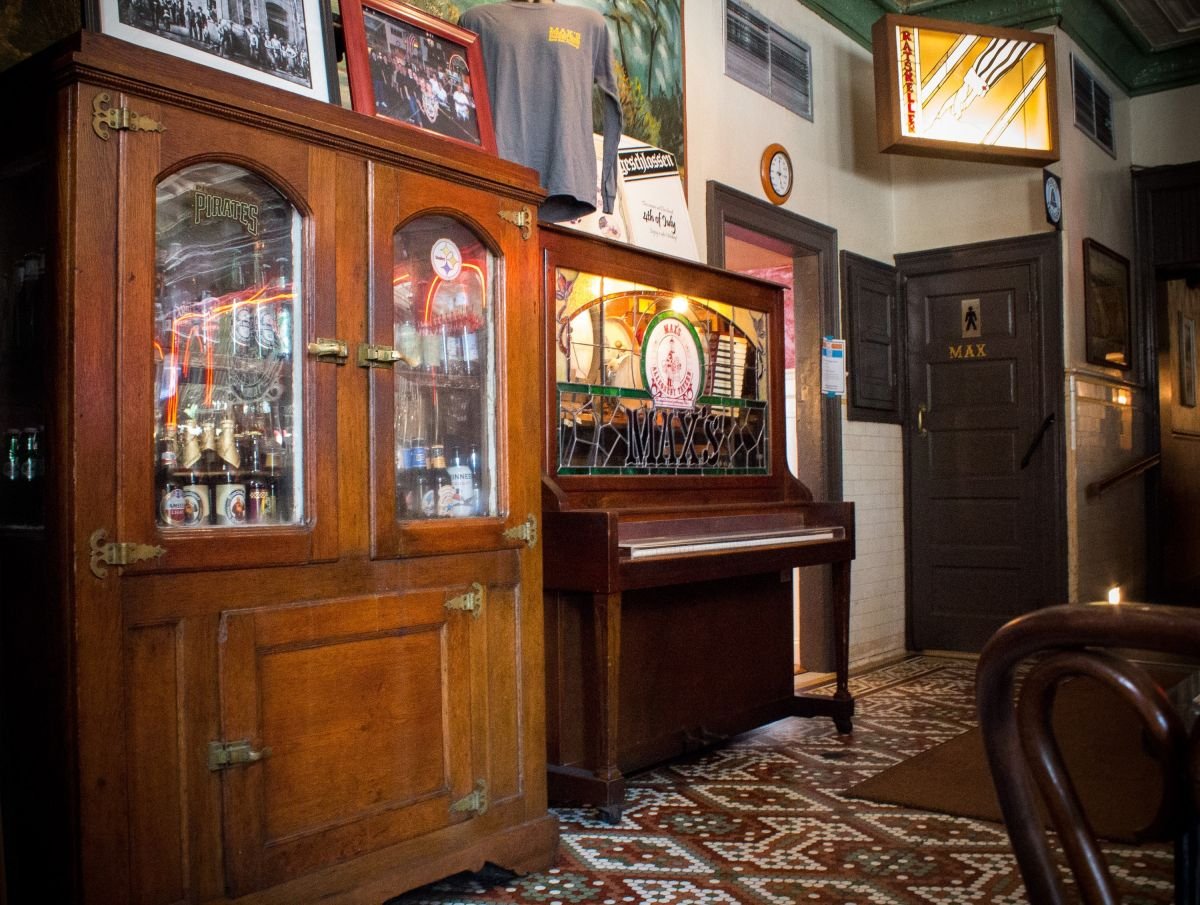
Walking toward the building, the architectural vocabulary is immediate: a neighborhood corner structure that belongs to the late nineteenth and early twentieth century building stock that defines this part of Pittsburgh. Inside, the register shifts to dark wood, long bar stools, and the particular amber light that German-American tavern interiors seem to produce independent of whatever bulbs are fitted. This is not a reconstructed aesthetic. The physical environment has accumulated rather than been assembled, and the difference is perceptible the moment you step in.
What German-American Tavern Culture Looks Like in Practice
The German-American tavern tradition in Pittsburgh ran deep before consolidation, urban renewal, and generational drift reduced its footprint. At its height, Allegheny City , now Pittsburgh's North Side , had a dense concentration of German immigrants whose social life organized around halls, churches, and neighborhood taverns that served as both eating and drinking establishments. What distinguishes the survivors of that tradition from the broader bar category is a specific combination: hearty food programs alongside serious beer selections, physical spaces built for duration rather than turnover, and a social contract that rewards regulars without excluding strangers.
Max's operates within that framework. The food menu leans into German-American classics , the kind of cooking that Pittsburgh's older neighborhoods kept alive long after it fell out of fashion elsewhere. Schnitzel, sausages, and sauerkraut-adjacent preparations are the category anchors, though the specific menu composition at any given time should be verified directly with the venue. The beer program reflects the same cultural logic: German lagers and wheat beers alongside domestic American options, in pours calibrated for a working tavern rather than a craft tasting room.
This positioning places Max's in a small peer set within Pittsburgh's drinking culture. Allegheny Wine Mixer, a few blocks away on the North Side, represents a different axis entirely: a wine-forward format aimed at a more contemporary hospitality sensibility. Alla Famiglia on the South Side occupies the Italian-American equivalent of this niche , a neighborhood anchor with deep local roots and a food program that prioritizes tradition over trend. Max's is the German-American version of that story.
Sound, Smell, and the Sensory Logic of a Working Tavern
The atmospheric signals at Max's are not manufactured for Instagram. The sound profile on a busy evening runs to the low register: conversation, the percussion of pint glasses on bar wood, a jukebox or background music that stays below the threshold of interference. There is no curated silence, no theatrical cocktail theater, no open kitchen designed to project culinary credentials into the dining room. What you get instead is the ambient warmth that comes from a space that has been used for its stated purpose for a long time.
The smell is kitchen-forward in the way that German-American cooking dictates: rendered fat, mustard, the yeast-heavy note of draft beer, and the background sweetness of braised meat when the kitchen is running at full capacity. These are not subtle signals. The venue announces what it is before you reach the menu, and that directness is part of its function.
By comparison, the craft cocktail bars that Pittsburgh's more design-conscious neighborhoods have developed over the past decade operate on a completely different sensory register. A place like Bar Leather Apron in Honolulu or Kumiko in Chicago builds atmosphere around restraint, precision, and visual minimalism. Jewel of the South in New Orleans and Julep in Houston use Southern hospitality as a structural organizing principle. Superbueno in New York City, ABV in San Francisco, and The Parlour in Frankfurt each reflect the particular character of their cities' contemporary bar culture. Max's belongs to none of those currents. It predates them and operates independently of their logic.
The North Side Context
Suismon Street sits in a section of the North Side that rewards the kind of exploratory walking that Pittsburgh's topography usually complicates. The Mexican War Streets neighborhood to the immediate south has undergone significant residential investment over the past two decades, bringing a younger demographic into close proximity with older institutional anchors. Max's sits at that intersection without having adjusted its format to accommodate it.
The Allegheny Elks Lodge #339 represents another strand of this neighborhood's civic associational life. Aiello's Pizza in Squirrel Hill illustrates how Pittsburgh's neighborhood food institutions operate across the city's distinct districts, each anchored to specific immigrant or working-class food traditions. For a broader orientation to Pittsburgh's eating and drinking scene, the full Pittsburgh restaurants guide maps the city's hospitality geography in detail.
Planning Your Visit
Max's Allegheny Tavern is located at 537 Suismon St, Pittsburgh, PA 15212, on the city's North Side. The venue is accessible from downtown Pittsburgh via the Andy Warhol Bridge or the Roberto Clemente Bridge, both of which connect the North Side to the central business district on foot in under fifteen minutes. Parking on the surrounding residential streets is generally available outside peak evening hours. Because specific hours, booking policies, and current menu details are not published centrally, visitors should confirm current operating times before making a dedicated trip , particularly for weekend evenings, when neighborhood taverns in this tier can fill without reservation infrastructure to manage capacity.
Frequently Asked Questions
- What's the atmosphere like at Max's Allegheny Tavern?
- Max's operates in the German-American tavern tradition that once defined North Side Pittsburgh. The physical environment reads as accumulated rather than designed: dark wood, a long bar, and a sound profile built around conversation rather than performance. If you are coming from one of Pittsburgh's newer hospitality corridors on the East End or South Side, the register will feel markedly different , slower, more settled, oriented toward duration rather than turnover.
- What's the signature drink at Max's Allegheny Tavern?
- The beer program reflects the venue's German-American identity, with German lagers and wheat beers alongside domestic options. This is not a cocktail-forward venue, and the drink selection is shaped by the same cultural logic as the food menu. Specific current draft selections should be confirmed with the venue directly, as tap lists at working taverns rotate without centralized publication.
- What should I know about Max's Allegheny Tavern before I go?
- Max's is a neighborhood tavern, not a destination restaurant formatted for first-time visitors. The food program leans into German-American cooking traditions , schnitzel, sausages, braised preparations , and the pace of the room is set by regulars rather than event programming. Confirm current hours before visiting, as specific operating schedules are not available through centralized listings.
- Can I walk in to Max's Allegheny Tavern?
- Taverns in this category , neighborhood anchors without a formal reservations infrastructure , typically operate on a walk-in basis, though capacity on busy evenings can vary. Because no booking method or phone number is currently listed through centralized sources, arriving early in the evening on weekdays is the lower-risk approach if you want to be sure of a seat.
- Is Max's Allegheny Tavern a good option for visitors who want to experience Pittsburgh's older neighborhood food culture rather than its contemporary restaurant scene?
- Yes, in specific terms: Max's represents a strand of Pittsburgh's food identity that predates the city's current wave of chef-driven and craft-oriented hospitality. The German-American tavern tradition it draws from was central to the North Side's social life for well over a century, and very few operating venues maintain it with this degree of continuity. For travelers whose interest in a city extends to its working-class and immigrant food histories, 537 Suismon St is a more instructive address than most of the venues currently generating press coverage in Pittsburgh.
Related editorial
- Best Fine Dining Restaurants in ParisFrom three-Michelin-star icons to the next generation of Parisian chefs pushing boundaries, these are the restaurants that define fine dining in the world's culinary capital.
- Best Luxury Hotels in RomeFrom rooftop terraces overlooking ancient ruins to Michelin-starred hotel dining, these are the luxury hotels that make Rome unforgettable.
- Best Cocktail Bars in KyotoFrom sleek lounges to hidden speakeasies, Kyoto's cocktail scene blends Japanese precision with global influence in ways you won't find anywhere else.
Save or rate Max's Allegheny Tavern on Pearl
Keep this venue in your Pearl passport, rate it after you visit, and track it alongside every other place you collect.