
Bar in Paris, France
Verjus
100ptsCave à Manger Precision
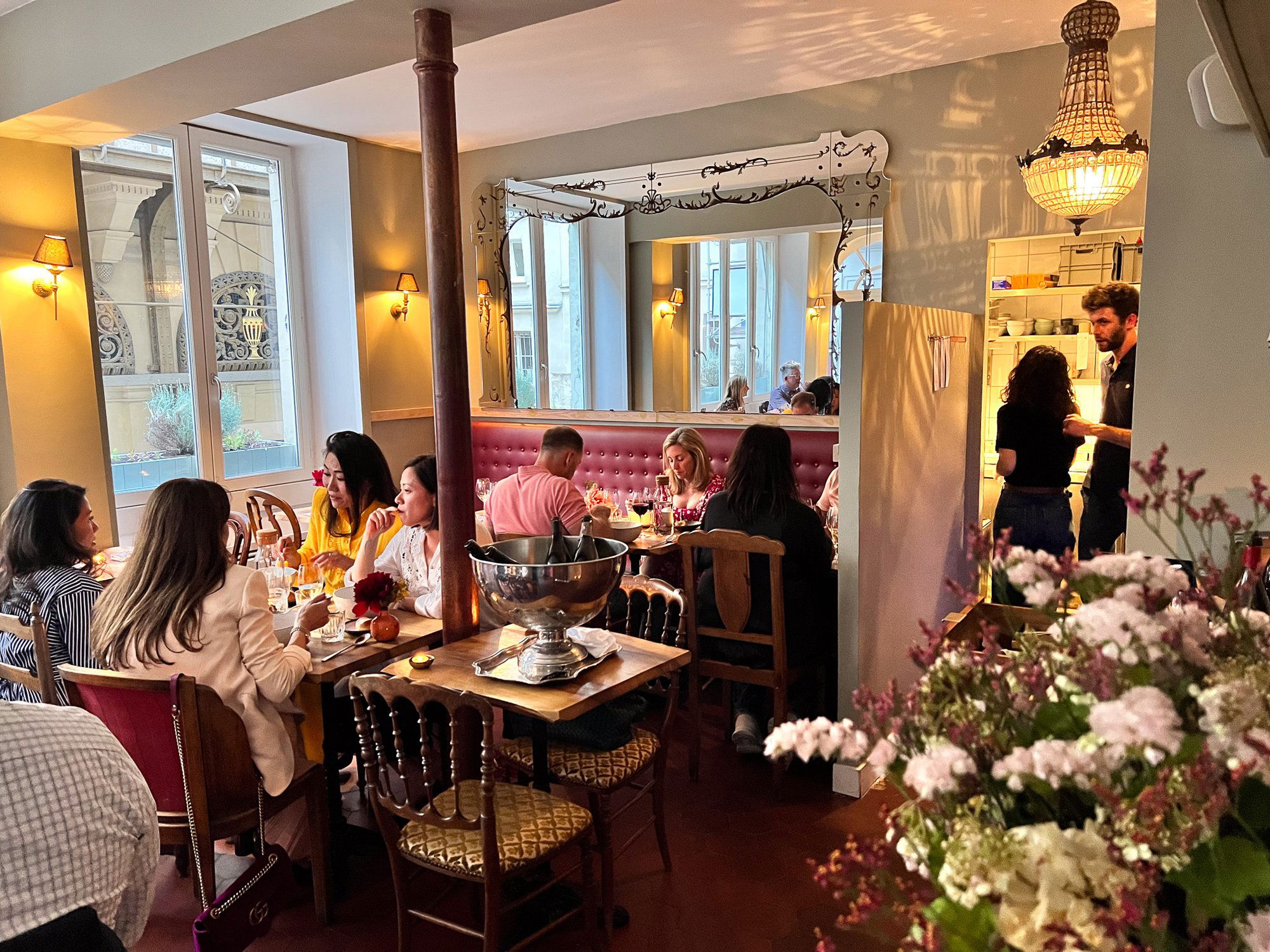
About Verjus
Verjus occupies a quietly influential position in Paris's 1st arrondissement, operating across two addresses on Rue de Richelieu and Rue de Montpensier near the Palais-Royal gardens. The restaurant has built a reputation among anglophone food circles for produce-driven cooking and a natural wine list that punches well above its low-key setting. Book ahead: word travels faster than the signage suggests.
The Palais-Royal Pocket and What It Means for Dining
The streets framing the Palais-Royal gardens — Rue de Richelieu, Rue de Montpensier, the arcaded galleries themselves — represent one of Paris's more quietly concentrated dining corridors. The area draws neither the tourist density of the Marais nor the destination-restaurant gravity of the 8th, which means the addresses that have established themselves here have done so largely on word of mouth and repeat custom rather than foot traffic. Verjus, split across 52 Rue de Richelieu and 47 Rue de Montpensier, is the clearest example of that dynamic in the neighbourhood: two connected spaces, one serving a more structured tasting format upstairs, one operating as a wine bar below, both drawing a crowd that has actively sought them out.
That geography matters because it shapes the expectations a diner brings. You are not stumbling in from a tourist drag. You have looked this up, made a reservation, and arrived with some baseline of intent. The room rewards that intent rather than performing for it.
Sourcing as the Organising Principle
Among Paris restaurants operating in the mid-to-upper tier, the ones that have aged leading over the past decade tend to share a structural commitment to where their ingredients come from rather than what culinary register they inhabit. The farm-to-table framing has become so diluted globally as to be almost useless as a descriptor, but in Paris's 1st arrondissement context, it retains meaning when it functions as a genuine constraint on the menu rather than a marketing category.
Verjus belongs to the cohort of Paris addresses that built their identity around produce sourcing before that became the default positioning of every new opening. The menu's shape follows the market and the season rather than a fixed repertoire, which means what arrives at the table in October looks substantially different from what the kitchen sends out in April. For a diner accustomed to menus that change quarterly at leading, the granularity of that seasonal responsiveness is noticeable in the plate. It also means that any specific dish descriptions circulating online are likely already out of date, which is not a warning so much as an accurate characterisation of how the kitchen operates.
The sourcing orientation also explains the wine program's logic. Verjus became known in anglophone food media in part because its wine list leaned toward natural and low-intervention producers at a time when that category was still a niche rather than a standard offering in Paris. The list functions as a companion to the sourcing philosophy in the kitchen: traceability and producer relationships matter on both sides of the pass. For readers exploring Paris's bar and wine scene more broadly, the city's cocktail-forward rooms such as Candelaria and Danico operate on a parallel but distinct logic, prioritising technique and spirit provenance over the vineyard-focused curation that defines Verjus's lower level.
The Wine Bar Format and Its Paris Peers
Paris has a specific and well-developed tradition of the cave à manger , a wine-forward space where the food is serious but the bottle is the explicit anchor of the experience. Verjus's ground-level wine bar sits within that tradition while tilting it slightly toward an anglophone sensibility in terms of how the list is communicated and the informality of the format. The result is a room that feels comfortable to a visitor who has spent time in London's natural wine bars or New York's lower-key wine-focused rooms, without abandoning the Parisian expectation that the food will be taken seriously regardless of the setting's casual register.
This positions Verjus's wine bar differently from the more theatrical Paris bar operations. Venues like Buddha Bar or Bar Nouveau serve different functions in the city's drinking landscape, prioritising atmosphere and cocktail programming over wine depth. The comparison is not hierarchical but categorical: knowing which mode you want before you book matters more than ranking them against each other.
For those building a broader France itinerary around wine-anchored drinking and eating, the approach at Verjus has rough equivalents in other French cities: Coté vin in Toulouse, La Maison M. in Lyon, and Bar Casa Bordeaux in Bordeaux each represent a city-specific take on the producer-focused wine bar format that Verjus helped popularise in Paris. Further afield, Papa Doble in Montpellier and Au Brasseur in Strasbourg offer useful contrasts in how regional French cities approach relaxed drinking with food.
The Two-Room Structure and How to Use It
The practical distinction between Verjus's two spaces is worth understanding before you book, because the experiences they offer differ in pacing and formality even while sharing a kitchen philosophy. The restaurant upstairs operates on a set tasting format with advance reservations and a fixed progression through the menu. The wine bar below is more spontaneous in structure, with walk-in capacity varying by day and time, and a shorter food menu designed around the same sourcing logic but in smaller, more flexible portions.
For a first visit, the wine bar functions as a lower-commitment introduction to what the kitchen is doing, with the option to upgrade to the full restaurant experience once you have calibrated your interest. For a repeat visitor, the restaurant format rewards knowing what you are walking into: the tasting progression is the product, and arriving with appetite and time is the baseline requirement.
The Palais-Royal location means the walk from either the Palais Royal-Musée du Louvre metro station or from the Louvre itself is short and navigable without a map. The neighbourhood quiets significantly after the galleries close, which makes the evening service feel more contained than the address's central 1st arrondissement postcode might suggest.
Know Before You Go
- Address: Restaurant at 52 Rue de Richelieu; Wine Bar at 47 Rue de Montpensier, 75001 Paris
- Nearest metro: Palais Royal-Musée du Louvre (lines 1 and 7)
- Format: Upstairs restaurant operates on a set tasting menu; ground-level wine bar offers à la carte plates and a producer-focused wine list
- Booking: Restaurant requires advance reservation; wine bar accepts walk-ins subject to availability
- Leading approach: Wine bar first for a first visit; full restaurant for a planned evening
- Paris context: See our full Paris restaurants guide for neighbourhood comparisons and category-level curation across the city
Frequently Asked Questions
What's the vibe at Verjus?
Verjus operates in the register that Paris does well when it is not trying to be grand: considered, ingredient-focused, and low on performative gesture. The room is not loud, the service is not stiff, and the crowd skews toward people who have come specifically for the food and wine rather than for the setting. If you have visited Parisian wine bars that feel more cellar than salon, Verjus sits in that family, though its anglophone ownership gives the communication around the list and menu a clarity that can feel more legible to international visitors than some peers.
What drink is Verjus famous for?
Verjus built its reputation on the wine side rather than cocktails, with a list weighted toward natural and low-intervention producers that was notable in Paris when the restaurant opened and remains a considered program. The name itself, verjus, refers to the pressed juice of unripe grapes , an ingredient with deep roots in classical French cooking and an appropriate emblem for a restaurant oriented around produce and the vineyard. For cocktail-first evenings in Paris, rooms like Candelaria and Danico serve different priorities with equivalent seriousness.
What should I know about Verjus before I go?
The two-space structure is the most important practical fact: the restaurant and the wine bar share a kitchen philosophy but operate on different booking logics and levels of formality. The restaurant requires a reservation and moves at a tasting-menu pace; the wine bar is more spontaneous but capacity is limited and evenings fill faster than the low-key exterior implies. Arriving without a reservation to the wine bar side works leading earlier in the evening or on quieter mid-week nights.
Is Verjus a good option for visitors who are not wine specialists?
The wine list at Verjus leans toward natural and low-intervention producers, which can feel unfamiliar if you are accustomed to conventional wine categories, but the format is not gatekept: the staff communicate the list in terms of flavour and producer story rather than assuming prior knowledge. The food menu, driven by seasonal sourcing, gives the meal a clear anchor regardless of how deeply you engage with the bottle. Verjus sits within a broader Paris tradition where the wine bar format is understood as democratic rather than exclusive, placing it in a different register from the city's more formal cave operations. For context on how Paris's drinking scene varies by neighbourhood and format, see our full Paris guide, and for international comparisons in the wine-bar-with-serious-food category, Bar Leather Apron in Honolulu offers an instructive contrast in how the format travels across very different drinking cultures. Closer to home, Le Café de la Fontaine in La Turbie shows how the French south handles the same casual-serious balance in a very different geographical register.
Related editorial
- Best Fine Dining Restaurants in ParisFrom three-Michelin-star icons to the next generation of Parisian chefs pushing boundaries, these are the restaurants that define fine dining in the world's culinary capital.
- Best Luxury Hotels in RomeFrom rooftop terraces overlooking ancient ruins to Michelin-starred hotel dining, these are the luxury hotels that make Rome unforgettable.
- Best Cocktail Bars in KyotoFrom sleek lounges to hidden speakeasies, Kyoto's cocktail scene blends Japanese precision with global influence in ways you won't find anywhere else.
Save or rate Verjus on Pearl
Keep this venue in your Pearl passport, rate it after you visit, and track it alongside every other place you collect.