
Bar in Paris, France
Vaudeville
100ptsBrasserie Counter Tradition
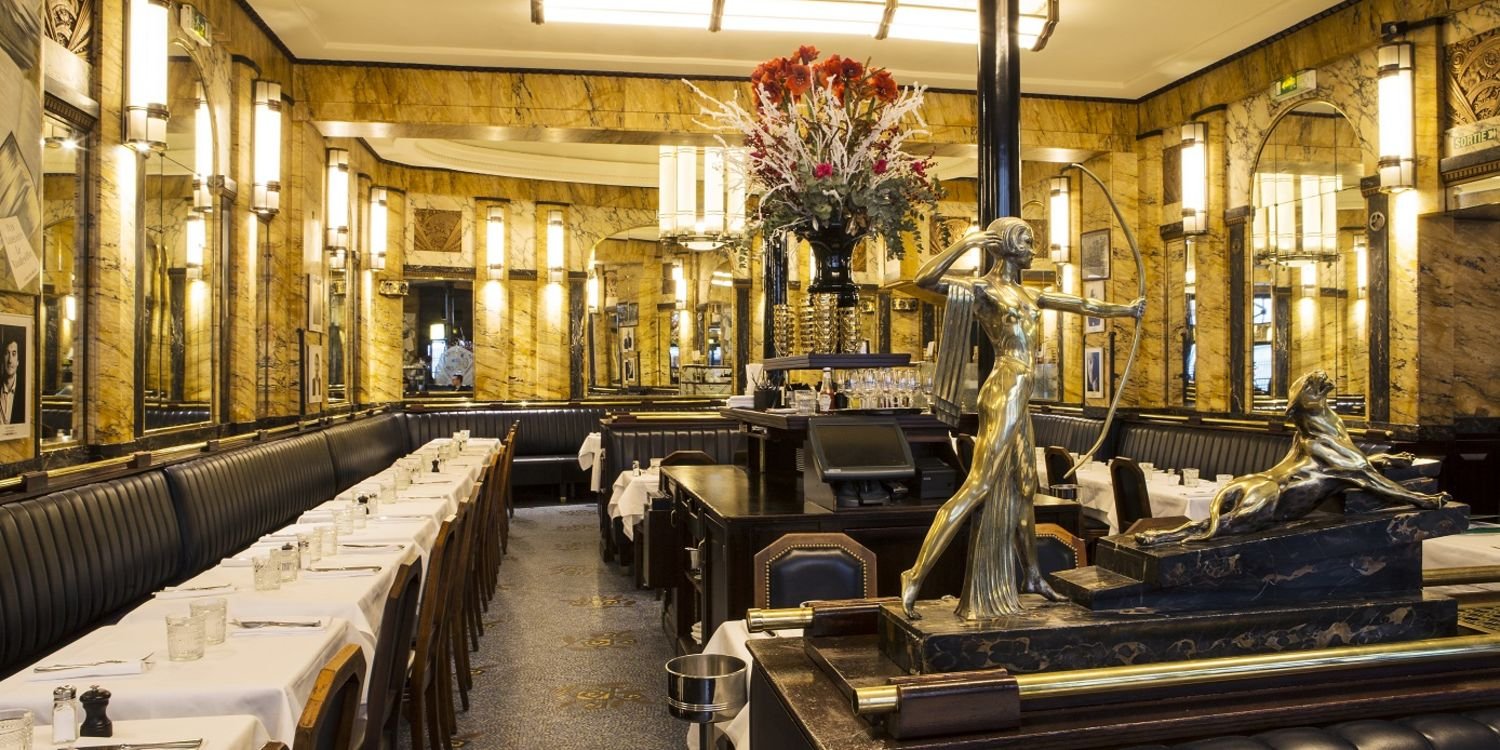
About Vaudeville
On Rue Vivienne in Paris's 2nd arrondissement, Vaudeville occupies the kind of Belle Époque brasserie space that the neighbourhood has refined for well over a century. The bar programme here sits within a broader food-and-drink operation where the two are genuinely interdependent, placing it in a specific tier of Parisian drinking that rewards visitors who want substance alongside their glass.
Rue Vivienne and the Brasserie Bar Tradition
There is a particular kind of Parisian bar that only makes sense when you understand the brasserie format it grew out of. The 2nd arrondissement, and Rue Vivienne specifically, has been one of the city's commercial and cultural corridors since the Palais-Royal arcades shaped pedestrian life in the neighbourhood during the 18th and 19th centuries. Vaudeville, at 29 Rue Vivienne, sits in that lineage: a room where the bar is not a separate destination grafted onto a restaurant, but a structural part of the brasserie's identity.
In Paris, the brasserie bar occupies a different position from the standalone cocktail bar. Where venues like Candelaria or Danico have built reputations on technical programmes detached from any food obligation, the brasserie bar earns its credibility through integration: how the drink list functions alongside the kitchen, how the room accommodates both a quick aperitif and a full evening. Vaudeville operates in that integrated mode, and judging it purely as a cocktail destination misses the point.
The Room as Argument
Walk into a well-preserved Belle Époque brasserie and the architecture makes a case before anyone has poured a drink. The high ceilings, the mirrored walls, the mosaic floors, the curved zinc bar: these are not decorative choices but a spatial logic inherited from the late 19th century, when Parisian brasseries were designed to hold crowds efficiently while maintaining a sense of occasion. The interior reads as a working archive of a dining and drinking format that much of the city has either lost or spent considerable money trying to recreate.
This matters for the bar programme because the physical context shapes what a drink can mean in the room. A glass of Champagne at a zinc counter in a room like this carries different weight than the same pour in a converted cellar or a hotel lobby. The atmosphere does work that the menu cannot do alone. It is worth stating that for bars like Buddha Bar or Bar Nouveau, the designed environment is itself part of the proposition. At Vaudeville, the environment is inherited, which is either its greatest asset or a test of whether the programme deserves it.
Food and Drink as a Single Programme
The editorial angle that matters most when assessing Vaudeville is pairing: how the food and drink lists function together. In the classic brasserie model, this is not an abstract ambition but a structural given. Steak tartare and Bordeaux. Plateau de fruits de mer and Muscadet. A late-night croque-monsieur and a ballon de rouge. These combinations have been calibrated over generations in rooms like this, and they represent a different kind of drink-food intelligence than the composed small-plate and craft-cocktail pairings that define newer venues.
Across Paris's bar scene, the food-and-drink pairing conversation has largely been driven by formats closer to Candelaria's taco-and-mezcal model or the more deliberately curated bar-snack programmes at places like Danico. The brasserie version of this conversation is older, less fashionable to write about, and arguably more deeply embedded in how Parisians actually eat and drink. A well-run brasserie bar does not need to explain its pairings because the logic has been absorbed into the culture of the room.
This places Vaudeville in a specific competitive context: it is not competing with the technical cocktail programmes of the Marais or the 11th, and it is not trying to. Its peer set includes the grand brasseries of the Grands Boulevards and the 2nd, where the bar exists to serve a room that is primarily in the business of French cooking at a particular register.
The 2nd Arrondissement Drinking Map
The area around Rue Vivienne and the Bourse is not where most visitors to Paris go looking for bars, which is part of what defines its character. The Grands Boulevards to the north have their own layer of historic cafés and theatre-adjacent brasseries. The Marais, twenty minutes on foot, has a denser concentration of contemporary bars. The 2nd sits between these poles: a working district during the day, quieter than adjacent arrondissements at night, and home to a specific type of after-work and pre-theatre drinking that rewards the kind of bar that does not require its guests to have made a considered destination choice.
For context on what serious bar culture looks like elsewhere in France, the formats vary significantly by city. La Maison M. in Lyon and Coté vin in Toulouse operate in wine-forward traditions that reflect their regional identities. Au Brasseur in Strasbourg sits in an Alsatian beer-and-food tradition with its own internal logic. Bar Casa Bordeaux draws on the obvious wine geography of its city. Vaudeville's context is Parisian and brasserie-specific: a different register entirely, and one that does not translate neatly to comparison with cocktail-focused programmes.
What the Format Asks of the Guest
A brasserie bar like Vaudeville asks its guests to engage with the room on the room's terms. That means understanding that the bar counter and the dining room are part of the same operation, that the wine list is likely to be more considered than the cocktail programme, and that the experience of drinking here is inseparable from the broader brasserie ritual: the timing, the service register, the way the room moves through an evening from aperitif to digestif.
For visitors used to the focused format of dedicated cocktail venues, this can feel less precise. For those who find value in a drink that is part of a longer, less stage-managed evening, it is the more comfortable option. The comparison is not unlike choosing between Papa Doble in Montpellier or Le Café de la Fontaine in La Turbie over a dedicated bar experience: each answers a different version of the question of what drinking should accomplish on a given evening.
The global comparison point is worth noting briefly: Bar Leather Apron in Honolulu has built its reputation on precision cocktail craft in a dedicated format. Vaudeville is the opposite pole: a room where the drink is one register in a much longer conversation between food, space, and time of day. Neither approach is a concession to the other.
For a broader view of where Vaudeville sits within Paris's eating and drinking options, see our full Paris restaurants guide.
Know Before You Go
- Address: 29 Rue Vivienne, 75002 Paris, France
- Arrondissement: 2nd (Bourse / Palais-Royal)
- Format: Brasserie bar and dining room
- Phone: Not available
- Website: Not available
- Booking: Contact details not confirmed; walk-in likely available at the bar counter
- Nearest Metro: Bourse (line 3) or Palais Royal-Musée du Louvre (lines 1, 7)
Frequently Asked Questions
- What's the must-try cocktail at Vaudeville?
- Specific cocktail details are not confirmed in available data. In a brasserie of this type and location, the drink programme tends to favour aperitif formats and wine over elaborate cocktail menus, which reflects the broader brasserie tradition in Paris's 2nd arrondissement. Checking directly with the venue before visiting is the practical route for current menu specifics.
- What's the defining thing about Vaudeville?
- The defining feature is the integration of bar and dining room within a preserved Belle Époque brasserie space on Rue Vivienne. This is a room where drink and food are part of the same programme rather than separate offerings, which places it in a different category from the dedicated cocktail bars that have shaped Paris's recent bar conversation.
- What's the leading way to book Vaudeville?
- Confirmed booking details are not available in current data. For a brasserie bar of this format in Paris, walk-in availability at the bar counter is typically an option, while dining room reservations usually require advance contact. Reaching out directly to the venue before visiting is recommended.
- What's Vaudeville a strong choice for?
- If you are looking for a classic Parisian brasserie experience in the 2nd arrondissement where drinking and eating are genuinely linked rather than incidental to one another, Vaudeville answers that specific request. It is a better fit for guests who want the brasserie ritual than for those seeking a focused cocktail programme.
- Is Vaudeville good value for a bar?
- Pricing details are not confirmed in available data. Brasseries in this part of Paris typically sit in a mid-to-upper range for drinks, in line with the neighbourhood's commercial character and the cost of maintaining historic dining rooms. The value question depends heavily on whether the format, room, and food-drink integration are what you are looking for on a given evening.
- Does Vaudeville suit a pre-theatre or late-evening visit?
- Brasseries in the Grands Boulevards and adjacent 2nd arrondissement have historically served the city's theatre and opera audience, and Rue Vivienne sits close to several of those venues. The brasserie format, with its flexible service across aperitif, dinner, and digestif, tends to accommodate both early and later arrivals more naturally than timed-format restaurants. Confirming current hours directly with the venue is advisable before planning around a specific performance.
Related editorial
- Best Fine Dining Restaurants in ParisFrom three-Michelin-star icons to the next generation of Parisian chefs pushing boundaries, these are the restaurants that define fine dining in the world's culinary capital.
- Best Luxury Hotels in RomeFrom rooftop terraces overlooking ancient ruins to Michelin-starred hotel dining, these are the luxury hotels that make Rome unforgettable.
- Best Cocktail Bars in KyotoFrom sleek lounges to hidden speakeasies, Kyoto's cocktail scene blends Japanese precision with global influence in ways you won't find anywhere else.
Save or rate Vaudeville on Pearl
Keep this venue in your Pearl passport, rate it after you visit, and track it alongside every other place you collect.