
Bar in Paris, France
Le Baron Rouge
100ptsBarrel-Pour Wine Culture

About Le Baron Rouge
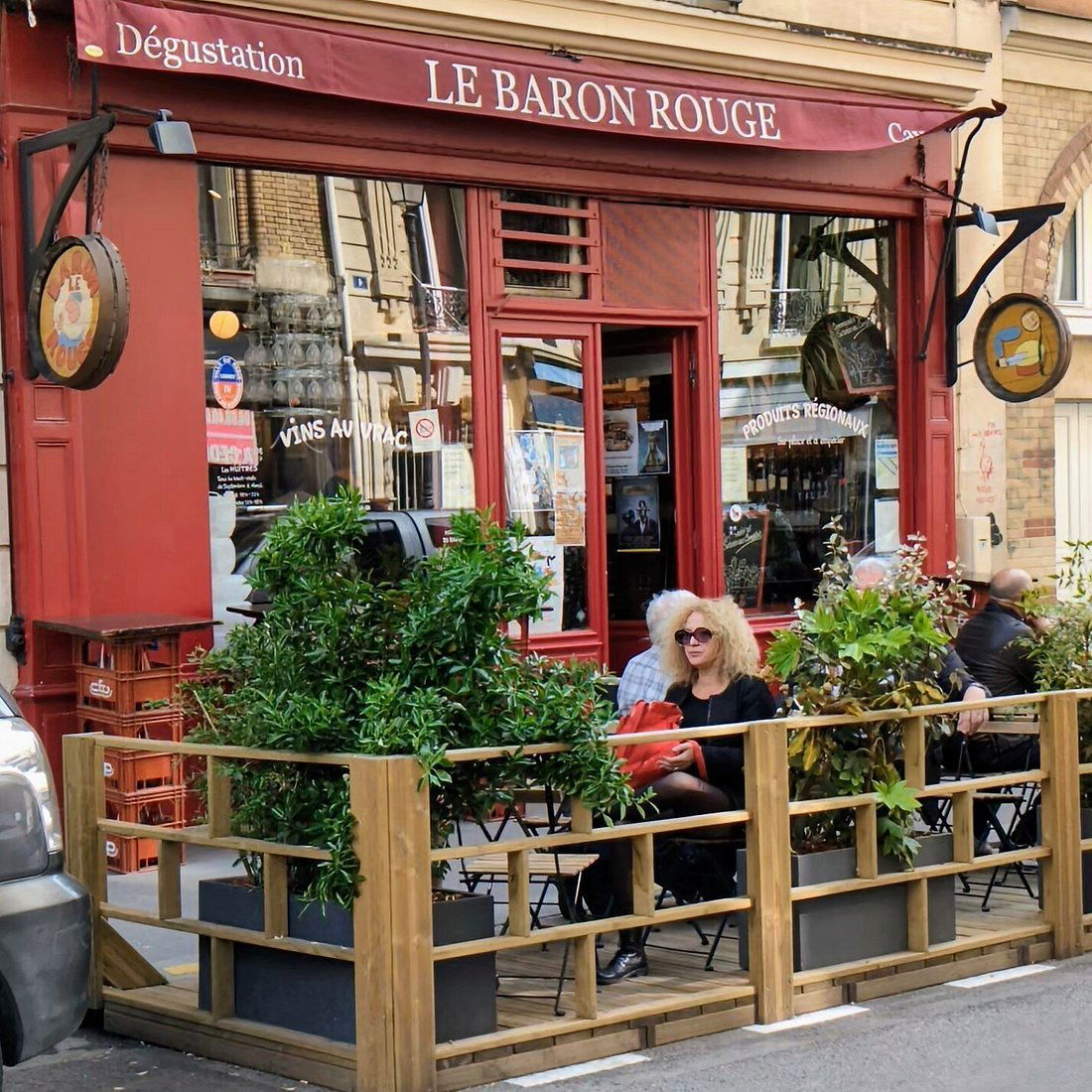
Le Baron Rouge sits at the heart of the 12th arrondissement's market culture, drawing locals and knowing visitors to its barrel-lined walls for affordable wine poured straight from the cask and oysters bought from the stand outside. Forget polished wine bars — this is old Paris drinking, unmediated and unhurried, operating on the logic of the neighbourhood rather than the agenda of a trend.
Where the 12th Drinks
The corner of Rue Théophile Roussel doesn't announce itself. It sits a short walk from the Marché d'Aligre, the 12th arrondissement's covered and open-air market that remains one of the few in Paris where prices still reflect the neighbourhood rather than the postcode. On weekend mornings especially, the pavement outside Le Baron Rouge fills with people who have come from the market stalls, carrying paper bags and standing with glasses at shoulder height, treating the exterior of the bar as naturally as they would a kitchen counter. That pavement culture is not an accident of popularity — it is the architecture of the place. The bar is small inside, and the street is part of the floor plan.
This corner of the 12th operates differently from the cocktail-forward bars that have reshaped drinking in the Marais and the Canal Saint-Martin districts. Paris's wine bar scene has split into two clear registers: the natural-wine shop-bar hybrid with a curated list and a blackboard menu, and the older type of cave à vins where wine comes from barrels, the selection is limited by design, and the point is drinking rather than discovery. Le Baron Rouge belongs firmly to the second category, and that positioning is not a limitation — it is the editorial proposition.
Barrels, Not Bottles
The detail that defines Le Baron Rouge for anyone who has been is the barrels. They line the walls of the interior, and staff pour directly from them. This is fût wine , wine bought in bulk by the barrel, poured into carafes or customers' own containers to take home. In Paris, the practice of bringing your own bottle to a cave and having it filled at the barrel has nearly disappeared from the urban centre. Here it persists, and that continuity gives the place a documentary quality alongside its practical one. You are not just drinking cheap wine; you are inside a format of urban wine retail that most French cities have largely retired.
The wine itself is unadorned. No vintage notes on chalkboards, no producer monologues. The expectation is that you know what you want or you ask, and either answer is fine. For visitors oriented toward the polished natural-wine bars of the 11th , places like Danico or Bar Nouveau , Le Baron Rouge can read as deliberately spartan. That reading is correct, and it is the point.
Oysters and the Market Rhythm
Seasonal eating in Paris is often discussed in the context of restaurant tasting menus, but the more instructive version of it happens at market level. At Le Baron Rouge, the seasonal signal is oysters. When the Marché d'Aligre's seafood vendors are operating, oysters appear outside the bar, shucked and served on the pavement. The pairing of cheap barrel wine and fresh-shucked oysters is not a curated concept , it is what proximity to a working market produces when the bar has been there long enough to develop the relationship. The oyster season in France runs roughly from September through April, following the old rule of months containing the letter R, which means the warmest summer months are the break. Timing a visit to Le Baron Rouge around oyster availability is as direct a piece of seasonal travel planning as Paris offers.
This relationship between bar and market also explains the morning-to-afternoon rhythm of the place. Le Baron Rouge is not a late-night venue in the way that Buddha Bar or Candelaria function. Its busiest period is tied to market hours, which means weekend mornings and early afternoons, when the 12th's residents shop and then stop. Coming in the evening is a different, quieter experience.
The 12th in Context
The Aligre neighbourhood sits in a part of Paris that does not feature heavily in most drinking itineraries. The 11th gets the cocktail bars; Saint-Germain gets the wine bars with Burgundy lists and serious glassware; the 1st gets the hotel lobbies. The 12th's drinking culture is more self-contained, oriented around residents rather than visitors, and Le Baron Rouge is the most representative address of that inward orientation. For travellers comparing it with destination bars like Candelaria, the framing needs to shift: Le Baron Rouge is not competing on cocktail craft or atmosphere design. It competes on authenticity of format and density of local life per square metre.
That same quality of neighbourhood-embedded drinking shows up in different forms across French cities. Coté Vin in Toulouse and La Maison M. in Lyon occupy analogous positions in their respective cities , wine-focused, locally rooted, operating outside the design-bar register. Bar Casa in Bordeaux tilts more wine-serious given the city's identity, while Au Brasseur in Strasbourg takes the same neighbourhood-bar logic into beer territory. The pattern across all of them is the same: these are places where the format serves the community first, and visitors enter on the community's terms.
Planning Your Visit
| Venue | Format | Leading for | Booking |
|---|---|---|---|
| Le Baron Rouge | Barrel wine, stand-up pavement drinking, seasonal oysters | Market mornings, casual wine by the carafe, neighbourhood atmosphere | No reservation , walk in |
| Danico | Cocktail bar with wine programme | Evening cocktails, curated list | Reservations advisable |
| Candelaria | Taqueria front, cocktail bar behind | Late evenings, Marais location | No reservations for bar |
| Buddha Bar | Large-format lounge and restaurant | Occasion dining, groups | Reservations recommended |
| Bar Nouveau | Natural wine bar | Wine exploration, evening sessions | Walk-in and reservations |
Le Baron Rouge sits at 1 Rue Théophile Roussel in the 12th arrondissement, a ten-minute walk from Ledru-Rollin metro (line 8) or Gare de Lyon. The Marché d'Aligre is immediately adjacent, making a market visit followed by the bar the natural sequence for a weekend morning. Arrive before noon on Saturday or Sunday for the pavement crowd at its fullest; arrive mid-afternoon for a quieter interior. No booking infrastructure exists here , this is a walk-in format by design, and the absence of a reservation system is a feature, not a gap.
For travellers moving between French cities, the same value-led, neighbourhood-embedded drinking logic is worth seeking out: Papa Doble in Montpellier and Le Café de la Fontaine in La Turbie each carry versions of this unhurried, place-specific quality, even if the format differs. And for those whose Paris itinerary extends further , to Honolulu, say, by a circuitous route , Bar Leather Apron represents the opposite pole of the drinking-bar spectrum: technically precise, reservation-driven, and intensely focused on craft. Le Baron Rouge makes the contrast vivid. See also our full Paris restaurants guide for broader context on where the 12th fits in the city's eating and drinking map.
Frequently Asked Questions
- What cocktail do people recommend at Le Baron Rouge?
- Le Baron Rouge does not operate as a cocktail bar. The programme here is wine, poured directly from barrels that line the walls of the interior. If you are after cocktails in Paris, Candelaria or Danico are the relevant addresses. At Le Baron Rouge, the order is a glass of red, white, or rosé from the barrel, or a carafe.
- What's the defining thing about Le Baron Rouge?
- The barrels. Wine poured straight from fût barrels at a corner bar beside one of Paris's last genuinely affordable markets is the format, and that format is the identity. In a city where wine bars have increasingly tilted toward curated natural-wine lists and polished service, Le Baron Rouge has held its original position: low price, no ceremony, barrel wine, and pavement standing.
- Do I need a reservation for Le Baron Rouge?
- No. Le Baron Rouge operates on a walk-in basis with no booking system. The bar is small and can fill quickly on weekend mornings when the adjacent Marché d'Aligre is running, but the pavement outside functions as overflow space, and standing outside with a glass is standard practice rather than a compromise.
- What's Le Baron Rouge a strong choice for?
- A Saturday or Sunday morning that starts at the Marché d'Aligre and moves to a glass of barrel wine and, in season (September through April), freshly shucked oysters outside the bar. It is also the right address for anyone who wants to understand how the 12th arrondissement's residents actually drink, as opposed to how Paris presents itself to visitors in the more curated neighbourhoods.
- Is Le Baron Rouge suitable for buying wine to take home?
- Yes. The cave à vins tradition of bringing your own bottle to be filled at the barrel is one of the practices Le Baron Rouge has maintained. Customers can bring containers to be filled from the barrels, a form of wine retail that has largely disappeared from central Paris. This makes it relevant not just as a place to drink on the spot, but as a source of affordable wine for self-catering stays in the city.
Recognized By

Similar venues by awards
Related editorial
- Best Fine Dining Restaurants in ParisFrom three-Michelin-star icons to the next generation of Parisian chefs pushing boundaries, these are the restaurants that define fine dining in the world's culinary capital.
- Best Luxury Hotels in RomeFrom rooftop terraces overlooking ancient ruins to Michelin-starred hotel dining, these are the luxury hotels that make Rome unforgettable.
- Best Cocktail Bars in KyotoFrom sleek lounges to hidden speakeasies, Kyoto's cocktail scene blends Japanese precision with global influence in ways you won't find anywhere else.
Save or rate Le Baron Rouge on Pearl
Keep this venue in your Pearl passport, rate it after you visit, and track it alongside every other place you collect.