
Bar in Paris, France
Le Barav
100ptsDual-Format Wine Ritual

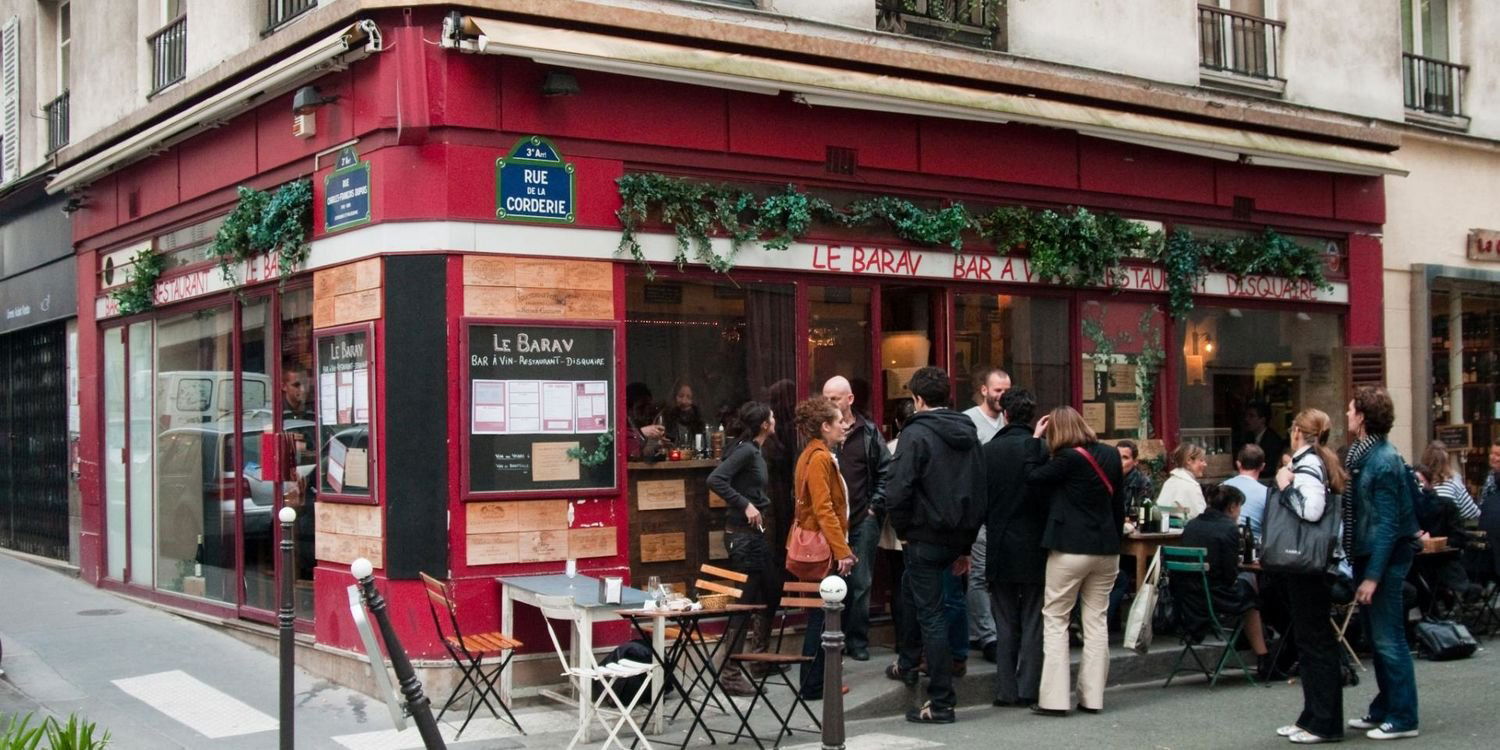
About Le Barav
In the 3rd arrondissement, Le Barav occupies a specific niche in the Marais drinking scene: a wine bar with serious cellar access and a selection that goes wide without losing focus. The format splits between street-level bar and an actual cave below, giving the ritual of choosing a bottle a physical dimension most Paris wine bars skip entirely.
The Marais and the Wine Bar Ritual
Paris wine bars have split into two distinct schools over the past two decades. The first leans natural, often scruffy, with handwritten labels and a faith-over-evidence approach to selection. The second holds to a more classical framework: a considered list, a proper cellar, and a format built around the act of choosing and drinking wine with some ceremony. Le Barav, on Rue Charles-François Dupuis in the 3rd arrondissement, belongs to the second school without being stiff about it.
The Marais is a neighbourhood where the drinking culture has always operated at a different register to the rest of Paris. It draws a mix of local residents, international visitors, and the kind of after-work crowd that wants something between a casual glass and a full restaurant experience. Wine bars here occupy an important social function: they are the stage for a particular Parisian ritual, one where the selection of a bottle is a decision taken seriously but not solemnly, and where the space between ordering and drinking carries as much weight as the wine itself.
Two Spaces, One Discipline
The physical structure of Le Barav matters because it encodes the ritual directly into the space. The ground-level bar operates as any good Paris wine bar should: accessible, convivial, a place where a glass can be ordered and enjoyed without ceremony. The cellar below changes the register. Descending into a cave to choose a bottle is a gesture with history behind it, one that repositions the drinker as participant rather than passive consumer. In a city where the theatre of the meal has always been part of the meal, this is not a trivial distinction.
Wine bars in the Marais that offer cellar access tend to attract a clientele that already knows what it wants, or wants to learn. The format encourages engagement: you browse, you ask, you handle the bottles. That tactile dimension separates this kind of establishment from spots where the list arrives on paper and the interaction is transactional. It is a format that survives precisely because it asks something of the guest in return.
The Selection as Editorial Argument
The description attached to Le Barav uses two words that carry real meaning in the wine bar context: wide and precise. These are not synonyms and they are not always compatible. A wide list without editorial discipline becomes a catalogue. A precise list without range becomes a niche exercise. The combination suggests a selection that has been built with a point of view: broad enough to accommodate different grapes, regions, and price points, tight enough that every bottle can be defended by whoever is pouring.
In Paris, this matters because the wine bar scene has become crowded at both ends. At one end, the natural wine movement has produced dozens of bars with narrow, producer-focused lists that reward the already-converted. At the other, hotel bars and brasseries offer large lists that prioritize recognition over discovery. The middle ground, occupied by places that take selection seriously without making it a statement of allegiance, is smaller than it looks. Le Barav operates in that space, and that positioning is its strongest editorial credential.
For comparison with other Paris bars working in adjacent registers, see Danico, Candelaria, Bar Nouveau, and Buddha Bar. Each represents a different axis of the Paris drinking scene, from cocktail-forward to immersive, and positions Le Barav's wine-specific focus in sharper relief.
Pacing and the Etiquette of the Glass
The wine bar ritual in Paris is governed by an unspoken pacing. You do not rush. A single glass can anchor an hour if the conversation is good and the pour is interesting. The expectation, in a place like Le Barav, is that the experience unfolds rather than executes. This is not always legible to visitors more accustomed to high-turnover bar formats, but it is the condition under which the wine tastes better and the selection makes more sense.
That pacing is also why the cellar format works. Descending to choose a bottle slows the transaction down in a productive way. The choice becomes considered. The return upstairs with something selected feels like a small achievement. These are the micro-rituals that define why certain Paris wine bars develop loyal clienteles while others, technically equivalent on paper, feel forgettable within a week of visiting.
Across France, this kind of format appears in different regional guises. In Toulouse, Coté vin approaches wine-bar culture with its own regional character. In Lyon, La Maison M. operates in a city where the relationship between food, wine, and pace has its own long tradition. In Bordeaux, Bar Casa Bordeaux sits in a city whose entire identity is built around wine selection. Comparing these against a Marais wine bar underlines how much context shapes the ritual, even when the format is superficially similar.
Further afield, the wine bar and neighbourhood bar formats vary sharply: Papa Doble in Montpellier, Au Brasseur in Strasbourg, Le Café de la Fontaine in La Turbie, and even Bar Leather Apron in Honolulu each represent how drinking culture adapts to geography and local expectation. Le Barav's specific Parisian version of that ritual, anchored in a historic neighbourhood with a dual-space format, is a distinct expression of the form.
Planning Your Visit
| Venue | Format | Location (Paris) | Walk-in Friendly |
|---|---|---|---|
| Le Barav | Wine bar + cellar | Marais, 3rd arr. | Generally yes |
| Danico | Cocktail bar | 2nd arr. | Yes |
| Candelaria | Cocktail/taqueria | Marais, 3rd arr. | Yes, can queue |
| Bar Nouveau | Natural wine/bar | Paris | Yes |
| Buddha Bar | Bar/restaurant | 8th arr. | Reservation advised |
Le Barav sits on Rue Charles-François Dupuis in the 3rd arrondissement, a short walk from the Place de la République and the upper Marais. No booking method is confirmed in available data; arriving without a reservation is the standard approach for Paris wine bars in this format, though evenings on weekends will fill the bar-level space quickly. For a broader view of Paris drinking and dining, see our full Paris restaurants guide.
Frequently Asked Questions
- What is the main draw of Le Barav?
- The combination of a street-level bar and an accessible cellar below is what positions Le Barav differently within the Marais. In a neighbourhood with a concentrated bar scene, the ability to descend into the cave and choose a bottle rather than order from a printed list gives the visit a different quality. The wine selection is described as wide and precise, two criteria that do not always overlap in Paris bar culture.
- Does Le Barav serve cocktails?
- Le Barav is a wine bar, not a cocktail bar. Its focus is wine across both the bar and cellar format, which is consistent with the 3rd arrondissement's longer tradition of serious wine-drinking spaces rather than spirit-led programs. For cocktail-specific addresses in the same city, Danico and Candelaria operate on a different premise entirely.
- Do they take walk-ins at Le Barav?
- No confirmed reservation system appears in available data for Le Barav, and the wine bar format in this part of Paris typically supports walk-in visits. That said, the Marais draws significant foot traffic on weekends and on warm evenings when terrace and bar space compresses quickly. Arriving earlier in the evening gives the leading chance of settling in without a wait. For confirmed booking policies, checking directly with the venue before a visit is advisable.
- What kind of wine list does Le Barav carry, and is it suited to wine novices?
- Le Barav's selection is described as wide and precise, a combination that in Paris wine bar terms usually signals range across regions and styles alongside enough curation to give direction. That kind of list tends to work for guests at different levels of familiarity, because the breadth offers entry points and the precision means staff can guide choices. The cellar format, where guests can browse physical stock, makes the process more accessible than a densely annotated paper list, which is one reason the dual-space model endures in the city.
Recognized By

Similar venues by awards
Related editorial
- Best Fine Dining Restaurants in ParisFrom three-Michelin-star icons to the next generation of Parisian chefs pushing boundaries, these are the restaurants that define fine dining in the world's culinary capital.
- Best Luxury Hotels in RomeFrom rooftop terraces overlooking ancient ruins to Michelin-starred hotel dining, these are the luxury hotels that make Rome unforgettable.
- Best Cocktail Bars in KyotoFrom sleek lounges to hidden speakeasies, Kyoto's cocktail scene blends Japanese precision with global influence in ways you won't find anywhere else.
Save or rate Le Barav on Pearl
Keep this venue in your Pearl passport, rate it after you visit, and track it alongside every other place you collect.