
Bar in Paris, France
Hôtel Parister
100pts9th Arrondissement Cocktail Anchor
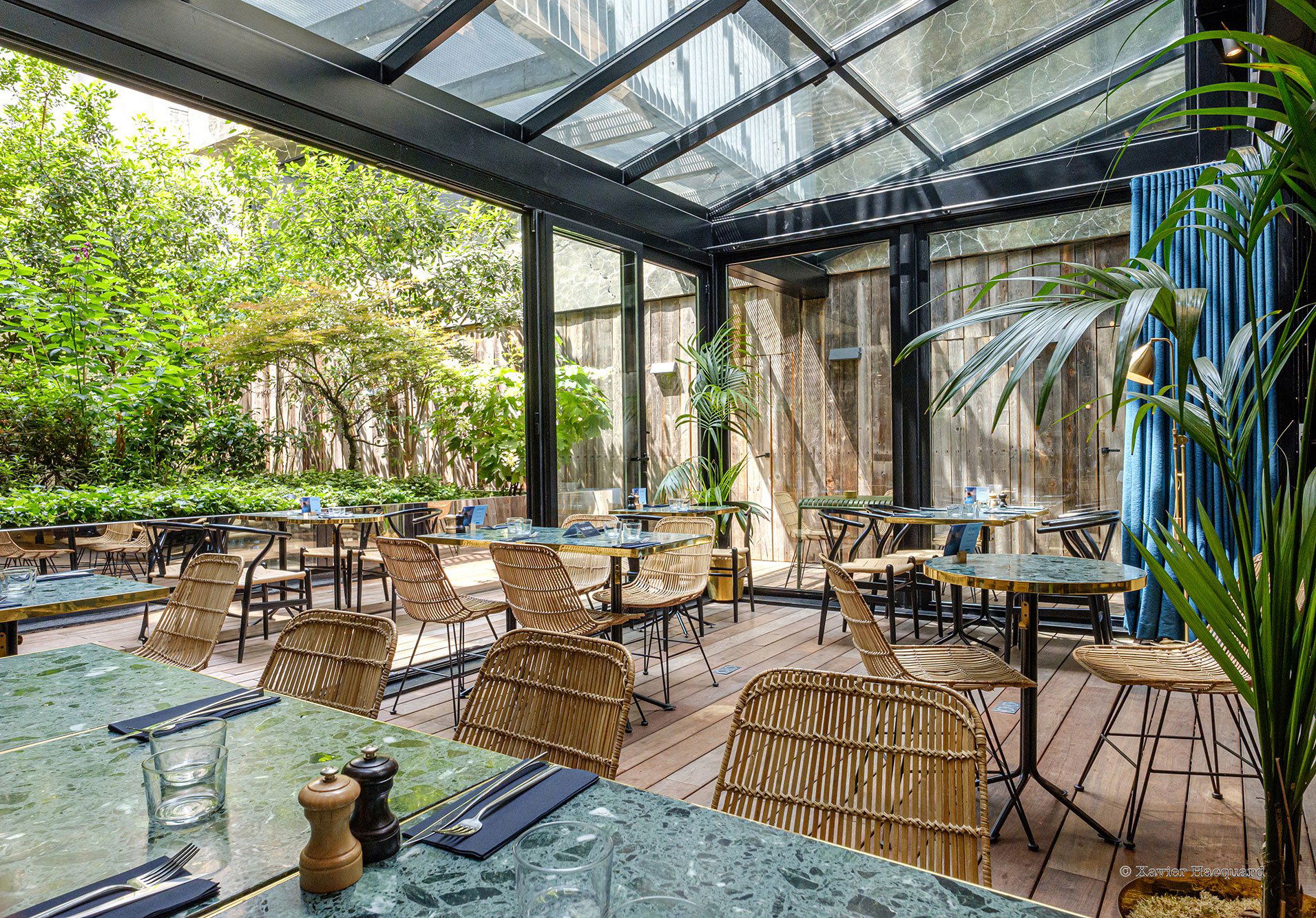
About Hôtel Parister
Hôtel Parister occupies a quiet address on Rue Saulnier in Paris's 9th arrondissement, a neighbourhood that has spent the last decade redefining what a Paris hotel bar can mean. Sitting between the grands boulevards and the Pigalle corridor, the property draws guests who want proximity to the city's most active drinking and dining quarter without the boulevard-facing noise.
The 9th Arrondissement and the Hotel Bar Moment
Paris's 9th arrondissement has undergone a measurable shift since the early 2010s. The triangle between Opéra, Pigalle, and the grands boulevards now carries a density of serious bars, natural wine counters, and chef-driven neighbourhood bistros that rivals anything in the Marais or Saint-Germain. Hotels in this zone are no longer incidental accommodation stops; the better ones have become anchors in a drinking and dining circuit that locals treat as their own. Hôtel Parister, at 19 Rue Saulnier, sits inside that circuit rather than apart from it.
Rue Saulnier itself is a secondary street, which in Paris terms is almost always an advantage. The approach is quiet relative to the Boulevard Haussmann traffic two blocks south, and the building's facade signals restraint over spectacle. That kind of positioning has become a recognisable pattern among Paris's design-conscious mid-scale hotels: addresses that earn attention through editorial coverage and neighbourhood integration rather than lobby grandeur.
A Bar Scene Anchored in the 9th
The 9th has a particular claim on Paris's cocktail conversation. Candelaria established the model for the serious back-bar in the adjacent Marais corridor, while Danico brought a product-led, technique-forward format to the Palais-Royal orbit. What has happened in the 9th specifically is a softer version of that same transition: hotel bars and standalone venues have converged on a format where the bar program carries as much weight as the room count.
Bar Nouveau represents one strand of this, building a menu around classic technique with contemporary sourcing. Buddha Bar, further west, anchors the higher-volume end of Paris's hotel-adjacent drinking scene. Hôtel Parister occupies territory between those two poles: small enough to be intimate, positioned in a neighbourhood with genuine bar credibility.
The broader French pattern is worth noting here. Cities like Lyon (La Maison M.), Bordeaux (Bar Casa Bordeaux), and Toulouse (Coté vin) have each developed hotel bar formats that pull from local production while applying technique borrowed from Paris and London. The 9th sits at the leading of that hierarchy, as the source market rather than the imitator.
Local Ingredients, Global Technique
The intersection of French agricultural production and internationally trained bartending is one of the more productive tensions in contemporary Paris drinking. France has a depth of agricultural raw material, from Normandy calvados to Provençal herbs to Alsatian eau-de-vie, that bartenders trained in London, New York, or Tokyo bring back and apply with techniques those regions developed partly because they lacked France's ingredient base. The result, at its leading, is a glass where the terroir is French and the construction is international.
Paris's cocktail bars have been more disciplined about this intersection than the restaurant world has. At venues like Candelaria, the influence is explicitly Latin American, transplanted to a Paris address and adapted to local product. The comparison extends internationally: Bar Leather Apron in Honolulu applies Japanese precision to Pacific ingredients; Papa Doble in Montpellier draws on Hemingway-era reference points filtered through southern French production. Hotel bars in the 9th occupy a version of that same conversation, with the additional pressure of serving guests whose reference points are global.
For Hôtel Parister, the address on Rue Saulnier places it within easy reach of that bar ecosystem. Guests who want to move from a well-made in-house drink to an exploratory evening in the 9th have the neighbourhood infrastructure to do it. Au Brasseur in Strasbourg and Le Café de la Fontaine in La Turbie each illustrate how regional French hospitality has built on local ingredient specificity; the 9th does the same at a more concentrated, urban scale.
Neighbourhood Positioning and the 9th's Competitive Set
The 9th arrondissement's hotel tier has fragmented in interesting ways. At one end sit the grand boulevard addresses, where room counts are high and bar programs are an afterthought to the lobby. At the other end, a cluster of smaller properties has leaned into design and neighbourhood integration as their primary differentiator. Hôtel Parister belongs to the latter group by address and scale, operating on a street where the surrounding blocks support the kind of low-key, informed hospitality that the neighbourhood now does well.
For travellers coming to Paris specifically for the dining and drinking circuits of the 9th, 10th, and 18th, the Rue Saulnier address is a practical advantage. The Folies Bergère is steps away. The wine bars and natural wine shops of the nearby Faubourg Montmartre are within a ten-minute walk. The distance to the grands boulevards Métro stations keeps central Paris accessible without placing the hotel in the mid-boulevard noise corridor.
That positioning also places it in a peer set that includes design-led boutique hotels across French cities, each of which has had to answer the same question: does the bar and food program justify the room premium over a standard three-star address? In the 9th, the surrounding neighbourhood partially answers that question for any hotel that manages its integration well. The street itself does part of the work.
Planning a Stay: What to Know
Know Before You Go
- Address: 19 Rue Saulnier, 75009 Paris, France
- Arrondissement: 9th, between Opéra and Pigalle, close to the Folies Bergère
- Metro access: Cadet (line 7) and Grands Boulevards (lines 8/9) are both within a short walk, connecting to central Paris and the northern arrondissements
- Booking: Check the hotel's official channels directly; the 9th peaks in spring and September for both leisure and trade travel, so early planning applies
- Nearby anchors: The drinking and dining circuit of the 9th runs along Rue des Martyrs, the Pigalle bar cluster, and the Faubourg Montmartre wine bar strip
Frequently Asked Questions
- What's the defining thing about Hôtel Parister?
- The address is the argument. Rue Saulnier places the hotel inside the 9th arrondissement's bar and dining circuit rather than adjacent to it, which matters in a neighbourhood that now functions as one of Paris's most active evening destinations. For travellers whose Paris itinerary centres on the northern arrondissements, the location removes the Métro calculation that midtown and Left Bank hotels require.
- What's the must-try cocktail at Hôtel Parister?
- Without a verified current drinks list, recommending a specific serve would be speculative. What the 9th's bar culture does well, and what the better hotel bars in the neighbourhood reflect, is the application of international technique to French agricultural spirits: calvados, gentian-based liqueurs, and Alsatian eau-de-vie feature prominently in serious Paris bar programs. Check the current menu on arrival and ask the bar team what they're working with from French producers.
- How far ahead should I plan for Hôtel Parister?
- Paris's 9th arrondissement peaks in April through June and again in September, when fashion and trade calendars overlap with leisure travel. If your dates fall inside those windows, booking several weeks in advance is prudent for the better boutique-scale properties in the neighbourhood. Outside peak periods, the 9th remains busy but lead times shorten. Confirm directly with the hotel for current availability and rate structures.
- What kind of traveller is Hôtel Parister a good fit for?
- Guests who plan their Paris trips around a specific neighbourhood rather than a monument itinerary will find the Rue Saulnier address directly useful. The 9th suits travellers who want proximity to the Pigalle bar circuit, the Faubourg Montmartre bistro strip, and the Opéra quarter without committing to a grand boulevard hotel format. It is less suited to travellers whose primary anchors are the Louvre or the Marais, where the Métro connection adds friction.
- How does Hôtel Parister relate to the broader design-hotel movement in Paris's northern arrondissements?
- The 9th and 10th arrondissements have produced a generation of smaller hotels that compete on design and neighbourhood integration rather than room count or lobby scale. Hôtel Parister at 19 Rue Saulnier sits within that cohort, where the value proposition is access to a specific urban quarter rather than a generalised Paris address. For reference, see our full Paris restaurants and bars guide for the broader neighbourhood context across the city's arrondissements.
Related editorial
- Best Fine Dining Restaurants in ParisFrom three-Michelin-star icons to the next generation of Parisian chefs pushing boundaries, these are the restaurants that define fine dining in the world's culinary capital.
- Best Luxury Hotels in RomeFrom rooftop terraces overlooking ancient ruins to Michelin-starred hotel dining, these are the luxury hotels that make Rome unforgettable.
- Best Cocktail Bars in KyotoFrom sleek lounges to hidden speakeasies, Kyoto's cocktail scene blends Japanese precision with global influence in ways you won't find anywhere else.
Save or rate Hôtel Parister on Pearl
Keep this venue in your Pearl passport, rate it after you visit, and track it alongside every other place you collect.