
Bar in Paris, France
Café Ventura
100ptsNeighbourhood Counter Culture
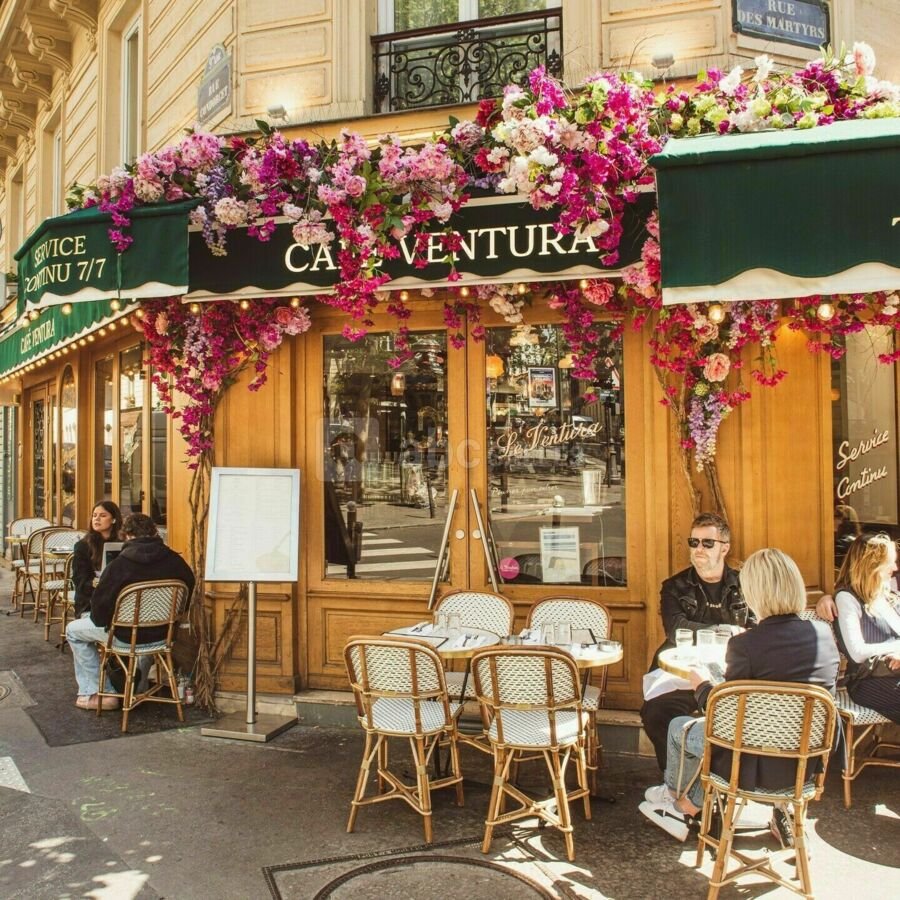
About Café Ventura
On the lower slopes of Montmartre, Café Ventura at 58 Rue des Martyrs sits inside a neighbourhood that has been reshaping Paris's casual drinking culture for the better part of a decade. The bar operates in the tradition of the craft-forward, neighbourhood-rooted café, where the person behind the counter sets the tone as much as the menu does. It belongs to a tier of Paris drinking establishments where technique and hospitality pull in the same direction.
Rue des Martyrs and the Neighbourhood Bar as Craft Statement
There is a particular quality to Rue des Martyrs on a weekday afternoon: the street tilts upward toward Montmartre, the shuttered fromageries and wine merchants on the lower stretch give way to busier café terraces as you climb, and the whole corridor hums with the low-grade energy of a neighbourhood that hasn't fully surrendered to tourism. At number 58, Café Ventura occupies a position that is less about destination dining and more about the kind of place that earns its regulars slowly, through consistency and a clear point of view on what a drink should be.
The 9th arrondissement has been repositioning itself for some time. South Pigalle, which the neighbourhood's residents shortened to SoPi long before the city's press caught up, became the proving ground for a generation of Paris bar operators who were less interested in the Belle Époque grand café template and more interested in what was happening in cocktail programs in London, Copenhagen, and New York. That context matters for understanding where Café Ventura sits: not as an outlier, but as part of a broader pattern of bars in this district that take the person behind the bar seriously as the primary product.
The Bartender as the Bar's Argument
Across the better drinking establishments in Paris, the craft-bar movement of the 2010s produced a generational shift in how the role of the bartender is understood. In the older café tradition, the barman was a fixture, almost architectural, present and efficient but rarely the reason anyone showed up. That model has been challenged, particularly in neighbourhoods like the 9th and the 11th, by bars where the training, the sourcing decisions, and the hospitality approach of the person on shift become the bar's primary offer.
Café Ventura operates within this tradition. Without a confirmed public-record breakdown of its program, what can be mapped from its address and category is the competitive set it inhabits: bars in this part of Paris are evaluated by their peers and by the city's more attentive drinkers on the quality of the pour, the intelligence of the back bar, and whether the person serving has enough curiosity to explain what they are doing and why. That last quality, the willingness to make the drink legible without making it didactic, separates the better operations from the merely competent ones.
This craft-first orientation in Paris bars is increasingly verifiable through the trajectory of venues that have attracted critical recognition. Danico and Candelaria represent two poles of the same shift: one technically austere, the other rooted in Latin-inflected informality, but both organised around what the bartender knows and what they do with that knowledge. Bar Nouveau extends the conversation into a more explicitly contemporary register. Café Ventura's position on the Martyrs axis places it in dialogue with all three, even if the format is more neighbourhood-facing than scene-making.
How Rue des Martyrs Compares to the Broader Paris Bar Circuit
Paris's drinking geography has never been fully centralised. The grands cafés of Saint-Germain carry a literary heritage that functions more as real estate value than as an active bar culture. The hotel bars, including Buddha Bar, operate on a different axis entirely: spectacle and scale, priced against international clientele rather than the local palate. What distinguishes the 9th arrondissement bar scene, and what Café Ventura participates in, is the preference for smaller format and closer contact between guest and bartender.
That format has found parallels across French cities. La Maison M. in Lyon and Coté vin in Toulouse work within similar logic: the bar as a tightly controlled environment where the bartender's choices are visible in every decision from glassware to garnish. Papa Doble in Montpellier and Bar Casa Bordeaux point to how this model has spread beyond the capital. Even further afield, Au Brasseur in Strasbourg and Le Café de la Fontaine in La Turbie reflect how France's smaller drinking establishments have developed sharper identities than a decade ago. Internationally, the craft-forward neighbourhood bar archetype that Café Ventura represents has found expression in places as distant as Bar Leather Apron in Honolulu, where a similar emphasis on bartender training and hospitality discipline has produced critical recognition in a very different context.
The comparison is useful because it frames what to expect from Café Ventura: not theatrical excess, not a list built around novelty spirits for their own sake, but a bar that earns repeat visits through reliability and through the kind of attention to the glass that comes from a program with a real point of view.
What the Address Tells You About the Experience
58 Rue des Martyrs sits on the street's mid-section, above the cluster of food shops near Notre-Dame-de-Lorette and below the sharper tourist traffic at the Montmartre boundary. This geography is not incidental. Bars on this stretch draw a mix of neighbourhood residents, people visiting the street specifically for its food and drink concentration, and the kind of passing trade that comes from a corridor with genuine foot traffic at most hours. The result is a clientele that skews local in the leading sense: people who know what they want and notice when it's done correctly.
For a wider view of Paris drinking and eating, our full Paris restaurants guide maps the city's bars, restaurants, and hotel dining across all arrondissements and price points.
Know Before You Go
- Address: 58 Rue des Martyrs, 75009 Paris, France
- Neighbourhood: South Pigalle (SoPi), 9th arrondissement
- Nearest Metro: Notre-Dame-de-Lorette (line 12) or Saint-Georges (line 12), both within a short walk
- Booking: No confirmed online booking data available; walk-in approach consistent with neighbourhood bar format
- Hours: Not confirmed in available data; check directly with the venue before visiting
- Price range: Not confirmed; consistent with mid-tier Paris neighbourhood bar pricing based on address and category
- Phone/website: Not publicly listed in current data
Frequently Asked Questions
Is Café Ventura more low-key or high-energy?
Based on its address and format, Café Ventura sits in the low-key register typical of the better neighbourhood bars in Paris's 9th arrondissement. The SoPi bar scene generally favours smaller, more considered environments over high-volume programming. Without confirmed awards or a high-visibility critical profile, the bar functions within the local rather than destination tier, which in practice means a quieter, more convivial atmosphere than the city's larger or more publicised venues. That profile can shift with time and recognition, but the current data points to a neighbourhood-facing operation.
What's the signature drink at Café Ventura?
No confirmed menu data or awards documentation is available that would identify a signature drink at Café Ventura. What can be said is that bars operating in this part of Paris, in dialogue with the craft-forward programs at venues like Danico and Candelaria, tend to anchor their offer around technically precise cocktails or well-chosen back-bar selections rather than novelty-led menus. Any specific drink recommendation would require a visit or direct confirmation from the venue.
Is Café Ventura connected to any particular cocktail tradition or cuisine style?
The venue's cuisine type and specific bar philosophy are not documented in available records, which is itself informative: Café Ventura does not appear to operate primarily as a concept-driven or cuisine-anchored destination. Its position on Rue des Martyrs, a street with a strong food-and-drink identity in the 9th arrondissement, places it within a neighbourhood context where quality of execution tends to matter more than adherence to a single national tradition. Visitors looking for a confirmed speciality should contact the venue directly before visiting.
Related editorial
- Best Fine Dining Restaurants in ParisFrom three-Michelin-star icons to the next generation of Parisian chefs pushing boundaries, these are the restaurants that define fine dining in the world's culinary capital.
- Best Luxury Hotels in RomeFrom rooftop terraces overlooking ancient ruins to Michelin-starred hotel dining, these are the luxury hotels that make Rome unforgettable.
- Best Cocktail Bars in KyotoFrom sleek lounges to hidden speakeasies, Kyoto's cocktail scene blends Japanese precision with global influence in ways you won't find anywhere else.
Save or rate Café Ventura on Pearl
Keep this venue in your Pearl passport, rate it after you visit, and track it alongside every other place you collect.