
Bar in Oakland, United States
Palmetto
100ptsUptown Sustainability Bar
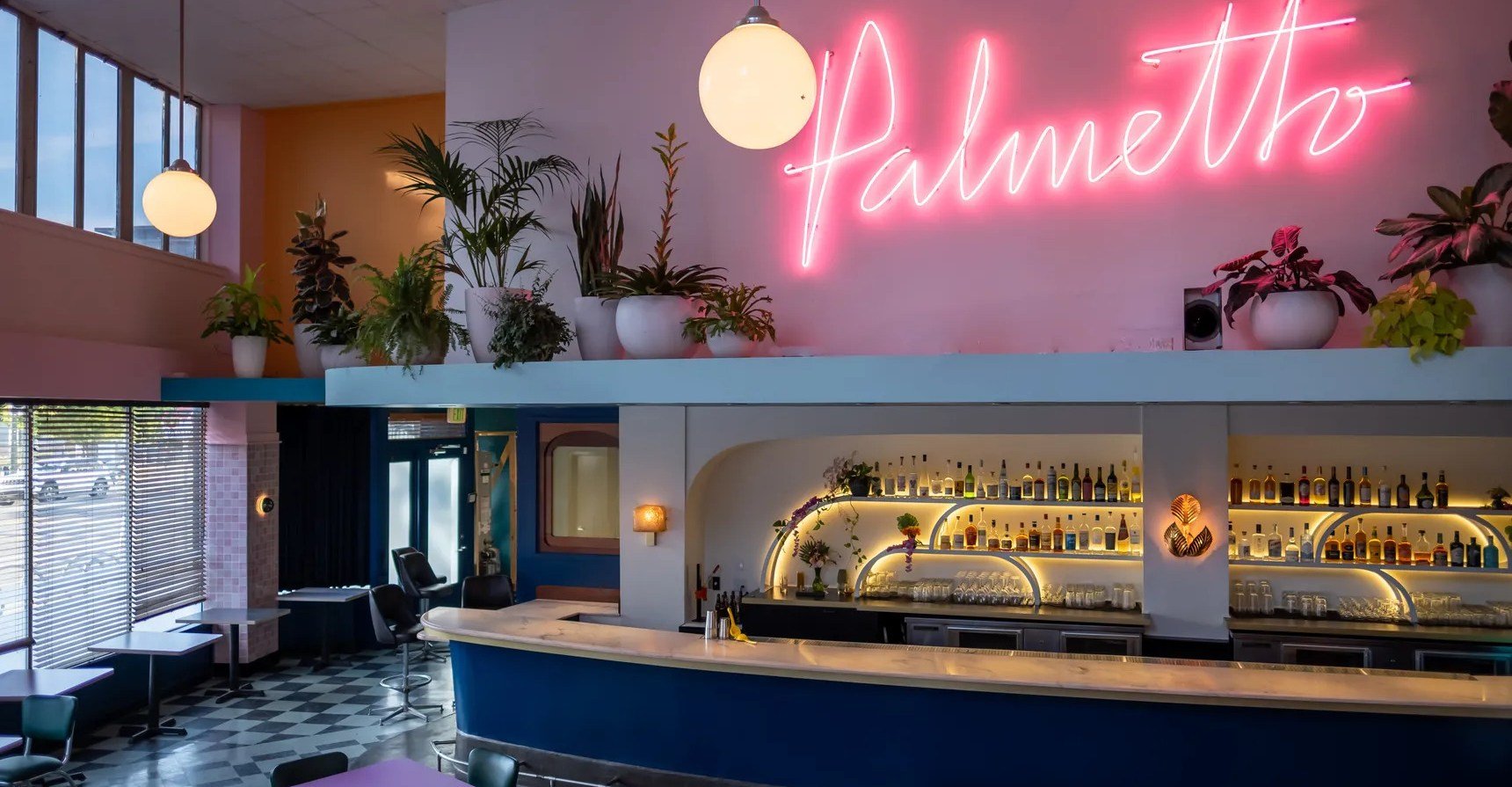
About Palmetto
Palmetto occupies a Telegraph Avenue address in Uptown Oakland, a stretch that has anchored the neighborhood's evolving bar and restaurant scene through multiple cycles of reinvention. With sparse public data available, the venue sits in a city whose independent hospitality scene continues to develop its own identity separate from San Francisco's longer-established reputation.
Telegraph Avenue and the New Oakland Bar Register
Walk north along Telegraph Avenue through Uptown Oakland on a weekday evening and the streetscape tells a story about how the city drinks now. The corridor between the Fox Theater and the Pill Hill neighborhood has become a testing ground for bars that take their environmental obligations as seriously as their programs. Palmetto, at 1900 Telegraph Ave, occupies a spot on that stretch where the indoor-outdoor threshold softens the boundary between the building and the block it sits on. The physical approach, past the kind of low-key signage that Oakland tends to favor over marquee branding, signals immediately that the room is not performing luxury so much as practicing it quietly.
Oakland's Sustainability Tier: What It Actually Means Behind the Bar
Across the American bar scene, sustainability language has split into two camps: marketing cover applied to conventional operations, and structural commitments that change what ends up in the glass and what ends up in the bin. Oakland's more considered bars have consistently leaned toward the latter. The East Bay's proximity to Northern California's farm belt, its farmers' markets, and its deep culture of ingredient-forward cooking creates conditions where sourcing decisions are easier to make and harder to fake. Bars along the Telegraph and Piedmont corridors have benefited from the same supply infrastructure that drives the region's restaurant reputation, which means local spirits, foraged or locally grown botanicals, and low-waste production approaches show up as genuine operational choices rather than aspirational copy.
Palmetto sits within that framework. Without detailed sourcing documentation in the public record, it would be overreaching to itemize every decision the bar makes in this direction. What the location and the Uptown context do indicate is that the venue operates in a neighborhood where ingredient provenance and waste reduction have become baseline expectations rather than differentiators. In Oakland's current bar culture, as represented by spots like 13 Orphans and Bay Grape, the conversation has moved past whether to prioritize sustainability to how rigorously to apply it.
How Palmetto Compares to Its Oakland Neighbors
Oakland's current bar tier is more differentiated than it gets credit for in national coverage, which tends to compress the city into a shadow narrative about San Francisco. The Uptown neighborhood specifically has built a cluster of bars with distinct identities: alaMar Dominican Kitchen works the intersection of Caribbean cooking and Bay Area ingredients; Belotti Ristorante E Bottega anchors Italian wine and spirits within a more traditional dining framework. Palmetto occupies a position that is distinct from both, oriented more toward the cocktail-program model than the kitchen-led approach. For a broader read of how Oakland's venues stack against one another, the full Oakland restaurants guide maps the competitive set in more detail.
The national frame is also useful here. Cocktail bars in mid-size American cities have been navigating the post-speakeasy transition with varying degrees of success, and the bars that have fared leading are those that built genuine technical depth rather than relying on theatrical presentation. Kumiko in Chicago represents one version of that shift, with a Japanese-influenced precision program that treats the bar as a laboratory. Jewel of the South in New Orleans anchors itself in regional heritage. Julep in Houston takes Southern traditions as its organizing principle. ABV in San Francisco, across the Bay, is perhaps the most direct regional peer in terms of format and ambition. What connects the stronger entries in this tier is a commitment to specificity: the program knows what it is, and the physical space supports that identity rather than working against it.
The Ordering Logic
Without access to a current menu, recommending specific drinks at Palmetto would be irresponsible. What the Uptown Oakland context suggests is that the bar's program, like those of its neighbors, rewards guests who engage with what is seasonal and local rather than defaulting to familiar international spirits. The East Bay bar culture that has developed around venues like this one tends to feature house-made ingredients, reduced-waste approaches to citrus and botanical use, and a preference for producers with verifiable sourcing credentials. Bars operating in this tier also tend to rotate menus with more frequency than their counterparts in more conservative markets, which means the leading approach is to ask what has recently arrived rather than arriving with fixed expectations.
Internationally, bars with strong sustainability programs, such as The Parlour in Frankfurt on the Main or Bar Leather Apron in Honolulu, have shown that environmental rigor does not require sacrificing depth or craft. The same logic applies in Oakland, where the constraints of thoughtful sourcing tend to push programs toward more creative solutions rather than narrower ones. Superbueno in New York City offers a comparable example of how a clear ingredient philosophy can generate a distinctive program identity.
Planning Your Visit
Palmetto's address at 1900 Telegraph Ave places it in the center of Uptown Oakland, a walkable stretch that connects easily to the 19th Street BART station, making it accessible from San Francisco without requiring a car. The Uptown neighborhood is most active from Thursday through Saturday evenings, though Oakland's bar culture tends to run earlier in the evening than comparable San Francisco venues, with many programs hitting their stride between 7 and 10 pm. Given the area's density of worthwhile bars, Palmetto fits naturally into a multi-stop evening that could include the Telegraph Ave and Grand Ave corridors without requiring significant travel between stops.
Frequently Asked Questions
- What's the vibe at Palmetto?
- Palmetto operates in Uptown Oakland's cocktail corridor, where the prevailing mode is considered and low-key rather than high-concept theatrical. The 1900 Telegraph Ave address puts it in a neighborhood with a dense bar scene, which tends to attract a crowd that is familiar with craft programs and expects ingredient transparency. It sits closer to the Oakland independent bar register than to anything flashy or tourist-facing, with pricing and format that align it with the city's mid-to-upper tier.
- What's the leading thing to order at Palmetto?
- Specific menu details are not available in the current public record, but bars in Palmetto's tier and neighborhood context typically reward guests who ask after seasonal or rotating items rather than ordering from a fixed mental list. The East Bay's supply infrastructure means that whatever is most local and most recently sourced is usually also the most well-executed on the menu. Engaging with the bar staff about current offerings tends to produce better results than arriving with a predetermined order.
- What is Palmetto leading at?
- Within Oakland's current bar field, Palmetto's position on Telegraph Ave aligns it with the group of venues that prioritize program integrity over volume. The Uptown context, where bars like Bay Grape and 13 Orphans have set expectations for quality and seriousness, suggests a bar built around consistency and craft rather than spectacle. It is not the city's highest-profile entry, but it operates in a neighborhood where that kind of understated reliability is both common and valued.
- How does Palmetto fit into Oakland's sustainability-focused bar scene?
- Oakland's Uptown district has become one of the Bay Area's clearest examples of sustainability moving from talking point to operational standard. Bars in the Telegraph Ave corridor benefit from direct access to Northern California's agricultural supply chain, which enables genuine local sourcing rather than aspirational claims. Palmetto's location within this district places it in a peer group, alongside venues like alaMar Dominican Kitchen and Belotti Ristorante E Bottega, where the bar's ingredient sourcing, waste practices, and producer relationships are part of the customer conversation rather than back-of-house footnotes.
Related editorial
- Best Fine Dining Restaurants in ParisFrom three-Michelin-star icons to the next generation of Parisian chefs pushing boundaries, these are the restaurants that define fine dining in the world's culinary capital.
- Best Luxury Hotels in RomeFrom rooftop terraces overlooking ancient ruins to Michelin-starred hotel dining, these are the luxury hotels that make Rome unforgettable.
- Best Cocktail Bars in KyotoFrom sleek lounges to hidden speakeasies, Kyoto's cocktail scene blends Japanese precision with global influence in ways you won't find anywhere else.
Save or rate Palmetto on Pearl
Keep this venue in your Pearl passport, rate it after you visit, and track it alongside every other place you collect.