
Bar in Oakland, United States
Coach Sushi
100ptsNeighborhood Omakase Counter
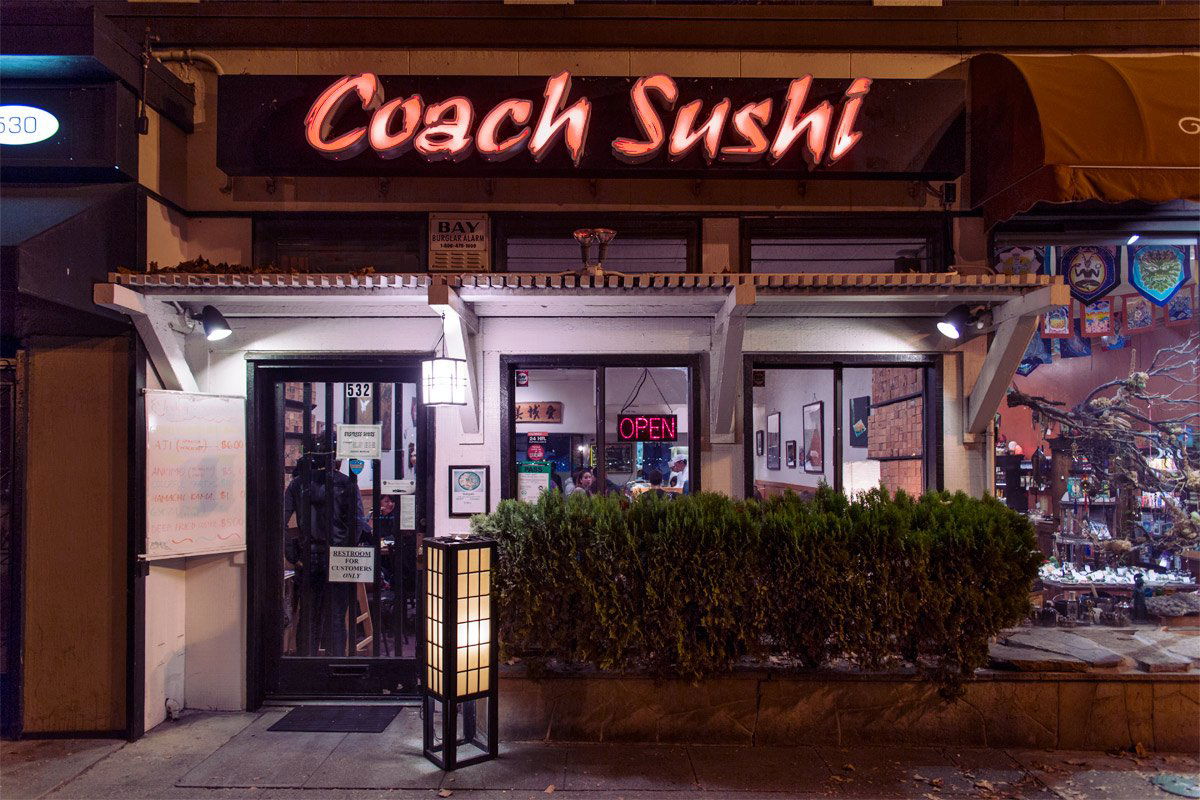
About Coach Sushi
Coach Sushi occupies a modest Grand Avenue address in Oakland's Grand Lake neighborhood, operating in a city where Japanese dining has moved from strip-mall standbys to a more considered, neighborhood-rooted format. It sits in the middle tier of the Bay Area's sushi scene — accessible enough for a Tuesday dinner, serious enough to draw repeat customers from across the East Bay.
Grand Lake and the Sushi Counter in Context
Grand Avenue runs through one of Oakland's more residential dining corridors, where the foot traffic comes less from tourists and more from neighbors who have decided this stretch is worth walking to on a weeknight. The blocks around Grand Lake have accumulated a particular kind of restaurant culture over the past decade: independent, format-specific, and disinclined toward the kind of volume-first thinking that defines dining near the larger Bay Area transit hubs. Our full Oakland restaurants guide maps how this pattern repeats across the city's distinct neighborhoods, but Grand Lake is among the clearer examples of it.
Coach Sushi sits inside that logic. The address at 532 Grand Ave places it in a neighborhood where diners are already primed for the kind of focused, single-cuisine experience that a sushi counter represents. Oakland's Japanese dining scene has shifted considerably in the past several years, moving away from the all-things-to-all-people Japanese restaurant model and toward more format-disciplined operations. Coach fits that shift, operating as a sushi-forward venue in a neighborhood that supports exactly that kind of commitment.
The Bay Area Sushi Tier and Where Oakland Fits
The Bay Area sushi market is structured around several distinct tiers. San Francisco and the South Bay hold most of the high-end omakase counters — the reservation-months-ahead, price-on-request end of the spectrum. Oakland has historically operated in a different register, offering more accessible price points and formats that emphasize neighborhood regulars over destination dining. That is not a concession; it reflects a different kind of value proposition, one that prioritizes consistency and proximity over occasion-dining theater.
Coach Sushi occupies this middle ground in the East Bay. It is the kind of place that draws comparisons to the better neighborhood sushi operations in cities like Honolulu, where venues such as Bar Leather Apron have demonstrated that quality and neighborhood accessibility are not mutually exclusive categories. The broader pattern across American cities is one where focused, format-disciplined venues serving a consistent neighborhood audience often outlast the destination-dining plays that over-use hype and under-deliver on repeat visits.
Within Oakland specifically, the comparison set includes operations that have staked out distinct culinary territory. alaMar Dominican Kitchen has done this with Caribbean flavors, and Belotti Ristorante E Bottega has held a consistent Italian position for years. Coach Sushi occupies a parallel position in Japanese cuisine, serving a neighborhood that has demonstrated it will support focused independent operations over the long run.
Atmosphere and Physical Experience
Grand Lake dining tends toward the informal-but-considered end of the spectrum. The physical environments along this corridor are rarely grand; they are scaled for the neighborhood rather than for a moment on a national list. What that means in practice is that the atmosphere at a venue like Coach Sushi is defined more by the regularity of the room — the counter format, the proximity to the kitchen's work , than by design statements or theatrical lighting.
Sushi counters in this price tier across American cities have converged on a fairly consistent atmospheric logic: clean surfaces, a kitchen visible enough to signal confidence in the preparation, and a pace that moves faster than an omakase counter but slower than a roll-and-delivery operation. The experience is legible without being flashy. In cities where cocktail programs have developed a similar clarity of purpose , venues like Kumiko in Chicago or Jewel of the South in New Orleans , the format discipline itself becomes the atmosphere. Coach Sushi operates on a version of that principle applied to Japanese dining in Oakland.
Drinks and the East Bay Bar Context
Oakland's drinks culture has matured alongside its food scene, and the Grand Lake corridor benefits from that broader development. The question of what to drink at a neighborhood sushi counter in this part of the Bay Area has a more interesting answer than it might have had ten years ago. Sake selections at venues in this tier have become more considered, reflecting both better distribution networks and a customer base that now arrives with more specific preferences.
For those who arrive early or want to extend the evening, the broader Grand Lake and Oakland neighborhood context offers options that complement the focused sushi format. Bay Grape has built a strong wine-focused reputation in the area, while 13 Orphans represents the more cocktail-forward direction Oakland's bar scene has taken. Both operate in the same neighborhood-first, format-specific register as Coach Sushi, which makes them natural companions rather than afterthoughts. Nationally, the trend toward technically serious neighborhood bars , evidenced by venues like ABV in San Francisco, Julep in Houston, Superbueno in New York City, and The Parlour in Frankfurt , has created a broader peer context in which Oakland's better operations sit comfortably.
Planning Your Visit
Grand Avenue is accessible by BART via the 19th Street Oakland station, with the walk through the Grand Lake neighborhood taking roughly fifteen to twenty minutes, or a short rideshare. Street parking along Grand Ave varies by time of day, with evenings on weekends requiring more patience than weeknight arrivals. Given the venue's neighborhood positioning, weekday dinner tends to offer a more relaxed version of the experience than peak weekend service.
For context on how this venue fits within Oakland's broader Japanese dining and independent restaurant scene, the EP Club Oakland guide provides neighborhood-level mapping of where different cuisine categories have concentrated. Those planning a wider East Bay evening might also consider pairing the meal with a stop at one of the above-mentioned neighborhood bars, several of which are within walking distance or a short drive of the Grand Avenue corridor.
Frequently Asked Questions
- What should I expect atmosphere-wise at Coach Sushi?
- Coach Sushi operates in Oakland's Grand Lake neighborhood, a residential dining corridor where the prevailing format is independent and focused rather than large-scale. The atmosphere reflects that context: counter-scale dining, a pace suited to a neighborhood regular as much as a first-time visitor, and an environment defined more by the work at the kitchen than by design gestures. It sits in the accessible mid-tier of the East Bay sushi scene, distinct from the high-price omakase counters that anchor the San Francisco and South Bay end of the market.
- What cocktail do people recommend at Coach Sushi?
- As a sushi-focused venue, the drinks program at Coach Sushi is more likely to center on sake and Japanese beer than on a cocktail list. The cuisine format and Oakland neighborhood context both point toward a beverage program that complements raw fish rather than competes with it. For those who want a cocktail before or after, the Grand Lake corridor's bar scene , including nearby 13 Orphans , offers well-developed options within easy reach.
- How does Coach Sushi fit into Oakland's broader Japanese dining scene?
- Oakland's Japanese restaurant market has shifted over the past decade toward more format-specific operations, moving away from generalist menus and toward venues with a clear culinary focus. Coach Sushi, at its Grand Avenue address, represents the neighborhood sushi counter end of that spectrum in the East Bay , a category that emphasizes consistent quality and local regulars over the destination-dining positioning that defines the higher-priced omakase counters across the Bay. It is the kind of venue that anchors a neighborhood's dining identity rather than drawing from across the region.
Related editorial
- Best Fine Dining Restaurants in ParisFrom three-Michelin-star icons to the next generation of Parisian chefs pushing boundaries, these are the restaurants that define fine dining in the world's culinary capital.
- Best Luxury Hotels in RomeFrom rooftop terraces overlooking ancient ruins to Michelin-starred hotel dining, these are the luxury hotels that make Rome unforgettable.
- Best Cocktail Bars in KyotoFrom sleek lounges to hidden speakeasies, Kyoto's cocktail scene blends Japanese precision with global influence in ways you won't find anywhere else.
Save or rate Coach Sushi on Pearl
Keep this venue in your Pearl passport, rate it after you visit, and track it alongside every other place you collect.