Caffè Parisi
Nardo historic center, Nardò
Bar in Nardò, Italy
 Book with Pearl
The Read
Price
$1–10per person
Why go
Caffè Parisi is a practical central Nardò café-bar for a low-pressure coffee, drink, or casual pause rather than a serious food-led booking. Use it when the piazza setting and flexibility matter; compare with Laurus or Quanto Basta if cocktails are the main reason for going.
About Caffè Parisi
Caffè Parisi in Nardò keeps late hours Tuesday through Sunday and has a casual dress code. Monday is closed, while Tuesday through Sunday run from 7:30 AM to 1:30 AM.
Without specific information about cuisine, chef, menu format, awards, pricing, seating setup, or service style, Caffè Parisi is a practical Nardò stop rather than a fully documented dining recommendation. It may fit a casual plan, but the decision should be based on the basics rather than assumptions about food, drinks, or atmosphere.
Use it as a casual Nardò option with late hours
For someone comparing simple stops in Nardò, Caffè Parisi is easiest to evaluate by schedule and dress code. The late closing time from Tuesday through Sunday makes it useful to keep in mind when plans need flexibility, while the casual dress code keeps expectations informal.
If you are comparing it with other options such as Quanto Basta or Laurus, avoid choosing based on details like a specific cocktail program, tasting format, or signature dishes. For broader trip planning, use our full Nardò restaurants guide, our full Nardò bars guide, our full Nardò hotels guide, our full Nardò wineries guide, and our full Nardò experiences guide.
Food details are limited
Caffè Parisi does not have details about a specific food program, cuisine, chef, awards, prices, or signature dishes. If the meal itself is the priority, compare other dining in Nardò before deciding. If the priority is a casual venue with late hours, Caffè Parisi remains a direct option to consider.
Quick reference: choose it when its Nardò location, casual dress code, and Tuesday-to-Sunday hours from 7:30 AM to 1:30 AM, fit your plan.
Planning details
- Location
- P.za Antonio Salandra, 38, 73048 Nardò LE, Italy
- Phone
- +39 0833 182 3223
The take
The Take
The Vibe
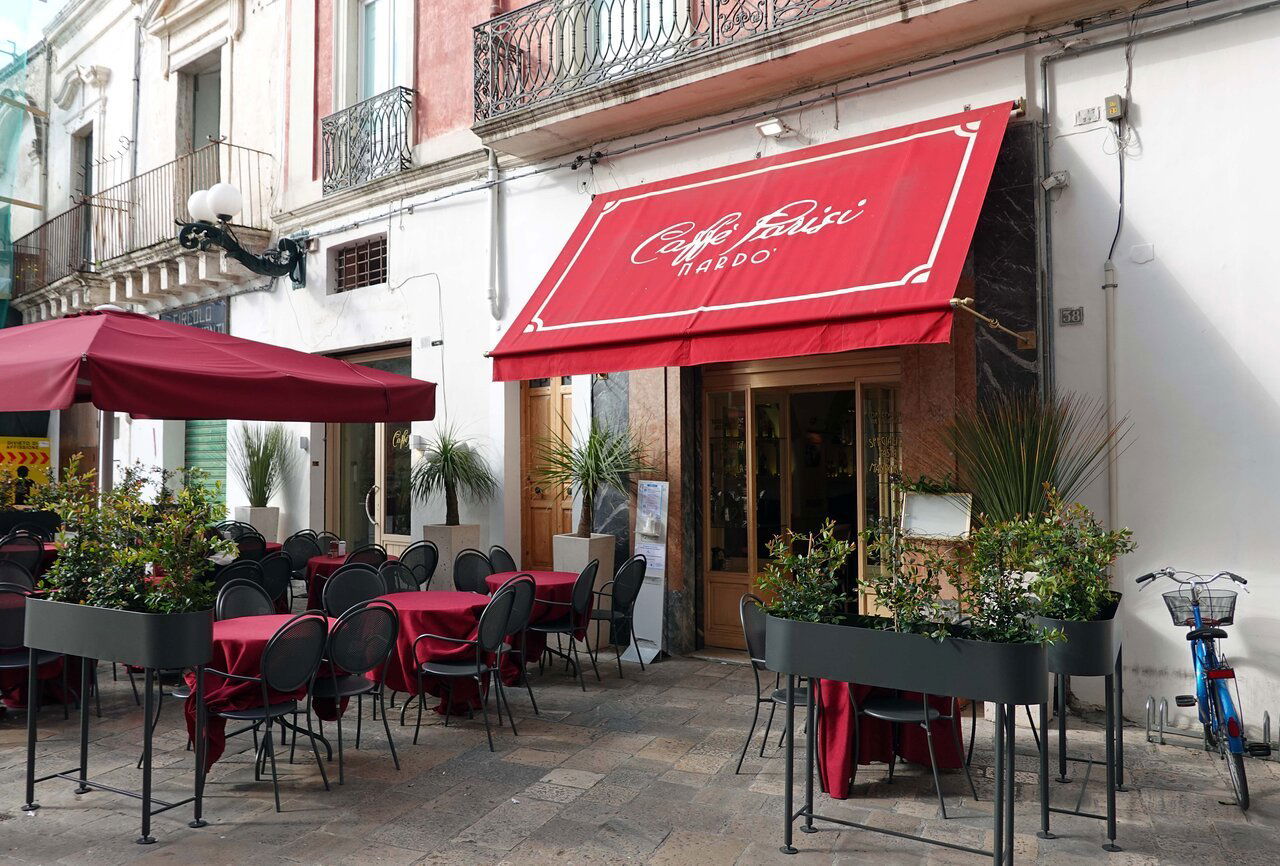
Caffè Parisi anchors one corner of Piazza Antonio Salandra and reads like a civic institution as much as a neighbourhood bar. Set against a baroque-heavy backdrop, it lives through the rhythms of the town — morning ristretti, midday pauses and the evening passeggiata — and its presence feels woven into local life. The aperitivo hour is when the place really animates: the piazza fills, the counter becomes the most active surface and the bar’s programme leans into regional flavours. The combination of historic architecture and habit-driven, all-day service gives the caffè a lively, approachable charm that feels thoroughly rooted in Salento.
Best For
Caffè Parisi is best for everyday social rituals rather than a single formal occasion. It suits solo coffee runs at dawn, casual conversations over an afternoon drink, and the ritual of aperitivo from around 6pm onward when the piazza fills. Locals and visitors alike converge for a relaxed, convivial moment on the square: quick morning espresso, a midafternoon pause, or an early-evening spritz before the passeggiata. If you want to taste regional bar culture in its natural context, this is a spot for habitual stops and informal gatherings throughout the day.
Ordering Tips
Lean into local specialties during the aperitivo hour: the bar’s programme highlights regional ingredients such as Primitivo-based spritzes, amari from nearby provinces and limoncello variations that reflect Lecce’s citrus production. Come around 6pm when the piazza livens and the counter is at its most animated; the moment reveals the caffè’s all-day fluency. For a true sense of place, order a simple espresso in the morning and return later for a spritz or an amaro — the menu rewards choices that follow local tradition rather than international bar trends.
Venue details
Ambiance
Old-school café atmosphere evoking mid-1900s charm with period character; bright daytime setting in the piazza with outdoor seating on cobblestones.
Tags
Vibe
Best For
Experience
Format
View
At the Bar
- Bar Category
- Lounge
- Late Night
- Open Until 2am
Signature Pours
- pasticciotto
- caffè leccese
- espresso
Know before you go
Know Before You Go
- Getting there
- P.za Antonio Salandra, 38, 73048 Nardò LE, Italy
Planning details
Location
P.za Antonio Salandra, 38, 73048 Nardò LE, Italy · Directions
Also consider
Also Consider
- Laurus, Notable alternative
- Quanto Basta, Notable alternative
- Bar Cotognata Leccese, Notable alternative
- Caffè Alvino, Notable alternative
- Barba's Natural Lounge, Notable alternative
Bar context
How it compares with nearby bar options
Choose Caffè Parisi when convenience and a piazza café-bar feel matter more than a tightly defined drinks program. Against Laurus and Quanto Basta, it reads as the lower-commitment option: easier for a casual stop, less compelling if the night is built around cocktails.
Bar Cotognata Leccese and Caffè Alvino are better cross-shops if the brief is café culture rather than a full bar evening. Caffè Parisi works for a central Nardò pause; those are the names to compare when the group wants a more classic coffee-and-pastry style stop.
Barba's Natural Lounge is the more natural comparison for readers prioritising lounge atmosphere. Pick Caffè Parisi for an easy, flexible meet-up; look to Barba's Natural Lounge if the room and mood matter more than being in the flow of the piazza.
Explore Nardò
Around this place
Discover more on Pearl
Unlock the full Caffè Parisi guide in Pearl, including awards, comparisons, FAQs, planning details, and nearby places.
Compare Caffè Parisi
| Venue | Location | Awards |
|---|---|---|
| Caffè Parisi | Nardò | No published awards |
| Laurus | Lecce | Top 500 Bars 2025 · #421 |
| Quanto Basta | Lecce | Top 500 Bars 2025 · #311 |
| Bar Cotognata Leccese | Lecce | No published awards |
| Caffè Alvino | Lecce | No published awards |
| Barba's Natural Lounge | Lecce | No published awards |

How Caffè Parisi Nardò compares with similar nearby venues.
FAQ
Frequently Asked Questions
Do I need a reservation at Caffè Parisi?
Reservation details are not available. If timing matters, check directly with Caffè Parisi before you go. The hours are Tuesday through Sunday from 7:30 AM to 1:30 AM, with Monday closed.
Is Caffè Parisi good for a date?
It may suit a casual plan if its basic offerings fit what you need: Caffè Parisi is in Nardò, has a casual dress code, and is listed with late hours Tuesday through Sunday. Specific atmosphere, seating, and service details are not available.
Does Caffè Parisi have happy hour deals?
Is Caffè Parisi open late?
Yes. The hours are Tuesday through Sunday from 7:30 AM to 1:30 AM, with Monday closed.
Is the food good at Caffè Parisi?
Details about a specific cuisine, menu, chef, prices, awards, or signature dishes are not available. If food is the main priority, compare other dining in Nardò before deciding.
What's the crowd like at Caffè Parisi?
We don't have information about the crowd. The dress code is casual, so it is best approached as an informal Nardò option rather than a venue with a documented formal service style.