
Bar in Napa County, United States
V. Sattui Winery
100ptsEstate-Direct Picnic Format
About V. Sattui Winery
V. Sattui Winery in St. Helena sits at the heart of Napa Valley's estate wine tradition, producing Cabernet Sauvignon, Zinfandel, and a portfolio of single-vineyard bottlings sold exclusively through the winery and its wine club. The property at 1111 White Ln draws visitors looking for direct-to-consumer access to Napa's mid-valley terroir, where allocation lists and cellar exclusives define the purchase experience.
Mid-Valley Napa and the Estate-Direct Model
St. Helena occupies a gravitational centre in Napa Valley's wine geography, positioned between Calistoga's volcanic northern soils and the cooler southern reaches where marine influence from San Pablo Bay softens ripening. The wineries operating along and around White Lane in this corridor have long leaned into an estate-direct commercial model: production sold without wholesale distribution, through tasting rooms, wine clubs, and allocation lists rather than restaurant wine programs or retail shelves. V. Sattui Winery at 1111 White Ln sits squarely inside that tradition, and its position is inseparable from understanding how a meaningful portion of Napa's premium wine moves outside the standard distribution chain entirely.
That direct-to-consumer structure shapes what a visit here actually means. You are not walking into a hospitality operation designed to funnel you toward a Michelin-starred dining experience or a hotel-branded tasting package, as you might at properties closer to the valley's resort corridor around Carneros, where venues like Carneros Resort and Spa and Boon Fly Café have built layered guest experiences around food and accommodation. Here, the proposition is more concentrated: wine, the cellar behind it, and direct purchase access to bottles that do not appear on secondary markets or retail shelves.
The Cellar Depth Behind the Label
Napa's allocation economy is most legible at the leading of the market, where cult Cabernet waitlists run years deep and secondary prices dwarf release costs. But it operates across the valley at every price tier, and the estate-direct model creates a version of it that is less about scarcity theatre and more about genuine production limits. Wineries producing across multiple single-vineyard designations, as is the case at V. Sattui, build cellar inventory that functions differently from blended program wine: specific vintages from specific blocks age at different rates and open at different windows, which means the library depth available at any given tasting room visit is a variable, not a constant.
That variability is part of what distinguishes a winery visit from purchasing at retail. The breadth of what a tasting room draws from its cellar on any given day, including older vintages pulled for comparison or library bottles available in limited quantity, represents the editorial equivalent of a bar's back bar: the depth behind the pour matters as much as what arrives in the glass. Properties along this mid-valley corridor compete partly on that depth. Clos Pegase Winery and Tasting Room, a few miles north toward Calistoga, offers a different version of this through its architecture-forward, arts-integrated tasting format, occupying a different niche in how it frames the cellar visit.
Grounds, Setting, and the Picnic Format
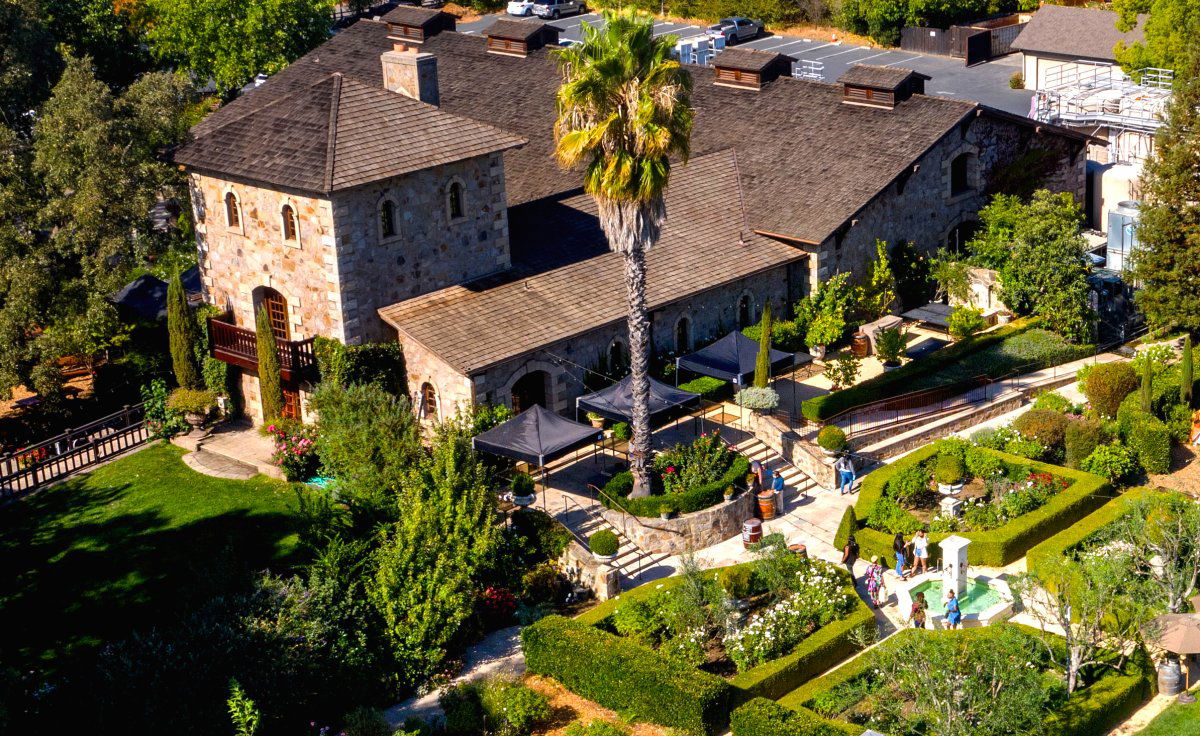
One element that defines V. Sattui's physical character is the picnic grounds format, which places the property outside the formal seated-tasting-only category that most premium Napa estates have gravitated toward. The deli and picnic tradition here predates the current wave of food-integrated wine experiences that now characterizes high-end Napa hospitality, including the farm-to-table register of FARM Restaurant and Bar. Picnic access on winery grounds is now restricted across much of Napa County by zoning constraints that limit what can be served on agricultural land; that V. Sattui has operated its deli and outdoor picnic format within existing entitlements gives it a logistical position that newer entrants to the market cannot easily replicate.
The grounds themselves sit against the visual backdrop typical of mid-valley Napa: vine rows running to the hills, stone architecture, and the kind of spatial generosity that distinguishes winery properties from the more compressed urban wine bar format that has proliferated in downtown Napa and Oxbow Market. Visitors arriving in spring and early summer, before the harvest-season crowds arrive in September and October, encounter the grounds at their most relaxed. Harvest season brings the valley's highest traffic levels, and tasting room waits at popular properties across St. Helena reflect that.
Positioning Against the St. Helena Peer Set
Within the St. Helena tier of Napa producers, the competitive set divides roughly between estates that have pursued prestige pricing and limited-production Cabernet as their primary identity and those operating across a wider price range with higher production volumes but genuine quality across the board. V. Sattui's model has historically sat in the latter category, with a portfolio broad enough to serve multiple buyer types, from visitors looking for an accessible introduction to Napa Cabernet to wine club members tracking specific vineyard designates across vintages.
That breadth of portfolio, combined with the exclusive direct-sales model, creates a dynamic where the wine club relationship functions as the primary loyalty mechanism. This is structurally similar to how spirits collections at destination bars reward depth of engagement: the full back bar is not visible to the casual visitor, but the regular who knows what to ask for accesses a different tier of what's available. Wine club membership at estate-direct Napa producers like this one operates on the same principle, with allocations, library access, and cellar events reserved for those inside the program.
For context on how this model compares to experiences at the higher end of the hospitality-integrated spectrum, bars and dining programs nationally that have built their identity around collection depth and curation, including Kumiko in Chicago, Jewel of the South in New Orleans, and ABV in San Francisco, illustrate how depth of curation functions as a trust signal independent of format. At a winery operating the estate-direct model, the cellar inventory performs the same function.
Planning a Visit
V. Sattui Winery at 1111 White Ln, St. Helena, CA 94574 sits along Highway 29, Napa's primary artery, which makes it accessible by car from both Napa city to the south and Calistoga to the north. St. Helena itself has limited lodging relative to visitor volume, so most guests base themselves in Napa city, Yountville, or one of the resort properties in Carneros to the south, building the winery visit into a day itinerary. Tasting room visits here do not require the advance reservation windows that more appointment-only estates in the valley demand, though weekend visits during peak season should not be treated as spontaneous drop-ins without checking current access policies. For a fuller picture of how this property sits within the valley's broader hospitality options, our full Napa County restaurants guide maps the range from casual to formal across the region.
Those who engage specifically with the wine club or cellar programs will find that the most relevant inventory, including older vintages and single-vineyard designates, requires that relationship rather than walk-in access. That is, again, consistent with how allocation-based properties across Napa operate, from the entry-level tasting room tier to the ultra-premium cult producers: access scales with engagement.
Frequently Asked Questions
- What drink is V. Sattui Winery famous for?
- V. Sattui is primarily a wine estate whose identity is anchored in Napa Valley Cabernet Sauvignon and Zinfandel, produced and sold exclusively through the winery rather than through standard retail or restaurant distribution. Single-vineyard designates across these varieties represent the depth of the cellar program and the primary draw for serious buyers.
- What is V. Sattui Winery known for?
- Within Napa County, V. Sattui is known for its estate-direct sales model, which means wine is available only through the tasting room or wine club, not at retail. The St. Helena property also maintains a deli and picnic grounds format that predates the current wave of food-integrated wine experiences and operates under entitlements that newer Napa estates cannot easily replicate. That combination of exclusive distribution, cellar depth, and outdoor hospitality defines its position in the mid-valley tier.
- How hard is it to get in to V. Sattui Winery?
- Walk-in access to the tasting room is generally available, which places V. Sattui outside the strictly appointment-only tier that many premium Napa estates now require. That said, weekend visits during harvest season (September through November) bring valley-wide crowds that compress wait times at popular properties. Wine club members and those seeking library or allocation wines operate on a different access track than casual visitors.
- What's the leading use case for V. Sattui Winery?
- The property works well for visitors who want direct purchase access to estate Napa wine without navigating the more formal appointment structures of ultra-premium producers, and for those interested in the picnic grounds format as an alternative to restaurant-based food pairings. Wine club membership is the appropriate mechanism for buyers tracking specific vineyard designates across multiple vintages.
- Is a night at V. Sattui Winery worth it?
- V. Sattui operates as a winery and tasting room rather than a lodging property, so overnight stays are not part of its offering. The relevant value question is whether the estate-direct model and cellar depth justify the visit against other St. Helena tasting room options, and for buyers who cannot access these wines at retail, the answer is direct.
- Does V. Sattui Winery sell its wine outside the tasting room or wine club?
- V. Sattui operates on an exclusively direct-to-consumer distribution model, meaning its wines are not available through third-party retail channels or restaurant wine lists. Purchase access runs through on-site tasting room visits at 1111 White Ln, St. Helena, or through wine club membership, which also governs allocation and library bottle access. This structure is a deliberate commercial choice that positions the winery within a peer group of Napa producers for whom the tasting room relationship is the primary sales channel.
For other venues building identity around curation depth and collection, see Bar Leather Apron in Honolulu, Julep in Houston, Superbueno in New York City, and The Parlour in Frankfurt as reference points across different formats and cities.
Related editorial
- Best Fine Dining Restaurants in ParisFrom three-Michelin-star icons to the next generation of Parisian chefs pushing boundaries, these are the restaurants that define fine dining in the world's culinary capital.
- Best Luxury Hotels in RomeFrom rooftop terraces overlooking ancient ruins to Michelin-starred hotel dining, these are the luxury hotels that make Rome unforgettable.
- Best Cocktail Bars in KyotoFrom sleek lounges to hidden speakeasies, Kyoto's cocktail scene blends Japanese precision with global influence in ways you won't find anywhere else.
Save or rate V. Sattui Winery on Pearl
Keep this venue in your Pearl passport, rate it after you visit, and track it alongside every other place you collect.