
Bar in Naha Shi, Japan
The DOJO bar
100ptsAsato District Counter
About The DOJO bar
In Naha's Asato district, The DOJO bar occupies a specific position in Okinawa's small but serious cocktail scene — a bar that rewards those who arrive with curiosity rather than a drinks list in hand. The address alone, on a residential stretch of 101 Asato, signals that this is not a venue built for walk-in tourist traffic. For those tracking Japan's regional bar culture beyond Tokyo and Osaka, it belongs on the itinerary.
Okinawa's Bar Scene and Where The DOJO Fits
Japan's cocktail culture has long been understood through the lens of Tokyo — the precision counters of Ginza, the herbalist theatrics of Bar Benfiddich in Tokyo, the white-jacketed formality that defined Japanese bartending for decades. But the country's regional bar scene has developed its own distinct characters. In Osaka, venues like Bar Nayuta and anchovy butter operate in a denser, more competitive urban environment. Kyoto's bars, including Bee's Knees, carry the weight of the city's aesthetic expectations. Nara has Lamp Bar, a reference point for slow, considered drinking. Further south, Yakoboku in Kumamoto represents the Kyushu approach to serious bartending.
Okinawa sits apart from all of these. As Japan's southernmost prefecture, it operates in a different cultural register — closer to the East China Sea than to Tokyo in both geography and sensibility. The island's drinking culture has historically been anchored by awamori, the local spirit distilled from Thai rice and aged in clay pots, and by the izakaya format that dominates Kokusai-dori and the surrounding streets. Cocktail bars of the kind found in Ginza or Kyoto's backstreets are thinner on the ground here, which makes the ones that exist more significant for what they represent: a deliberate choice to apply serious technique in a city where the dominant drinking habit runs in a different direction.
The DOJO bar, at 101 Asato in Naha, sits in that context. The Asato address positions it away from the tourist-facing stretch of central Naha , a residential district where a bar's clientele is built through word of mouth and repeat visits rather than foot traffic. For those reading our full Naha Shi restaurants guide, this kind of venue represents a specific tier: bars that exist for the city rather than for visitors passing through it.
The Physical Environment
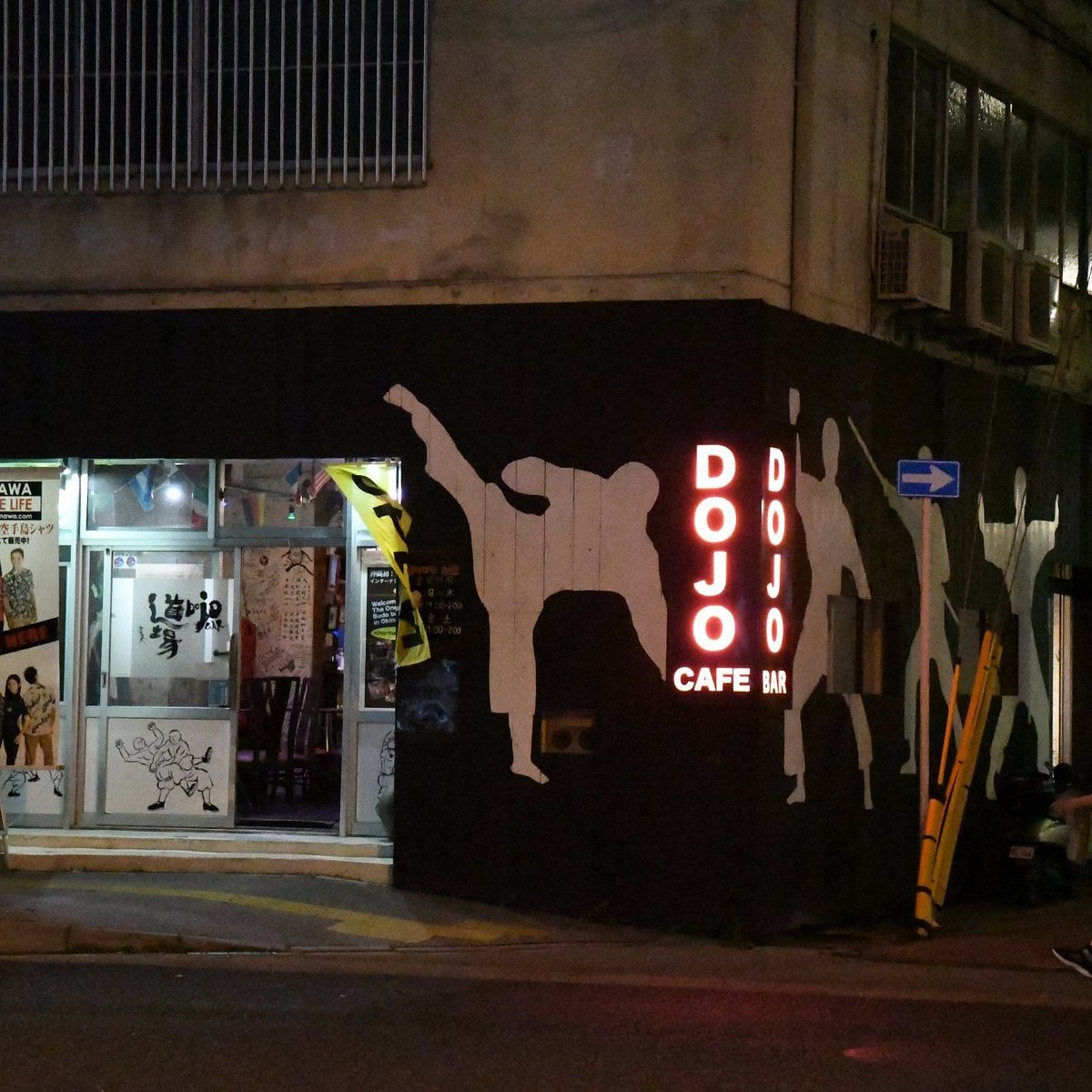
Approaching a bar like this in a Japanese city follows a familiar rhythm for anyone who has tracked down a counter in an unmarked Osaka basement or found a Kyoto bar behind an unmarked door. The exterior signals matter. In Japan's serious bar culture, understatement is almost a credential , the absence of neon, the lack of a menu in the window, the narrow entrance that asks the visitor to commit before they've seen inside. The DOJO name carries its own tone: a dojo in Japanese tradition is a training space, a place of discipline and practice, and the name applied to a bar suggests something about the seriousness with which the craft is approached.
What this translates to inside is a counter-facing format that runs throughout Japan's top-tier bar culture, from the lacquered wood counters of Star Bar Ginza to the more stripped-back environments of Kyushu's regional bars. The counter is the unit of interaction , bartender and guest across a working surface, the drink made in view, no intermediary. Japan's bar culture has refined this format over decades, and it remains the dominant mode for venues operating in the serious cocktail bracket.
The Cocktail Programme in Context
The editorial interest of any serious Japanese cocktail bar lies in how it positions itself relative to the traditions it draws from. Japan's bar culture developed its own idiom through rigorous adoption and then adaptation of Western techniques , the hard shake, the Japanese-style stirred whisky highball, the use of crystal-clear ice as a signal of craft. Over the past decade, a second layer has emerged: bars that integrate local ingredients into a broadly classical framework. In Kyoto, that might mean local matcha or regional sake. In Hokkaido, it might mean dairy-derived spirits or local herbs. At venues like JR Tower Hotel Nikko Sapporo, the setting itself orients the programme toward local reference.
In Okinawa, the obvious regional variable is awamori. A bar in Naha that does not engage with awamori in some form is making a deliberate choice to operate in a purely international register. Whether The DOJO bar works awamori into its programme, or positions itself as a Western spirits counter in a tropical setting, is the kind of editorial question that makes regional bar culture worth tracking. Okinawa's climate , subtropical, humid, with a food culture built around pork, bitter melon, and the sea , creates a different demand from its cocktails than a dry Tokyo winter or a Kyoto autumn evening.
The broader trend in Japan's regional bars, visible at venues from Le Clos Blanc in Hiroshima to Cucina Takemura in Yokohama, is toward hybridity , bars that operate at the intersection of food culture and drink culture, or that draw on a specific regional identity to differentiate themselves from the Tokyo standard. A bar in Naha that takes Okinawa seriously as a place, rather than treating the island as a generic backdrop, has a richer set of ingredients to work with than most.
For comparison outside Japan, Bar Leather Apron in Honolulu offers a useful analogue: a technically serious bar operating in a tropical island city where the surrounding drinking culture skews toward casual and tourist-facing. The parallel is instructive , the challenge and the opportunity are the same.
Planning a Visit
The Asato district of Naha is reachable from the city centre on foot or by short taxi ride from the Yui Rail's Asato station, which sits on the monorail line connecting Naha Airport to the rest of the city. For visitors staying in the central Naha hotel corridor near Kokusai-dori, the journey is short enough to justify the trip even on a single evening. As with most serious Japanese bars, arriving without a reservation is a risk , counter seats are limited by design, and regulars in cities like Naha who have found a bar worth returning to tend to fill them. Checking whether The DOJO bar accepts reservations before visiting is direct common sense. The bar's precise hours are not confirmed in EP Club's current data, so verifying opening times before travel is advisable. Japan's serious cocktail bars also vary considerably in their dress expectations , some are strictly formal, others are not , and The DOJO's position in a residential district suggests something less rigid than a Ginza counter, though this is inference rather than confirmed detail.
Okinawa's bar scene is small enough that a single serious venue can serve as the anchor for an evening, with the surrounding Naha food options , from the rafute pork and champuru dishes of local izakayas to the soba counters near the market , providing the food component before or after. For those building a broader Japan bar itinerary, Naha represents the outer edge of the country's serious cocktail geography, which is part of what makes it worth the detour. The bars worth finding in cities like this reward the effort precisely because they are not on the main circuit. Kyoto Tower Sando covers the accessible end of the spectrum; The DOJO, in Asato, covers something different.
Frequently Asked Questions
- What's the vibe at The DOJO bar?
- The DOJO bar sits in Naha's Asato district, away from the tourist-facing centre of the city, which shapes its atmosphere considerably. Japan's serious cocktail bars in residential or low-footfall locations tend to run quieter, more deliberate evenings , counter seating, drinks made in view, conversation possible without competing with a sound system. The name itself signals something about the register: a dojo is a space of practice and discipline, not spectacle. Whether The DOJO operates with the formality of a Ginza bar or something more relaxed is not confirmed in EP Club's current data, but the address and positioning suggest a neighbourhood-rooted rather than tourist-facing experience.
- What do regulars order at The DOJO bar?
- EP Club does not have confirmed menu data for The DOJO bar, so specific drink recommendations cannot be made with authority. What can be said is that bars in Okinawa of this type occupy a space where the regional spirit , awamori, distilled from Thai rice and with centuries of local history , sits alongside international spirits as a potential programme anchor. Regulars at Japan's serious regional bars often order off-menu or ask the bartender to lead, which is standard practice at counter-format venues throughout the country.
- What should I know about The DOJO bar before I go?
- The bar's address at 101 Asato places it in a district not built for casual walk-in traffic, so arriving with some intent is advisable. EP Club does not have confirmed hours, pricing, or booking policy in its current data, which means contacting the venue in advance is the sensible move before making the trip. Naha's serious cocktail options are fewer in number than Tokyo or Osaka, so if this bar is on your list, building an evening around it rather than treating it as a backup plan makes practical sense.
- Is The DOJO bar a good option for someone who wants to try awamori in a cocktail context?
- Okinawa is the production heartland of awamori, Japan's oldest distilled spirit, and any serious Naha bar operates in proximity to that tradition whether or not it engages with it directly. For visitors specifically interested in awamori, a bar in the Asato district with a considered cocktail programme is a more likely venue for an awamori-forward drink than a hotel bar or tourist-facing venue on Kokusai-dori. EP Club does not have confirmed menu details for The DOJO, but the category of bar it represents , small, counter-format, in a residential neighbourhood , is precisely where that kind of ingredient-specific programme tends to appear in Japan's regional bar culture.
Related editorial
- Best Fine Dining Restaurants in ParisFrom three-Michelin-star icons to the next generation of Parisian chefs pushing boundaries, these are the restaurants that define fine dining in the world's culinary capital.
- Best Luxury Hotels in RomeFrom rooftop terraces overlooking ancient ruins to Michelin-starred hotel dining, these are the luxury hotels that make Rome unforgettable.
- Best Cocktail Bars in KyotoFrom sleek lounges to hidden speakeasies, Kyoto's cocktail scene blends Japanese precision with global influence in ways you won't find anywhere else.
Save or rate The DOJO bar on Pearl
Keep this venue in your Pearl passport, rate it after you visit, and track it alongside every other place you collect.