
Bar in Mexico City, Mexico
Covadonga
100ptsOld-World Cantina Format
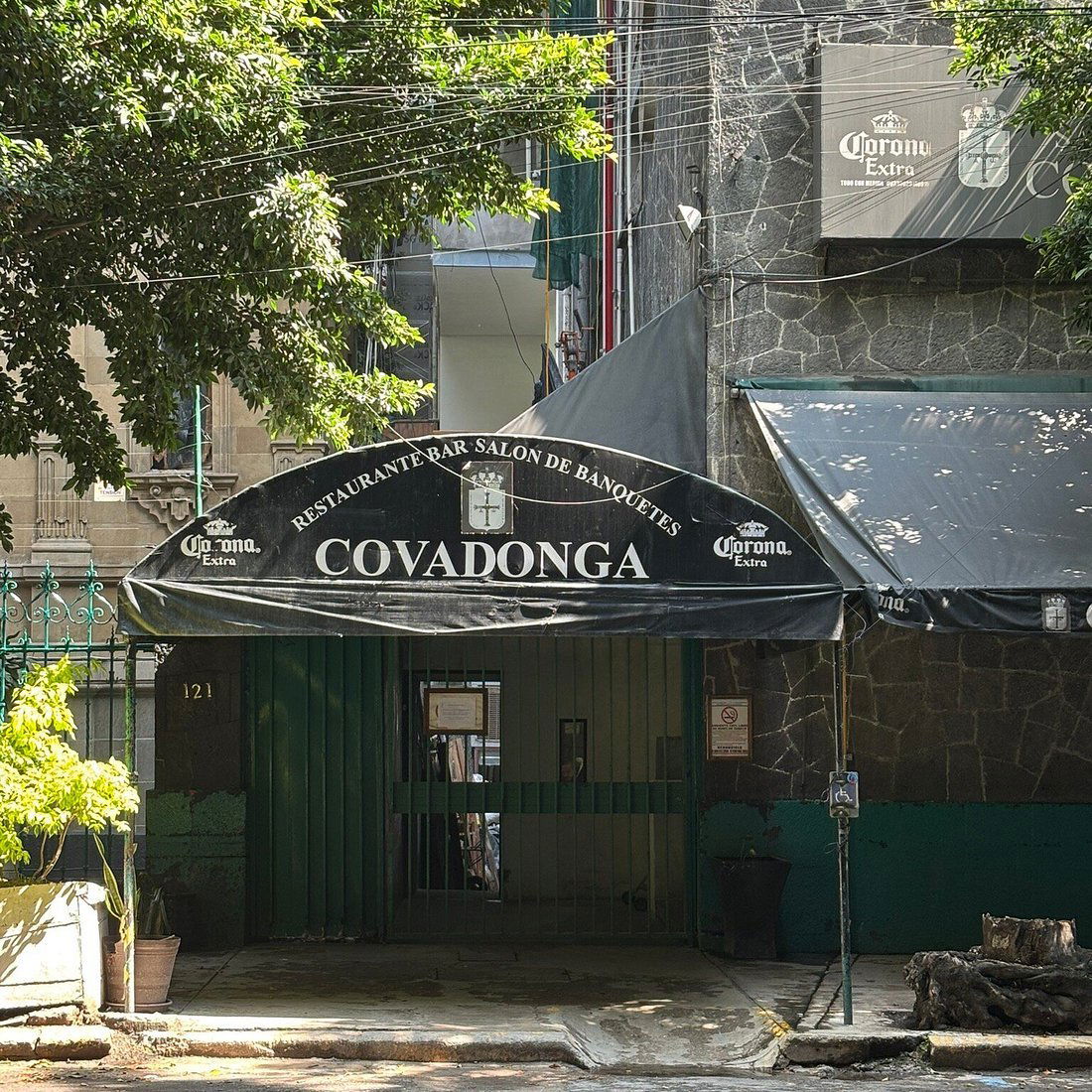
About Covadonga
Covadonga sits on Puebla 121 in Roma Norte, one of Mexico City's most concentrated drinking neighbourhoods, and operates in the tradition of the Spanish cantina transplanted to Mexican soil. The back bar leans into agave spirits alongside European imports, placing it in a different register from the cocktail-forward programs at nearby competitors. A reference point for those tracking how old-world drinking culture adapts in a Latin American context.
Roma Norte and the Cantina Tradition It Keeps Alive
Mexico City's Roma Norte has accumulated enough bars in the last decade to constitute a genuine scene rather than a loose collection of addresses. The neighbourhood around Álvaro Obregón and its surrounding streets runs a spectrum from serious cocktail laboratories to neighbourhood pulquerías that predate the current boom by generations. Covadonga, on Puebla 121, belongs to a third category: the Spanish-style cantina, a format that arrived with Iberian immigration in the early twentieth century and never fully left, even as successive waves of drinking culture washed over the city around it.
The cantina as a format is worth understanding before you arrive. Unlike the cocktail bars that have made Roma Norte internationally legible — places such as Baltra Bar or Bijou Drinkery Room, which traffic in technique and seasonal menus — the cantina organises itself around the bar as social infrastructure. Drinking here is inseparable from eating, from argument, from the kind of long afternoon that refuses to resolve itself into an evening. The format descends from Asturian and Basque tavern culture, and Covadonga's name announces that lineage directly: Covadonga is a site in Asturias, the region of northern Spain most associated with cider, sidra culture, and the emigrant communities that shaped pockets of Mexican civic life from the Porfiriato onward.
The Back Bar as Catalogue of Two Continents
The spirits collection at a place like Covadonga communicates something different from a craft cocktail bar's back bar, where bottles are selected as components in a program. Here, the selection operates more like an inventory of affiliations: what the house considers worth keeping, what regular customers expect, and what the cultural inheritance of a Spanish-inflected cantina demands. That means agave spirits sit alongside Spanish brandies, sherries, and whatever vermouth the house has committed to. The interplay between those categories is the editorial argument of the bar, made in glass rather than prose.
Agave spirits in Mexico City have moved from background assumption to active subject over the past fifteen years. The premium mezcal category, in particular, has bifurcated: there are bottlings aimed at the export market and its associations of artisanal production, and there are bottles that circulate primarily within Mexico's own connoisseurship networks, often from smaller palenques with limited output. A cantina with genuine depth of selection will stock across that divide rather than optimising for one audience. How Covadonga curates that range is the most practically useful thing a first-time visitor can assess upon arrival , look at what the house pours by default and what sits behind the bar without a price card.
Spanish brandies and sherries deserve attention in this context. The Jerez-style brandies , Cardenal Mendoza, Lepanto, and their peers , have never quite achieved the cultural visibility in international drinking circles that their quality warrants, but in cantinas with Spanish roots they remain serious items. A fino or manzanilla alongside a taco is one of the most underexamined pairings in Mexico City drinking, and a cantina environment is one of the few places in the city where ordering sherry reads as native behaviour rather than affectation.
For a contrasting approach to spirits curation in the city, Bar Mauro and Brujas each organise their collections around different principles , the former with a European-leaning wine and spirits sensibility, the latter with a more explicitly Mexican spirits identity. Covadonga's interest lies in the overlap zone, where both inheritances are treated as equally valid claims on the glass.
Food, Format, and the Logic of the Long Sitting
The cantina's relationship to food is structural, not optional. The botana tradition , small plates brought to drinking customers, sometimes included in the price of a round , is both a practical mechanism for keeping people at the bar and a philosophical statement about the relationship between eating and drinking. Where cocktail bars in Roma Norte tend to treat food as a supplement, the cantina treats drink as one axis of a two-axis experience. Croquetas, tortilla española, pickled things, fried things: the food vocabulary is Spanish-inflected and designed for repetition across an afternoon rather than a single composed meal.
This format distinction matters for planning. A visit to Covadonga on a weekend afternoon operates differently from a Tuesday evening, and differently again from the post-theatre crowd that Roma Norte generates late on a Friday. The cantina format rewards patience and a willingness to let the sitting shape itself, which puts it at odds with the booked-slot, coursed-experience model that defines Mexico City's higher-end restaurant scene.
Roma Norte in Comparative Perspective
Roma Norte now competes with Condesa and Juárez as a primary destination for serious drinking in Mexico City, and the three neighbourhoods have developed distinct characters even as they blur at their edges. Juárez skews toward the technically ambitious , Hanky Panky and its Latin America 50 Best recognition sits there, as does the mezcal-forward program at Fifty Mils in the nearby Reforma corridor. Roma Norte runs a wider range, from the neighbourhood taquería that has always been there to the natural wine bar that arrived three years ago. Covadonga represents the layer beneath both of those: the institution that the neighbourhood grew around rather than the destination that the neighbourhood's reputation attracted.
That positional difference is not a hierarchy. It is a different kind of value. Mexico City's bar scene is increasingly legible to international visitors through the filter of awards and lists , Arca in Tulum, El Gallo Altanero in Guadalajara, and La Capilla in Tequila each occupy recognised positions within Mexico's broader drinking geography. Cantinas like Covadonga operate outside that legibility by design, which makes them more resistant to the homogenising pressure that list-culture exerts on bars that want to appear on it.
For visitors building a broader picture of Mexican drinking culture beyond Mexico City, Bekeb in San Miguel de Allende and Aruba Day Drink in Tijuana demonstrate how different cities are resolving the same tension between local tradition and international bar culture. The contrast with something as deliberately spectacle-driven as Coco Bongo in Cancun is sharp enough to clarify what a cantina is by negative definition. And internationally, Bar Leather Apron in Honolulu offers a useful comparison point for how immigrant cultural traditions shape bar identity in cities where those communities settled.
Our full Mexico City restaurants and bars guide maps the broader scene across neighbourhoods and price points.
Planning a Visit
Covadonga is at Puebla 121 in Roma Norte, walkable from the Insurgentes metro station and within easy reach of the neighbourhood's main corridor. The cantina format typically means walk-in is the operative mode , reservations, if taken at all, are generally less critical here than at the cocktail-forward venues nearby that manage capacity tightly. Dress is casual by the standards of the neighbourhood: Roma Norte does not require formality even at its more serious addresses, and a cantina actively discourages it. The practical case for arriving before the peak weekend afternoon sitting is that the bar is more navigable and conversation with whoever is behind the counter is more possible , which, at a place where the spirits selection is the main text, matters.
Frequently Asked Questions
- Is Covadonga more formal or casual?
- Covadonga operates in the cantina tradition, which is structurally casual. Roma Norte's bar culture broadly does not require formal dress, and the cantina format specifically is organised around long, unstructured sittings rather than booked-slot formality. It sits at the opposite end of the register from the more ceremony-conscious cocktail programs in the city.
- What is the leading thing to order at Covadonga?
- The spirits selection is the strongest argument for a visit. In a cantina with Spanish roots, this means agave spirits alongside Spanish brandies and sherry-style pours , a category combination that is rare to find treated with equal seriousness. If the house pours a fino or manzanilla alongside bar snacks, that pairing is worth prioritising.
- What should I know about Covadonga before I go?
- Covadonga is a cantina with Asturian-Spanish heritage, not a cocktail bar, so its logic is different from the technically-led programs that have made Roma Norte internationally known. The experience rewards a longer, less structured visit. It is at Puebla 121, walkable from Insurgentes metro, and operates within a neighbourhood that offers considerable bar variety at every price point.
- Is Covadonga reservation-only?
- The cantina format generally operates on a walk-in basis, and Covadonga fits that pattern. Unlike the higher-demand cocktail venues in Roma Norte and Juárez that manage capacity through advance booking, cantinas have traditionally absorbed their crowds through turnover and standing space rather than reservation systems.
- Should I make the effort to visit Covadonga?
- If your interest is in how Spanish cantina culture embedded itself in Mexico City and what that looks like as a drinking format distinct from the city's contemporary cocktail scene, yes. It occupies a positional gap that the award-tracked, list-optimised bars in the same neighbourhood do not fill.
- How does Covadonga fit into Mexico City's broader agave spirits scene?
- Mexico City's agave culture has split between export-facing premium mezcal programs and bars with deeper roots in how Mexicans actually drink spirits at home. A cantina like Covadonga represents the latter current: agave spirits are present as one category among several, alongside Spanish brandies and vermouth, rather than as a stand-alone focus. For visitors tracking the full range of how mezcal and tequila sit within Mexican drinking culture , as opposed to how they are positioned for international audiences , that embedded, non-curatorial approach is itself informative.
Related editorial
- Best Fine Dining Restaurants in ParisFrom three-Michelin-star icons to the next generation of Parisian chefs pushing boundaries, these are the restaurants that define fine dining in the world's culinary capital.
- Best Luxury Hotels in RomeFrom rooftop terraces overlooking ancient ruins to Michelin-starred hotel dining, these are the luxury hotels that make Rome unforgettable.
- Best Cocktail Bars in KyotoFrom sleek lounges to hidden speakeasies, Kyoto's cocktail scene blends Japanese precision with global influence in ways you won't find anywhere else.
Save or rate Covadonga on Pearl
Keep this venue in your Pearl passport, rate it after you visit, and track it alongside every other place you collect.