
Bar in Madrid, Spain
La Casa del Abuelo
100ptsGarlic Prawn Counter
About La Casa del Abuelo
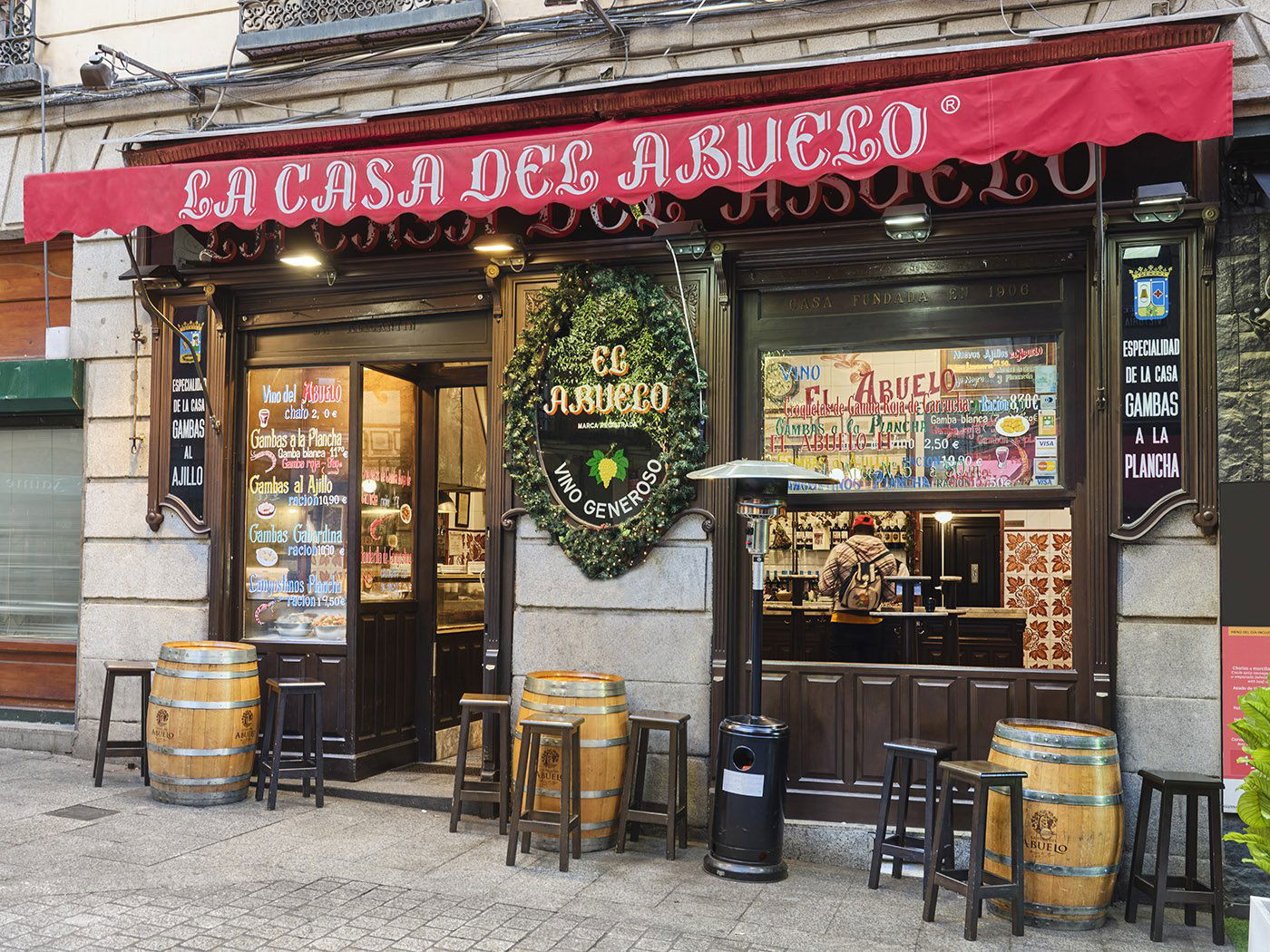
La Casa del Abuelo has served gambas al ajillo and cold Valdepeñas wine from its narrow bar on Calle de la Victoria since 1906, making it one of Madrid's most enduring tapas institutions. The standing-room format, tiled walls, and sizzling clay cazuelas define a specific strain of old-city drinking culture that survives largely unchanged in the Sol district.
A Bar Unchanged by the City Around It
There is a particular type of Madrid bar that exists as a kind of atmospheric anchor: narrow, loud, tiled from floor to mid-wall, smelling of garlic and olive oil, with no table service and no concession to current trends. Calle de la Victoria, a short pedestrian street running off the Puerta del Sol axis, holds one of the clearest examples of this format still operating at full volume. La Casa del Abuelo has occupied this spot since 1906, and the physical space has not drifted far from what a century of regulars would recognise.
The room is compact enough that the heat from the kitchen reaches you before you reach the bar. Ceramic tiles in dark greens and creams line the walls, the timber bar is worn smooth at the edges, and the lighting sits at the amber end of the spectrum — the kind that flattens shadows and makes everyone look like they belong. There is no background music competing with the noise of service. The sounds are functional: clay cazuelas set down on zinc, wine poured from a jug, the snap of an order being called. This is the atmosphere of the place, and it is not designed. It is simply what happens when a bar operates this way for more than a century.
The Standing Bar as Urban Institution
Madrid's tapas culture evolved differently from that of Andalusia or the Basque Country. In the capital, the standing bar at the counter — ordering in rounds, eating quickly, moving on , became the dominant social format in the older districts. The area around Sol and Huertas concentrated this tradition, and Calle de la Victoria in particular accumulated a small cluster of old-city drinking stops. La Casa del Abuelo sits within this pattern rather than apart from it.
The bar's longevity places it in the company of a small number of Madrid establishments that predate the Civil War and have continued in operation through every subsequent shift in the city's economy and demographics. That continuity is itself a form of editorial comment on what the city values: a place that draws both office workers at noon and tourists at nine in the evening, all standing, all eating from the same limited menu, is performing a social function that newer formats have not replaced.
For visitors building a broader picture of Madrid's drinking culture, this stretch of the city pairs well with the more contemporary programs at Angelita and Salmon Guru, where the city's current cocktail ambitions are most visible. The contrast between those bars and La Casa del Abuelo is not a question of quality but of what each format is trying to do. 11 Nudos Madrid and 1862 Dry Bar occupy a middle register , modern in execution, Madrid in sensibility , if you want to triangulate across the city's bar scene on a single evening.
Gambas and Valdepeñas: What the Menu Is Actually Doing
The menu at La Casa del Abuelo is short by design. Gambas al ajillo , prawns cooked in olive oil with garlic and dried chilli, served sizzling in a clay cazuela , has been the ordering anchor here for generations. Gambas a la plancha offer the same ingredient at the grill rather than submerged in oil. The wine is Valdepeñas, the traditional red of Madrid's taberna culture, served cold in small glasses. This is not a menu that signals ambition. It signals discipline: knowing what you do, doing it at volume, and not complicating it.
The cazuela format matters to how the food reads in context. The clay retains heat and delivers the dish still active, the oil still bubbling slightly at the edges when it reaches you. Eating standing at a bar, with a glass of cold red wine and a piece of bread from the basket, is a specific sensory register that differs from the same ingredients served at a table. The standing format is part of the dish, in the way that bar drinking differs from restaurant drinking even when the liquid is identical.
Across Spain, old-city bars operating on this model are thinning in number as rents rise and ownership transfers to operators with different priorities. The comparison is instructive: Boadas in Barcelona holds a similar position in Catalan bar history, while places like Bar Sal Gorda in Seville, Bar Gallardo in Granada, and Garito Cafe in Palma De Mallorca represent variations on how Spain's regional bar cultures preserve , or reinvent , their older formats. The Sol district version, as La Casa del Abuelo demonstrates, has preserved the format more completely than most.
Planning a Visit
La Casa del Abuelo sits at Calle de la Victoria, 12, in the Centro district, within walking distance of the Puerta del Sol metro interchange (lines 1, 2, and 3) and the Tirso de Molina and Sevilla stops. The address puts it at the geographic heart of Madrid's old-city tourist and local overlap zone, which means the bar fills quickly in the early evening and again after nine. The practical advice that applies across this type of Madrid bar applies here: arrive early in the service window (around noon or just after seven) if you want space at the bar without pressure, or accept the crowd as part of the format. Neither approach is wrong.
No advance booking is available or necessary for a standing bar of this type. The visit is self-contained and short by design: two rounds of gambas, two glasses of wine, twenty to thirty minutes. It functions well as the first stop on an evening that continues elsewhere , La Margarete in Ciutadella and Garden Bar in Calvia offer useful reference points for how Spanish island bar culture compares to the mainland format if your trip extends beyond Madrid. For context on the broader Madrid scene, our full Madrid restaurants guide maps the city's current dining and drinking options across price tiers and neighbourhoods.
Dress code is nonexistent in any formal sense , this is a bar where office workers and tourists share the same zinc counter. Cash is the traditional payment method for this format, though the expectation has shifted across Madrid over the past decade. Confirm on arrival. And if the bar at La Casa del Abuelo is full, the street itself is narrow enough that most of the crowd spills outside, which, on a warm evening, is its own version of the experience.
Frequently Asked Questions
- What is the signature drink at La Casa del Abuelo?
- The house drink is Valdepeñas wine, a traditional red from Castilla-La Mancha that has been the standard pour in Madrid's old-city tabernas for generations. It is served cold in small glasses and ordered repeatedly alongside the gambas rather than as a standalone drink. The combination of cold wine and hot cazuela is the sensory pairing the bar is built around.
- What should I know about La Casa del Abuelo before I go?
- La Casa del Abuelo has operated from its Calle de la Victoria address since 1906, which places it among the longest-running bars in central Madrid. The format is standing only, the menu is deliberately short, and the crowd is a mix of locals and visitors who are largely there for the same thing. No reservations are taken. The bar is in the Centro district, steps from Puerta del Sol, so access is direct by metro or on foot from most central hotels.
- How far ahead should I plan for La Casa del Abuelo?
- No advance planning is required , La Casa del Abuelo does not take reservations, and the format does not demand it. If you arrive during peak evening hours (roughly eight to ten), expect a crowd at the bar and moderate noise levels. The Sol-area location means it integrates easily into a broader evening itinerary rather than requiring a dedicated trip.
- What kind of traveler is La Casa del Abuelo a good fit for?
- Travelers who want to understand Madrid's pre-modern bar culture, rather than its contemporary cocktail or restaurant scene, will find this the clearest available reference point in the city centre. If you have been to Bar Leather Apron in Honolulu or similar precision-focused bar programs elsewhere, La Casa del Abuelo operates from entirely different premises , longevity, simplicity, and a fixed social format , and is worth the contrast precisely because of that difference.
- Is La Casa del Abuelo connected to any other bars in Madrid bearing a similar name?
- Yes. The Casa del Abuelo name is associated with a small cluster of related addresses in the Sol area, all operating on the same gambas-focused format and Valdepeñas model. The Calle de la Victoria location is the original, operating since 1906. If you are specifically seeking the oldest iteration of the format, the Victoria address is the correct one. The related locations in the same district offer a near-identical experience if the original bar is at capacity.
More bars in Madrid
- 28008 Madrid28008 Madrid operates in the Argüelles area of Chamberí, a residential neighbourhood where bars tend to price honestly and draw a committed local crowd. Booking is easy, walk-ins are generally viable, and the area rewards explorers looking for a spirits-focused experience away from Madrid's tourist-heavy centre. Check the current menu before visiting if a specific category is your priority.
- 360º Rooftop BarA central Madrid rooftop that works well for a date night thanks to panoramic city views near the Royal Palace. Booking is easy — no weeks-ahead planning required. For serious cocktail craft, look at Angelita or 1862 Dry Bar instead; for occasion-setting atmosphere with a view, 360º Rooftop Bar earns a place on your shortlist.
Related editorial
- Best Fine Dining Restaurants in ParisFrom three-Michelin-star icons to the next generation of Parisian chefs pushing boundaries, these are the restaurants that define fine dining in the world's culinary capital.
- Best Luxury Hotels in RomeFrom rooftop terraces overlooking ancient ruins to Michelin-starred hotel dining, these are the luxury hotels that make Rome unforgettable.
- Best Cocktail Bars in KyotoFrom sleek lounges to hidden speakeasies, Kyoto's cocktail scene blends Japanese precision with global influence in ways you won't find anywhere else.
Save or rate La Casa del Abuelo on Pearl
Keep this venue in your Pearl passport, rate it after you visit, and track it alongside every other place you collect.