
Bar in Madrid, Spain
Corral de la Morería
100ptsSerious-Stage Tablao Dining
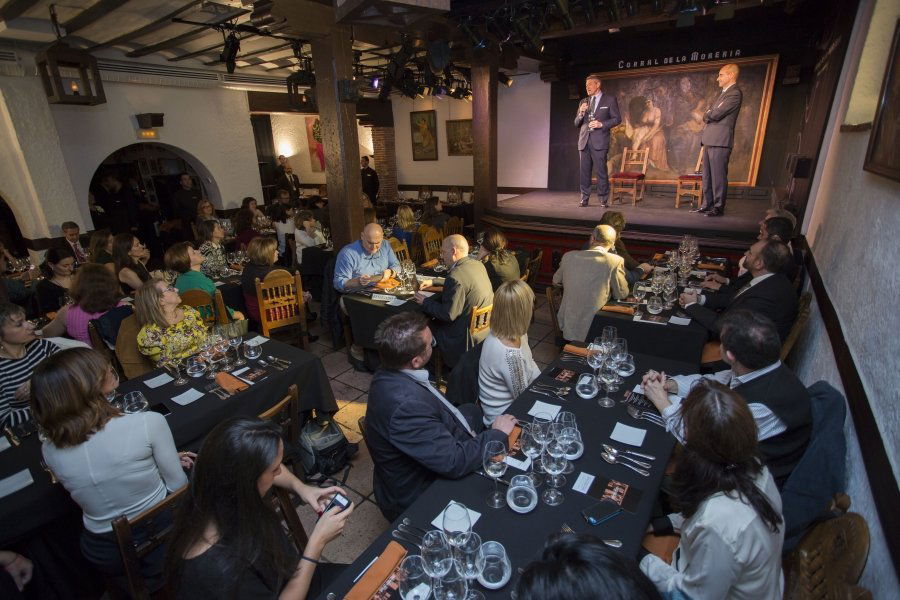
About Corral de la Morería
One of Madrid's most enduring flamenco-dining venues, Corral de la Morería has operated in the Latina district for decades, pairing live performance with a kitchen rooted in Spanish regional tradition. The combination of serious artistic programming and a full dinner service places it in a different tier from the city's tourist-facing tablaos. Reservations are strongly advised, particularly on weekends.
Where the Latina Quarter Sets the Stage
Calle de la Morería sits in one of Madrid's oldest residential pockets, a short walk from the Viaducto and the Basilica de San Francisco el Grande. The street itself carries a particular atmospheric weight at night: the surrounding buildings are low, the lighting warm and uneven, and the sound of guitars tends to reach the pavement before you reach the door. This is the kind of approach that reminds you flamenco was never designed for concert halls. It emerged from kitchens, courtyards, and smoky back rooms, and the physical setting here still communicates that lineage.
Corral de la Morería has occupied this address since 1956, making it one of the longest-running flamenco venues in continuous operation in Spain. That continuity matters in a city where entertainment formats cycle quickly. The venue has outlasted several waves of Madrid nightlife — the movida, the cocktail bar boom of the 2010s, the post-pandemic recalibration of the hospitality sector — and the durability itself functions as a kind of credential. For context on how Madrid's current bar and cocktail scene has evolved around venues like this, the full Madrid restaurants and bars guide maps the broader picture.
The Flamenco-Dining Format in Madrid's Context
Madrid divides its flamenco offer into roughly two categories. The first is the tourist-targeted tablao model: a fixed show, a set menu, high throughput, and a booking experience that resembles a theatre ticket more than a dinner reservation. The second, smaller category involves venues where the artistic programming is taken seriously by practitioners as well as audiences, where visiting performers of genuine reputation appear, and where the kitchen is treated as a parallel priority rather than an afterthought.
Corral de la Morería sits in the second category and has maintained that position across multiple generations of ownership. The artists who have performed here over the decades include figures central to the development of contemporary flamenco, and the venue's reputation within the professional dance and music community distinguishes it from peers that primarily serve international visitors seeking an accessible introduction to the form. The distinction shows up in the programming depth: the roster rotates, the format allows for extended performances, and the room is designed so that proximity to the stage is meaningful rather than incidental.
The Kitchen and Its Regional Sourcing Logic
In flamenco-dining venues, the food frequently serves a purely functional role: filling time between acts, justifying the ticket price, sustaining an audience through a long evening. At Corral de la Morería, the kitchen operates with more deliberate intent. The menu positions itself within the tradition of Spanish regional cooking, drawing on produce and techniques that reflect the country's geographic range rather than defaulting to a generic Castilian template.
Spanish regional sourcing carries specific implications. It means Iberian pork products that trace back to Extremadura and Andalusia, where the montanera feeding period and the specific microclimate of dehesa woodland shape the fat composition and flavor of the finished product. It means fish from Atlantic and Mediterranean coastlines, where the provenance of sea bass, bream, or clams shifts the cooking logic considerably. And it means vegetables and legumes that reflect the seasonal rhythms of the interior plateau, where the climate imposes a very different calendar from the coastal markets.
This sourcing framework is not decorative. In Spain's premium dining tier, the conversation around ingredient origin has become as technically rigorous as it is in France or Japan. A kitchen that commits to regional provenance accepts constraints on its menu flexibility, shorter shelf lives, and the logistical complexity of working with small producers. The payoff is a product quality that ingredient substitution cannot replicate. Within the flamenco-dining format, where the food competes for attention against live performance, that commitment to sourcing becomes the kitchen's primary argument for being taken seriously.
An Evening Here: What the Format Asks of You
A full evening at Corral de la Morería runs longer than most Madrid dinner services. Arriving for dinner before the show begins is the practical structure, and the room transitions from restaurant to performance space without a hard break. The pacing is Spanish in the specific sense that conversation and attention are both expected to extend across two to three hours, and the kitchen times courses accordingly.
For visitors who have already covered Madrid's cocktail circuit, venues like Angelita, Salmon Guru, 11 Nudos Madrid, and 1862 Dry Bar represent the city's more technically focused bar programs. Corral de la Morería occupies a different slot entirely: it is an evening-length commitment organized around performance, not a two-hour dinner before moving on. That distinction is worth understanding before you book.
Beyond Madrid, Spain's live-entertainment-meets-hospitality format appears in other configurations. Boadas in Barcelona and Bar Sal Gorda in Seville each represent how different Spanish cities handle the overlap between drinking culture and local tradition. Further afield, Garito Cafe in Palma de Mallorca, Bar Gallardo in Granada, La Margarete in Ciutadella, Garden Bar in Calvia, and even Bar Leather Apron in Honolulu each illustrate how performance-adjacent hospitality takes different shapes depending on local context.
Planning an Evening at Corral de la Morería
The venue is located at Calle de la Morería, 17, in the Centro district, postcode 28005. It falls within walking distance of the Latina metro stop and is accessible from the Opera area on foot in under ten minutes. Weekend evenings fill well in advance, and the combination of dining and performance means that last-minute walk-ins are a significant risk. Checking availability and booking ahead is the appropriate approach, particularly for parties of more than two. The venue's position in a residential street also means arriving by taxi or rideshare is preferable to driving, as parking in the immediate area is restricted.
Frequently Asked Questions
What should I try at Corral de la Morería?
The kitchen works within Spanish regional tradition, which means the strongest arguments for ordering are the Iberian pork preparations and the seasonal fish dishes, where provenance and sourcing quality are most evident. These are the categories where regional sourcing makes the most demonstrable difference, and where the kitchen's commitment to Spanish produce logic is most clearly expressed.
What is the standout thing about Corral de la Morería?
In Madrid's flamenco-dining category, the venue's 1956 founding date and sustained reputation within the professional flamenco community place it in a different tier from venues that primarily serve international visitors. The combination of serious artistic programming and a regionally sourced kitchen, held across nearly seven decades of continuous operation in the Centro district, represents a depth of institutional credibility that is difficult for newer entrants to replicate.
Is Corral de la Morería reservation-only?
Given the format, which combines a full dinner service with ticketed flamenco performance, and the venue's profile within Madrid's cultural calendar, advance booking is strongly advisable rather than optional. Weekend evenings in particular carry high demand. Visitors should check the venue's official website for current availability and booking procedures, as walk-in capacity on performance nights is limited by the fixed seating structure of the room.
Is Corral de la Morería better for first-timers or repeat visitors?
The venue serves both audiences, but in different ways. For first-timers to Madrid's flamenco scene, the combination of serious artistic programming and a full kitchen makes this a more complete introduction than a purely ticketed performance would offer. For repeat visitors who already know the form, the rotating roster of performers and the depth of the venue's historical connections to professional flamenco give it continued relevance across multiple visits.
How does Corral de la Morería compare to other historic flamenco venues in Spain?
Operating since 1956, it sits among a small group of flamenco venues in Spain with more than six decades of continuous programming, a peer set that includes a handful of Seville and Granada establishments with comparable longevity. What distinguishes the Madrid venue is its position within the capital's arts calendar: it has hosted artists central to the development of contemporary flamenco rather than operating as a primarily heritage-facing institution. That keeps the programming current while the address and founding history provide the institutional weight.
More bars in Madrid
- 28008 Madrid28008 Madrid operates in the Argüelles area of Chamberí, a residential neighbourhood where bars tend to price honestly and draw a committed local crowd. Booking is easy, walk-ins are generally viable, and the area rewards explorers looking for a spirits-focused experience away from Madrid's tourist-heavy centre. Check the current menu before visiting if a specific category is your priority.
- 360º Rooftop BarA central Madrid rooftop that works well for a date night thanks to panoramic city views near the Royal Palace. Booking is easy — no weeks-ahead planning required. For serious cocktail craft, look at Angelita or 1862 Dry Bar instead; for occasion-setting atmosphere with a view, 360º Rooftop Bar earns a place on your shortlist.
Related editorial
- Best Fine Dining Restaurants in ParisFrom three-Michelin-star icons to the next generation of Parisian chefs pushing boundaries, these are the restaurants that define fine dining in the world's culinary capital.
- Best Luxury Hotels in RomeFrom rooftop terraces overlooking ancient ruins to Michelin-starred hotel dining, these are the luxury hotels that make Rome unforgettable.
- Best Cocktail Bars in KyotoFrom sleek lounges to hidden speakeasies, Kyoto's cocktail scene blends Japanese precision with global influence in ways you won't find anywhere else.
Save or rate Corral de la Morería on Pearl
Keep this venue in your Pearl passport, rate it after you visit, and track it alongside every other place you collect.