
Bar in Louisville, United States
Shirley Mae’s Cafe
100ptsSmoketown Soul Kitchen
About Shirley Mae’s Cafe
Shirley Mae's Cafe on South Clay Street sits inside Louisville's tradition of community-anchored soul food, where the cooking carries more cultural weight than any restaurant week reservation. The Smoketown address places it in a neighbourhood with deep roots in Black Louisville history, and the atmosphere reflects that continuity. For visitors calibrating between the city's bourbon bars and its quieter dining institutions, this is the kind of address that earns its place on the itinerary for reasons that have nothing to do with press cycles.
South Clay Street and the Soul Food Tradition It Carries
Louisville's dining conversation tilts heavily toward the bourbon corridor and the chef-driven restaurants that have clustered around NuLu and downtown over the past decade. The South Clay Street address of Shirley Mae's Cafe sits at a deliberate distance from that circuit, in the Smoketown neighbourhood that has shaped Black Louisville's cultural and civic identity since the late nineteenth century. In cities where soul food has been absorbed into a gentrified brunch format or reduced to a single token dish on an otherwise unrelated menu, places that hold the original register are worth locating with some precision. Shirley Mae's is one of them.
Soul food in Kentucky carries a specific regional accent. The state's foodways sit at a crossroads between Deep South technique and Appalachian pantry logic, and the cooking that came out of Smoketown historically reflected both. Greens cooked low and slow with smoked meat, cornbread built for soaking up pot likker, fried chicken with a crust that has structural integrity rather than decorative crunch: these are not aesthetic choices but practical ones, refined over generations of domestic and community cooking. Understanding that tradition is the correct frame for Shirley Mae's, rather than the tasting-menu vocabulary that dominates so much contemporary food writing.
What the Room Feels Like
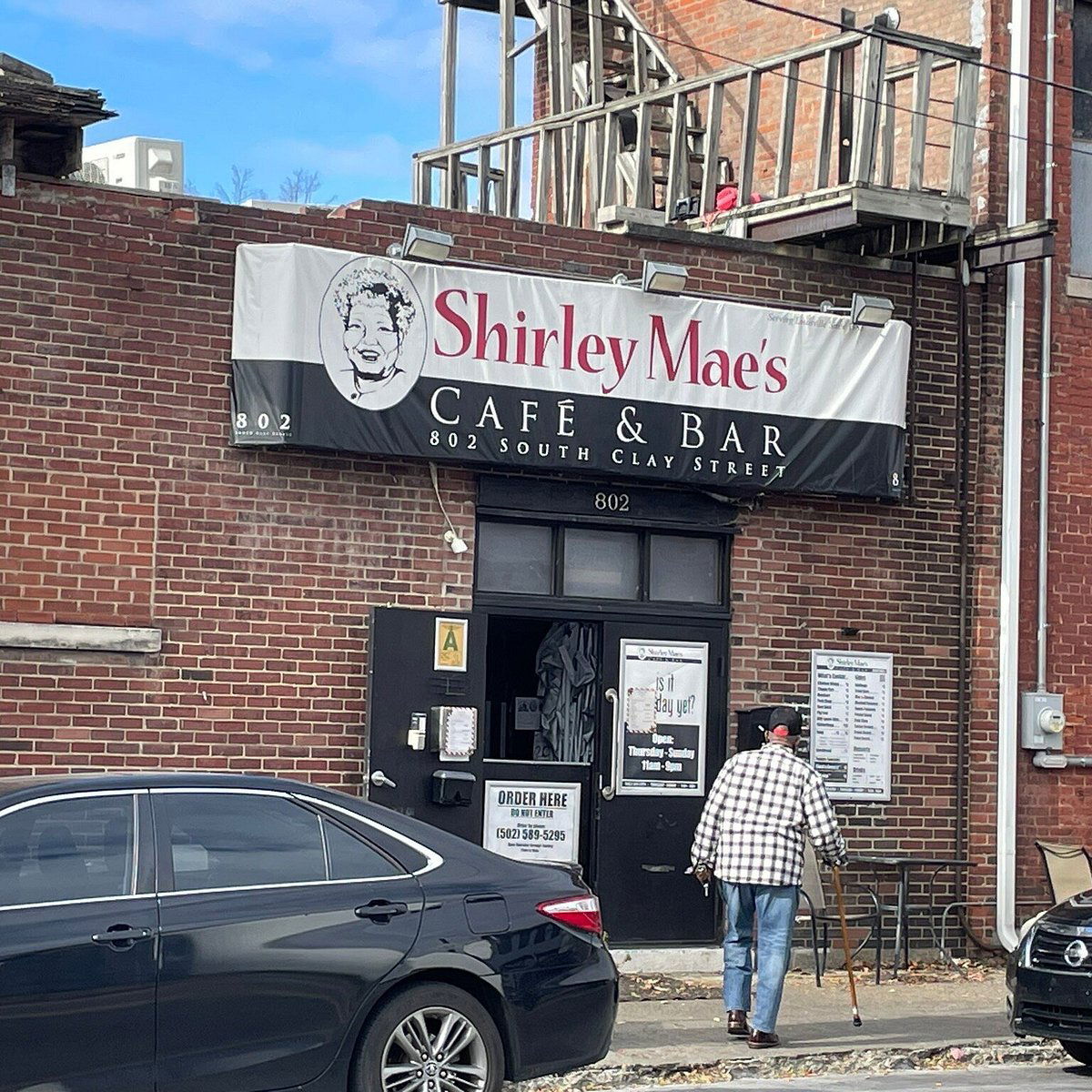
Arriving on South Clay Street, the scale is immediately domestic. There is no architectural signal that separates Shirley Mae's from the residential fabric around it, which is in part why it functions the way it does. The interior follows the logic of a home kitchen expanded to accommodate regulars: close quarters, surfaces that have absorbed decades of cooking smells, and a social density at peak hours that makes the room feel like it is operating at full capacity well before every seat is taken. The sound is the sound of actual conversation rather than a curated playlist, which tells you something about the clientele and their relationship to the space.
Smoketown as a neighbourhood amplifies this effect. Unlike the bar-dense streets around Whiskey Row or the refurbished warehouse district that now frames much of Louisville's food tourism, South Clay remains predominantly residential. The visitors who find Shirley Mae's tend to have made a specific decision to come here, rather than stumbling in from a hotel concierge recommendation. That self-selection changes the atmosphere in ways that are difficult to manufacture and impossible to retrofit.
Where This Fits in Louisville's Dining Structure
Louisville has developed a layered restaurant scene across multiple price tiers and formats. At the leading end, chef-driven tasting menus and high-margin bourbon-pairing dinners compete for the same out-of-town reservation. In the middle, an expanding roster of neighbourhood restaurants has pushed into NuLu and Germantown. Shirley Mae's operates outside both of those categories, in a tier that prioritises continuity and community function over dining-as-event. For visitors who have already worked through the city's more publicised options, or who are specifically interested in Louisville's African American culinary heritage, this is where the itinerary should make space.
The city has a number of bars and restaurants that merit attention for craft and atmosphere. For cocktails, the programme at bar Vetti brings Italian-inflected technique to the Bourbon Belt context, while 8UP refined Drinkery & Kitchen and Big Bar each occupy different points on the scale between neighbourhood reliability and view-driven hospitality. None of those addresses cross into the same culinary tradition as Shirley Mae's, which is the point. Louisville's dining culture is more diverse than its most-photographed storefronts suggest, and the gap between a cocktail bar on Market Street and a soul food institution on South Clay represents the actual range of what the city offers. See our full Louisville restaurants guide for a broader map of the city's options.
The Broader Context of American Soul Food Institutions
Across American cities, the long-running soul food cafe occupies a specific and increasingly pressured position. Rising property values and shifting neighbourhood demographics have closed a significant number of these places in the past two decades, particularly in cities where gentrification has accelerated fastest. Louisville has not been immune to those pressures, and Smoketown has seen its share of change. The continued presence of Shirley Mae's on South Clay is part of that wider story, which gives a visit here a layer of cultural relevance that goes beyond the food itself.
That context also sheds light on how to compare this address against analogues in other cities. The model has more in common with long-running community institutions than with the heritage-branding restaurants that have recently used soul food aesthetics to enter upscale dining markets. For reference points elsewhere, the tradition of anchoring a city's culinary identity in community-facing formats rather than press-cycle openings connects Shirley Mae's to a specific lineage of American dining that includes some of the country's most critically recognised bars and restaurants, even if the formats differ widely. Within the cocktail and food scene that EP Club covers, that community-first orientation shows up in different ways at places like Jewel of the South in New Orleans, which draws on deep local tradition, or Julep in Houston, where Southern hospitality and local identity inform the entire programme. More technically-focused counterparts include Kumiko in Chicago and ABV in San Francisco, and internationally, Bar Leather Apron in Honolulu, Superbueno in New York City, and The Parlour in Frankfurt on the Main each demonstrate how community-rooted identity can drive a programme's character. Also worth noting for cocktail research is META, which takes a different angle on the Louisville bar scene altogether.
Planning a Visit
Shirley Mae's is located at 802 S Clay Street in Smoketown, a short drive or rideshare from downtown Louisville and the main hotel corridor. Given the absence of published booking infrastructure, this is a walk-in address: arriving early during peak meal service is the practical approach, as the room fills with regulars who have long-standing relationships with the schedule. Contact details and hours are not publicly listed through standard channels, which means calling ahead or checking locally sourced information before making a specific trip is advisable, particularly for first-time visitors. That informality is consistent with the format: Shirley Mae's operates on the terms of its community rather than the terms of a tourism infrastructure, and visitors who approach it on those terms will find the experience more coherent for it.
Frequently Asked Questions
- What should I drink at Shirley Mae's Cafe?
- Shirley Mae's sits within Louisville's soul food tradition rather than its cocktail bar circuit. The drink of choice here follows the cooking: sweet tea is the regional standard at this type of address, and it is a better fit with the food than anything from the city's bourbon programme. For a broader look at Louisville's cocktail scene, the bars covered in our Louisville guide include several options that pair well as a before or after stop.
- What is the standout thing about Shirley Mae's Cafe?
- The most distinct quality is the address's relationship to its neighbourhood. Smoketown has a specific place in Louisville's African American history, and Shirley Mae's continuity on South Clay Street represents something that a short-run restaurant cannot replicate: a decades-long record of community function that the cooking reflects directly. That is a different kind of credential than a Michelin listing, but it carries its own weight, particularly for visitors interested in the city beyond its most marketed attractions.
- Is Shirley Mae's Cafe reservation-only?
- Based on available information, Shirley Mae's does not operate a formal reservation system. No booking platform, phone number, or website appears in public records, which is consistent with the walk-in, community-facing format typical of long-running neighbourhood soul food institutions. Arriving during standard lunch or early dinner hours and being prepared to wait during busy periods is the practical approach for first-time visitors.
- What kind of cooking does Shirley Mae's Cafe represent, and how does it fit into Louisville's food history?
- Shirley Mae's represents the community soul food tradition that developed in Smoketown and other African American neighbourhoods of Louisville across the twentieth century. The cooking draws on Kentucky's position at the intersection of Southern and Appalachian foodways, producing dishes built around slow-cooked proteins, braised greens, and cornbread in a register that predates and exists independently of contemporary food trends. For visitors researching Louisville's culinary heritage rather than its current restaurant openings, this address functions as a primary source rather than a secondary interpretation of that tradition.
More bars in Louisville
- 8UP Elevated Drinkery & Kitchen8UP refined Drinkery & Kitchen sits on the eighth floor of a downtown Louisville hotel, with a rooftop terrace that gives you one of the better skyline views in the city. Book it as a first stop for drinks with a view rather than a destination for serious cocktails or food. Walk-in access is easy, making it a low-friction add to any Louisville itinerary.
- Against the GrainAgainst the Grain is a Louisville brewpub in a converted baseball stadium, best suited to groups of four or more who want an on-site brewing experience with a casual, high-energy atmosphere. The room is loud and spacious — great for a group night out, less suited to quiet conversation. Walk-ins are easy; plan transport from Downtown.
Related editorial
- Best Fine Dining Restaurants in ParisFrom three-Michelin-star icons to the next generation of Parisian chefs pushing boundaries, these are the restaurants that define fine dining in the world's culinary capital.
- Best Luxury Hotels in RomeFrom rooftop terraces overlooking ancient ruins to Michelin-starred hotel dining, these are the luxury hotels that make Rome unforgettable.
- Best Cocktail Bars in KyotoFrom sleek lounges to hidden speakeasies, Kyoto's cocktail scene blends Japanese precision with global influence in ways you won't find anywhere else.
Save or rate Shirley Mae’s Cafe on Pearl
Keep this venue in your Pearl passport, rate it after you visit, and track it alongside every other place you collect.