
Bar in Hays County, United States
Jester King Brewery
100ptsHill Country Spontaneous Fermentation
About Jester King Brewery
Jester King Brewery operates from a working farm on Fitzhugh Road outside Austin, producing farmhouse and mixed-fermentation ales that draw serious drinkers from across Texas and beyond. The outdoor setting, on-site pizza, and bottle releases have made it a reference point for American wild ale production. It sits in a distinct tier among Texas craft producers, where the beer itself is the programme.
Hill Country Fermentation: Where Texas Wild Ale Found Its Ground
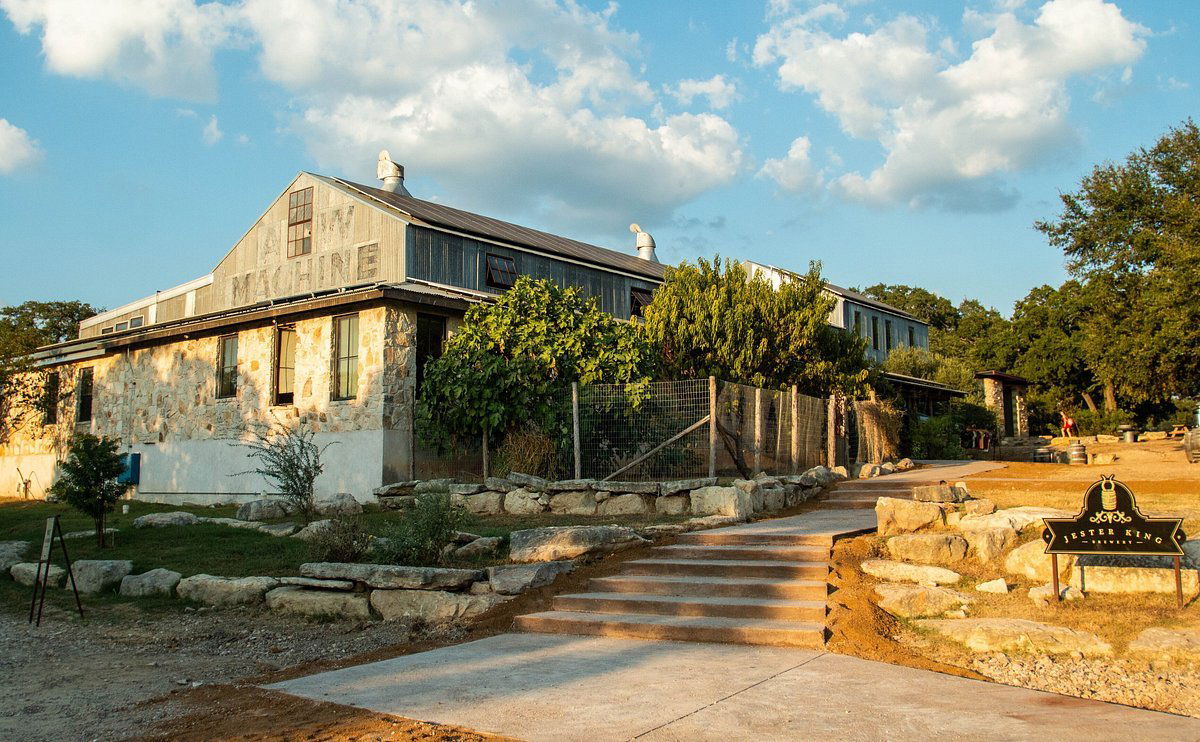
The drive out Fitzhugh Road from Austin tells you something before you arrive. The terrain shifts from suburban sprawl to cedar scrub and limestone ridge, and by the time you reach the farm at 13187, the city feels genuinely remote. That physical distance is not incidental to Jester King Brewery's identity — it is the premise. The Hill Country microclimate, the native flora, and the open-air fermentation environment shape the beer in ways that a controlled urban production facility cannot replicate. This is a brewery where the land functions as an ingredient.
In the American craft beer scene, farmhouse and mixed-fermentation production occupies a smaller, more demanding niche than the hop-forward ales and lagers that dominate most taprooms. Jester King has operated squarely within that niche since its founding, positioning its programme against Belgian and French saison traditions while grounding the flavours firmly in Central Texas. The result is a category of beer that reads as local precisely because it could not be made identically anywhere else. Wild yeast captured from the surrounding environment, fruit sourced from Texas producers, and extended barrel aging all contribute to a house character that takes years of palate calibration to read fully.
The Beer as the Cocktail Programme
At most craft operations, the tap list is a rotation of styles. At Jester King, the offering functions more like a bar programme built around technique and origin: mixed-fermentation saisons, spontaneously fermented ales, fruit-conditioned bottles, and collaborations that bring outside yeast cultures into contact with the house microbiome. The conceptual logic is closer to a serious spirits or natural wine list than to a conventional brewery menu.
The production approach draws on methods associated with Belgian lambic traditions — open fermentation vessels, extended contact with ambient microflora, and patience measured in months or years rather than weeks. Where American craft brewing frequently prioritises speed and consistency, Jester King's output is deliberately variable. Two bottles from the same batch may express differently depending on when they were opened. That unpredictability is not a flaw in the programme; it is the programme. Visitors who arrive expecting a predictable pint find instead a tasting format that rewards attention and return visits.
Bottle releases are a significant part of how the brewery operates. Limited runs of aged and fruit-fermented beers sell through the taproom and occasionally via pre-order, and they generate the kind of collector behaviour more commonly associated with rare wine allocations than craft beer. The secondary market for certain Jester King releases reflects genuine demand from drinkers outside Texas who cannot make the trip to Fitzhugh Road. For context, the Texas craft scene includes capable producers like Twisted X Brewing Company and Vista Brewing, both within Hays County , but neither occupies the same fermentation niche or commands the same national following among wild ale collectors.
The Farm Setting and What It Means Practically
The outdoor format is central to the visit. Picnic tables spread across the grounds, goats occupy a visible paddock, and the ambient noise is wind and conversation rather than curated playlist. This is not a designed rustic aesthetic layered over an urban production facility , the farm is operational, and the brewery sits within it. Eden East Farm, another Hays County venue where the agricultural setting anchors the experience, offers a useful reference point for how the Hill Country has developed a distinct category of destination drinking that requires visitors to leave the city intentionally.
The on-site kitchen produces wood-fired pizzas, which supply the food component without attempting to compete with the beer for attention. The pairing logic is functional rather than elaborate: the acidity and funk of a mixed-fermentation saison cuts through char and fat in a way that suits the format. Visitors making a day of the trip , the drive from central Austin runs roughly 30 to 40 minutes depending on traffic , tend to arrive mid-afternoon and stay through early evening, using the pizza and multiple pours to structure the session.
Weather matters here in a way it does not at an enclosed bar. The Texas summer heat pushes serious visits toward fall, winter, and spring. Weekend afternoons between October and April represent the optimal window, when temperatures sit in a range that makes extended outdoor drinking comfortable. Bottle release dates, which the brewery announces in advance, draw the largest crowds and benefit from early arrival.
Where Jester King Sits in the Wider American Wild Ale Conversation
American mixed-fermentation brewing has developed several geographic clusters over the past decade, with notable programmes in the Pacific Northwest, the Northeast, and isolated pockets of the South and Midwest. Texas was not an obvious candidate for farmhouse ale production given its climate, but Jester King's location in the Hill Country , where limestone aquifer water, seasonal humidity, and a specific set of native microorganisms converge , turned out to be genuinely suited to the style. The brewery is now referenced in discussions of American wild ale alongside producers that have been working in the format considerably longer.
For comparison outside Texas, the technical seriousness of Jester King's programme aligns it with bar and production cultures that prioritise craft depth over volume: Kumiko in Chicago and Bar Leather Apron in Honolulu both represent venues where the programme is built around technique and restraint rather than accessibility and scale. The parallel holds in the sense that all three reward visitors who arrive with prior knowledge of what the format demands. Similarly, Jewel of the South in New Orleans, Julep in Houston, Superbueno in New York City, ABV in San Francisco, Allegory in Washington, D.C., and The Parlour in Frankfurt on the Main each represent programme-driven drinking destinations where knowing the format before you arrive improves the visit materially.
Planning the Visit
Jester King operates on a farm property roughly 18 miles southwest of central Austin via Fitzhugh Road. The address , 13187 Fitzhugh Rd, Austin, TX 78736 , is direct to reach by car and not served by public transit, which means driving or arranging transport is a prerequisite. Weekend visits during bottle release periods draw significant crowds; a weekday afternoon in the shoulder season offers a more deliberate pace. The pizza kitchen provides enough food to sustain a multi-hour session. Those planning a broader exploration of Hays County's independent drinking scene should consult our full Hays County restaurants guide for neighbouring options across the county.
Frequently Asked Questions
What do regulars order at Jester King Brewery?
The house mixed-fermentation saisons and fruit-conditioned ales are the core of what makes a visit here distinct from any other Texas taproom. Regulars tend to work through the current draft list before moving to bottles, particularly limited releases that are only available on-site. The wood-fired pizza is ordered as a session anchor rather than a destination dish in its own right.
What is Jester King Brewery known for?
Jester King has built its reputation on spontaneously fermented and mixed-fermentation farmhouse ales made with ambient Hill Country microflora, local fruit, and extended barrel aging. Within Texas, it occupies a different tier from most craft producers , one defined by production philosophy rather than volume. Nationally, it is referenced among a small group of American breweries that have developed a credible wild ale tradition outside the Pacific Northwest and Northeast.
How hard is it to get in to Jester King Brewery?
Walk-in access to the taproom is generally available on regular operating days, though weekend afternoons and bottle release dates generate significant crowds. The outdoor format gives the property more capacity than an enclosed bar, which means the experience of a busy day is more about wait times for food and specific pours than outright exclusion. Bottle releases specifically can sell out quickly and are worth tracking in advance if a particular limited run is the objective.
What's Jester King Brewery a strong choice for?
If your interest is in mixed-fermentation and spontaneous ales produced in a genuine farm environment, Jester King is a clear destination. It is also a reasonable choice for a half-day trip out of Austin that combines serious beer with outdoor space and food. It is not the right fit for visitors seeking a conventional craft taproom with a broad, approachable tap list , the programme assumes some baseline familiarity with the style.
Does Jester King Brewery live up to the hype?
The national reputation for wild ale production is grounded in real technical commitment rather than marketing positioning. The variability between batches and the outdoor farm environment mean the visit experience depends on timing, weather, and which releases happen to be pouring , factors that can produce a significantly different impression depending on when you go. On the right afternoon, with the right bottles open, the case for the hype becomes apparent in the glass.
Is Jester King Brewery worth visiting if you're not already a craft beer enthusiast?
The farm setting and outdoor atmosphere give the visit an appeal that extends beyond the beer itself , the Hill Country landscape and the working farm environment make it a genuine half-day excursion rather than purely a drinking destination. That said, the beer programme is built around styles with high acidity, funk, and complexity that can read as challenging without prior exposure to the format. Visitors who arrive with some familiarity with Belgian farmhouse ales or natural wine will find the flavour logic easier to follow than those expecting a standard craft lager or IPA.
Related editorial
- Best Fine Dining Restaurants in ParisFrom three-Michelin-star icons to the next generation of Parisian chefs pushing boundaries, these are the restaurants that define fine dining in the world's culinary capital.
- Best Luxury Hotels in RomeFrom rooftop terraces overlooking ancient ruins to Michelin-starred hotel dining, these are the luxury hotels that make Rome unforgettable.
- Best Cocktail Bars in KyotoFrom sleek lounges to hidden speakeasies, Kyoto's cocktail scene blends Japanese precision with global influence in ways you won't find anywhere else.
Save or rate Jester King Brewery on Pearl
Keep this venue in your Pearl passport, rate it after you visit, and track it alongside every other place you collect.