
Bar in Granada, Spain
Restaurante Oliver
100ptsAlbaicín Neighbourhood Anchor
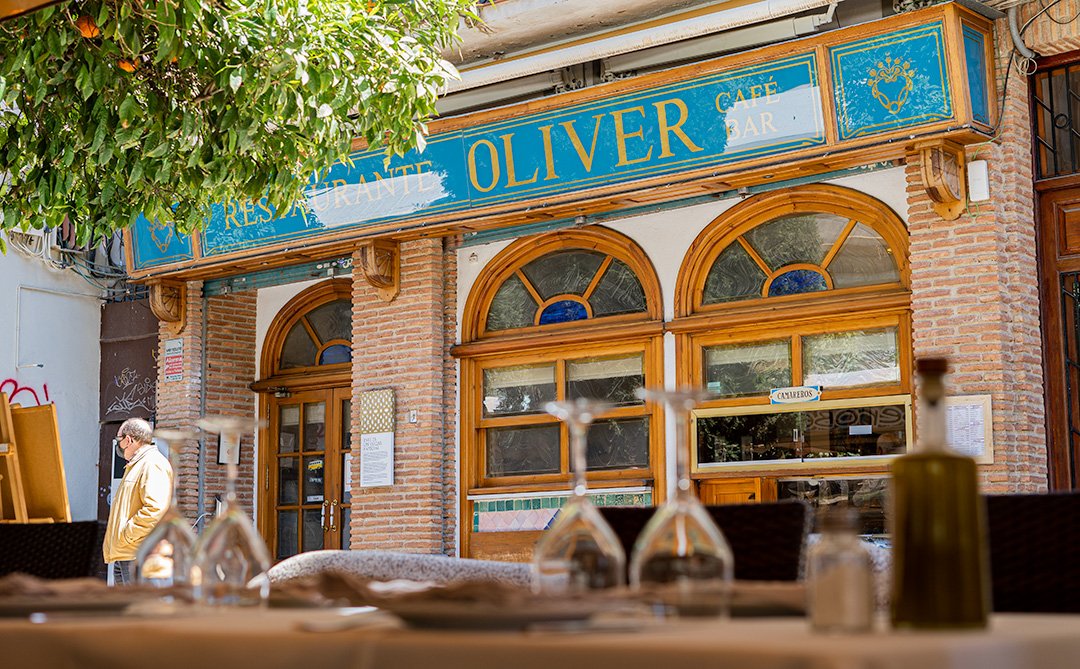
About Restaurante Oliver
On Plaza de la Pescadería in Granada's historic centre, Restaurante Oliver occupies one of the city's most animated squares, where bar culture and restaurant dining blur in the Andalusian tradition. Positioned among Granada's established drinking and eating addresses, it draws a mix of locals and visitors who treat the square itself as part of the experience. A reference point for the area's convivial, unhurried approach to hospitality.
A Square That Sets the Terms
Plaza de la Pescadería sits at the edge of Granada's Albaicín quarter, a compact, stone-flagged space where the city's social rhythm plays out across terraces and open doorways. In a city that takes its bar culture seriously, the plaza functions less as a backdrop and more as an active participant in the experience of eating and drinking here. Restaurante Oliver occupies number 12, a position that places it in direct conversation with one of the most socially charged public spaces in central Granada. The approach alone tells you something about what kind of evening you're signing up for: tables spill outward, voices carry, and the boundary between inside and the street is deliberately porous.
This is the context in which Granada's hospitality tradition makes most sense. Unlike Madrid's increasingly formalised cocktail culture, where venues like Angelita in Madrid have built identity around technical programmes and curated wine lists, or Barcelona's heritage bar scene anchored by places like Boadas in Barcelona, Granada operates on a different axis. The city's bar and restaurant addresses are measured as much by their integration into daily life as by any formal credential. Being on a square like Pescadería is itself a statement of position.
The Bar as Anchor
Granada's relationship with its bar counters is structurally different from most Spanish cities. The tapa-with-every-drink convention, still practiced in the city more consistently than elsewhere in Andalusia, means that the bar counter functions simultaneously as social space, food delivery mechanism, and informal meeting room. At Restaurante Oliver, as at comparable addresses around the centre, the person behind that counter carries more weight than a simple service role might suggest. In Granada's informal hospitality tradition, the bar presence is where the pace of an evening gets set, where regulars get recognised, and where the house character becomes legible to a newcomer within the first exchange.
That kind of counter hospitality has parallels in other Spanish cities operating at a similar register. Bar Sal Gorda in Seville works a comparable dynamic, as does Garito Cafe in Palma De Mallorca in a different format. What distinguishes the Granada version is the volume of competition operating within a very small radius. Within a short walk of Plaza de la Pescadería, addresses like Bar Aliatar Los Caracoles, Bar Gallardo, Taberna La Tana, and El Quejío wine bar all operate with their own distinct identities, drawing regulars for specific reasons rather than proximity alone. That density of alternatives raises the bar for any address that wants repeat custom.
Granada's Hospitality Tradition at Table
What Restaurante Oliver represents, within the city's broader dining culture, is the kind of address that functions as a reliable node in a neighbourhood social network. Granada's central eating and drinking circuit is not primarily tourist-driven, even if tourists move through it. The city's university population, its professional class, and the families who have been eating on these streets for generations create a base demand that keeps standards from drifting entirely toward visitor expectations. That local grounding is what distinguishes the better addresses from the ones that have learned to coast on footfall.
Andalusian food culture in Granada skews toward simplicity executed with care rather than technical elaboration. The region's proximity to the sea, the mountains, and centuries of Moorish agricultural legacy give local kitchens a larder that doesn't require much intervention to read well on a plate. Fried fish handled correctly, good olive oil, produce from the Vega de Granada's fertile basin, and the city's own ham tradition from the Alpujarras are the materials around which any credible local kitchen operates. The question, at any given address, is less what's on the menu and more whether the kitchen treats those materials with the attention they merit.
For visitors comparing Restaurante Oliver against the wider field of Granada central addresses, it helps to understand that the category here is not fine dining in any formal sense. It sits closer to the tier of convivial neighbourhood restaurants where eating is secondary to the full social occasion of being in a specific place at a specific time. Addresses at this tier in Spanish cities operate on a different logic than, say, La Margarete in Ciutadella or Garden Bar in Calvia, where the format and setting do more of the differentiating work. In Granada's centre, the differentiation comes from the human texture of the place: whether the staff know their regulars, whether the counter feels occupied or performative, and whether the kitchen respects its ingredients consistently across a long service.
Planning Your Visit
Plaza de la Pescadería is walkable from the main tourist axis around the Cathedral and the Bib-Rambla square, placing Restaurante Oliver in a zone that sees heavy foot traffic on weekend evenings and during the summer months. Granada's dinner hour runs late by northern European standards, with serious eating rarely beginning before 9pm and kitchen service often extending past midnight. Arriving earlier in the evening, particularly mid-week, gives a different and often more local experience of the square than the peak-hour weekend crowd provides.
Because no booking platform or phone contact appears in the publicly available record for this address, the practical approach for visitors is to treat it as a walk-in venue and plan accordingly, building flexibility into the evening rather than anchoring a fixed itinerary around a guaranteed table. This is consistent with how most addresses at this tier in Granada operate; the city's bar and restaurant culture is structured around spontaneity rather than advance reservation logic, particularly in the central zone. For broader orientation across the city's eating and drinking options, our full Granada restaurants guide maps the key addresses by neighbourhood and format, which helps set expectations before you arrive.
The Pescadería location also places the venue within reach of Bar Leather Apron in Honolulu-style technical ambition as a useful contrast point for travellers who move between craft cocktail culture in international cities and the more embedded, less formalised hospitality of a place like Granada's centre. The contrast is instructive: Granada doesn't position its bar culture through technical signalling. It positions it through density of use, longevity of presence, and the particular social confidence that comes from knowing a local square for decades.
Frequently Asked Questions
- What's the leading thing to order at Restaurante Oliver?
- Granada's tapa tradition means that ordering a drink typically brings food alongside it, so the structure of a meal here differs from a conventional restaurant sequence. The city's kitchen strengths run toward fried and cured preparations, produce from the Vega de Granada, and ingredients from the Alpujarras region. Without a current verified menu, the practical approach is to follow what the kitchen recommends on the day rather than arriving with fixed expectations.
- Why do people go to Restaurante Oliver?
- The draw is primarily locational and social. Plaza de la Pescadería is one of Granada's most active public squares, and Restaurante Oliver's position at number 12 places it at the centre of an evening circuit that combines eating, drinking, and extended time in a convivial public space. That combination is the point rather than any single dish or award credential, which aligns it with the broader Granada bar-restaurant tradition rather than destination dining in a formal sense.
- How far ahead should I plan for Restaurante Oliver?
- Based on the available record, no advance booking infrastructure is publicly listed for this address. Granada's central dining culture generally accommodates walk-in visitors, particularly mid-week and outside peak summer months. Arriving before 9pm on busy weekend evenings gives the leading chance of securing a table without a wait. For high-season travel, building venue flexibility into the evening is the most reliable approach.
- Is Restaurante Oliver suited to a long, unhurried evening or a quick stop between sights?
- The plaza setting and Granada's social dining conventions both favour an extended stay rather than a rapid turnover. Addresses on squares like Pescadería are calibrated for the Andalusian evening ritual of drinks, tapas, and conversation spread across a couple of hours rather than a single compressed sitting. Visitors treating it as a quick stop between attractions are likely to miss what makes the location worth choosing in the first place.
Related editorial
- Best Fine Dining Restaurants in ParisFrom three-Michelin-star icons to the next generation of Parisian chefs pushing boundaries, these are the restaurants that define fine dining in the world's culinary capital.
- Best Luxury Hotels in RomeFrom rooftop terraces overlooking ancient ruins to Michelin-starred hotel dining, these are the luxury hotels that make Rome unforgettable.
- Best Cocktail Bars in KyotoFrom sleek lounges to hidden speakeasies, Kyoto's cocktail scene blends Japanese precision with global influence in ways you won't find anywhere else.
Save or rate Restaurante Oliver on Pearl
Keep this venue in your Pearl passport, rate it after you visit, and track it alongside every other place you collect.