Uerige
Altstadt, Düsseldorf
Bar in Düsseldorf, Germany
 Book with Pearl
Why go
Uerige is the Düsseldorf pick for groups who want a casual, high-energy stop rather than a polished cocktail bar. It works especially well as a flexible early-evening anchor, while couples or wine-focused drinkers may prefer Weinlokal Galerie, Concept Riesling, or THE WELLEM Bar.
About Uerige
Uerige is a Düsseldorf venue with casual dress and daily hours from 10 AM to 12 AM. The strongest planning details are simple: it is open every day, it keeps evening hours, and it does not call for formal attire. Plan around those basics if you need a straightforward stop.
Plan this for a casual Düsseldorf stop
Use Uerige when you want a direct, casual option in Düsseldorf with broad daily opening hours. It is safest to treat it as a flexible stop rather than a tightly defined special-occasion plan.
If you are comparing venues for the same day or evening, consider Uerige alongside Weinlokal Galerie, Concept Riesling, THE WELLEM Bar, Bar & Smokers Lounge, or Bar Cherie, depending on what kind of outing you are planning. Uerige’s clearest distinction is its casual dress code and daily 10 AM–12 AM schedule.
How to use it in a Düsseldorf night
Uerige can fit into a Düsseldorf itinerary at many points in the day because it is open Monday through Sunday from 10 AM to 12 AM. That flexibility may be useful if you want to keep plans simple.
For readers mapping a fuller trip, use our full Düsseldorf guide for planning, and compare Uerige with other Düsseldorf options when deciding how to structure the evening.
Planning details
- Location
- Berger Str. 1, 40213 Düsseldorf, Germany
- Website
- uerige.de
- Phone
- +49 211 866990
The take
The Take
The Vibe
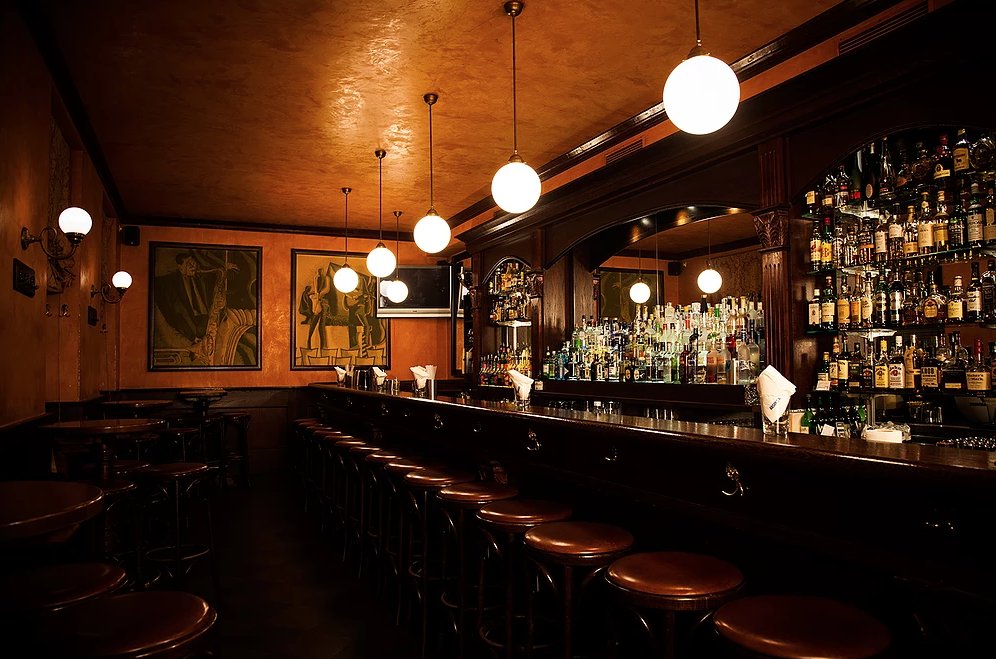
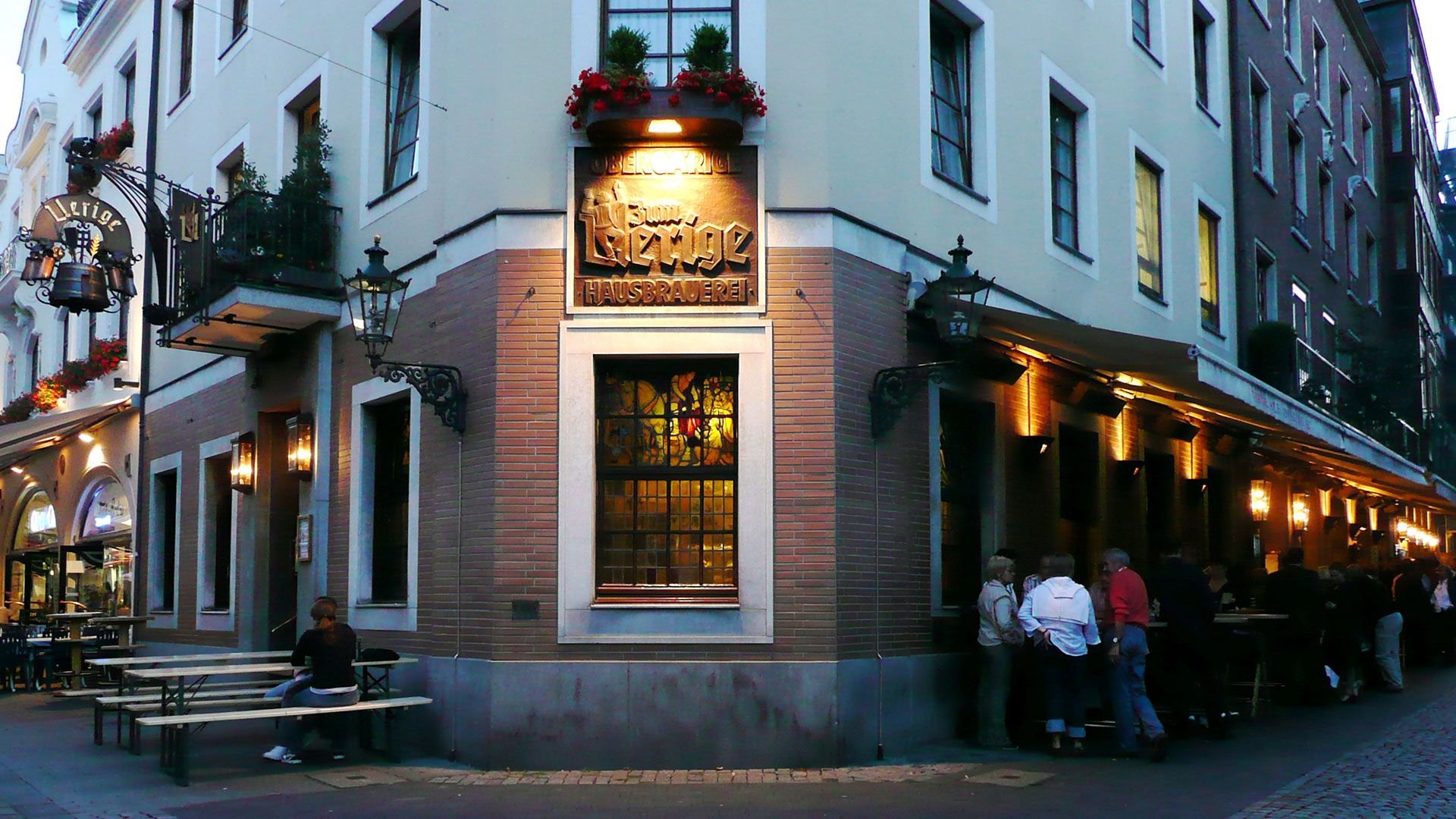
Uerige reads like a working brewpub kept exactly as it was meant to be: an old, heavy-timbered building that announces itself on Berger Strasse and an interior that prioritises functionality over design flourishes. Low ceilings and dark wooden panelling lend the room a warm, intimate density, while the presence of the brewery feels practical and immediate rather than theatrical. Lighting is set for drinking, not photography, and the smell of fermenting grain underlines the place’s purpose. The result is a historically rooted, no-nonsense atmosphere that celebrates doing one thing — Altbier — exceptionally well.
Best For
Uerige is best for visitors who want an authentic Altstadt brewery experience rather than a curated craft-beer tasting. It suits after-work pours, casual hangouts and group outings where the point is convivial drinking in a traditional setting. The hall’s worn wooden benches and working-room feel encourage relaxed, social evenings rather than formal dining or special-occasion styling. If your aim is to sample a locally important Altbier in surroundings that have accumulated decades of conversation and practice, this is the place.
Ordering Tips
Expect minimal menu exposition: there are no tasting notes, no glassware programme and no hospitality storytelling. Ordering here is direct — the beer is the point — so don’t look for elaborate descriptions on the menu. If you want guidance, keep requests simple (ask what’s on tap) and be prepared to accept the house presentation; the venue’s tradition prioritises a straightforward serve over bells and whistles. Embrace the discipline: order the Altbier and let the brewery’s long-established approach speak for itself.
Venue details
Ambiance
Traditional dark wood interior with stained glass and pub furnishings; bustling outdoor beer garden with standing tables; lively, convivial atmosphere with locals and tourists mingling.
Tags
Vibe
Best For
Experience
Format
At the Bar
- Bar Category
- Beer Bar
- Late Night
- Closes by Midnight
- Music
- Live Music, Mainly Traditional
- Live Music
- Yes
Signature Pours
Altbier
Know before you go
Know Before You Go
- Getting there
- Berger Str. 1, 40213 Düsseldorf, Germany
Planning details
Location
Also consider
Also Consider
- Weinlokal Galerie, Notable alternative
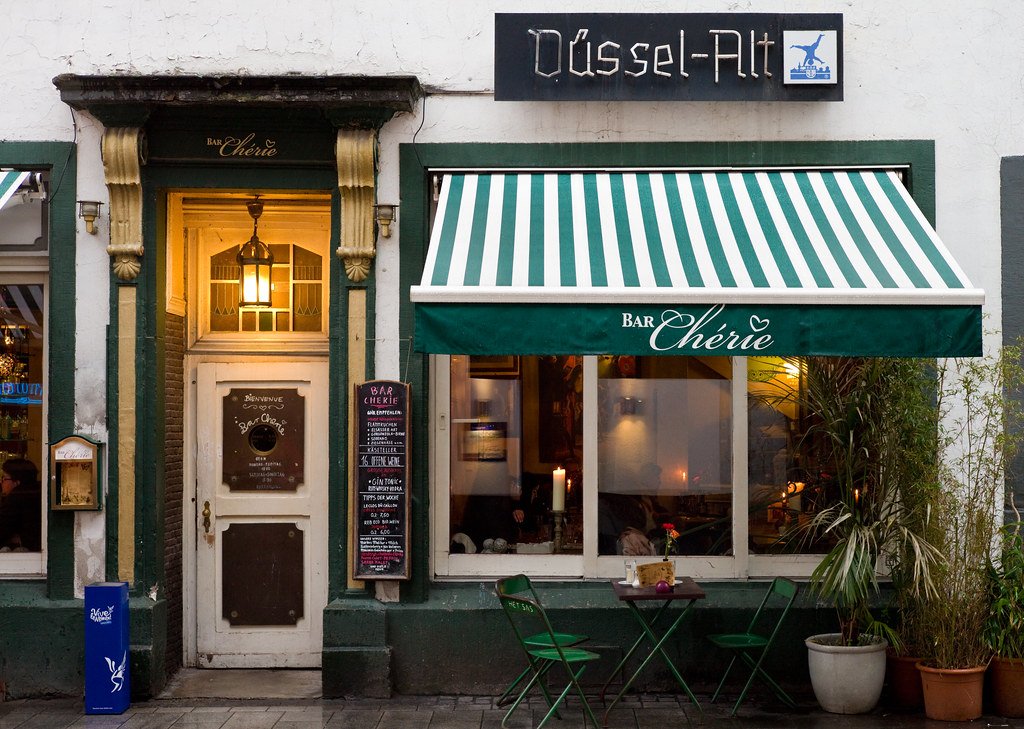
- Bar Cherie, Notable alternative
- Concept Riesling, Notable alternative
- THE WELLEM Bar, Notable alternative
- Bar & Smokers Lounge, Notable alternative
Bar context
How It Compares
Choose Uerige when ease and group energy matter more than a composed bar experience. Against Weinlokal Galerie and Concept Riesling, it is the more casual call: better for a mixed group that wants a lively stop, less suited to guests who want a wine-led evening with slower pacing.
Bar Cherie and THE WELLEM Bar are stronger if ambiance and date-night control matter. THE WELLEM Bar is the safer choice for a polished hotel-bar feel; Uerige is better when the group wants less formality and fewer moving parts.
Bar & Smokers Lounge is the cross-shop for a later, darker, more lounge-oriented drink. If the plan is conversation, pick the lounge. If the plan is a social Düsseldorf stop that can handle a larger party without turning the evening into a booking exercise, pick Uerige.
Explore Düsseldorf
Around this place
Discover more on Pearl
Unlock the full Uerige guide in Pearl, including awards, comparisons, FAQs, planning details, and nearby places.
Compare Uerige
| Venue | Location | Awards |
|---|---|---|
| Uerige | Düsseldorf | No published awards |
| Weinlokal Galerie | Düsseldorf | No published awards |
| Bar Cherie | Düsseldorf | No published awards |
| Concept Riesling | Düsseldorf | Star Wine Lists 2026 · #1 |
| THE WELLEM Bar | Düsseldorf | No published awards |
| Bar & Smokers Lounge | Düsseldorf | No published awards |

How Uerige Düsseldorf compares with similar nearby venues.
FAQ
Frequently Asked Questions
Is Uerige good for a date?
Uerige works best as a casual Düsseldorf option rather than a specifically date-focused pick. It has a casual dress code and is open daily from 10 AM to 12 AM.
What's the crowd like at Uerige?
Plan around the basics: Uerige is a casual Düsseldorf venue open every day from 10 AM to 12 AM.
What's the best time to go to Uerige?
Uerige is open from 10 AM to 12 AM every day, so the practical choice depends on how it fits with your other Düsseldorf plans.
Is Uerige good for groups?
If you are comparing options for a group outing, consider Uerige alongside Weinlokal Galerie or Concept Riesling, then choose based on your own needs and the latest venue details.
Is the food good at Uerige?
If food is the priority, check current venue information before making plans, or compare with other Düsseldorf venues such as Bar Cherie or THE WELLEM Bar.
Do I need a reservation at Uerige?
Uerige is open daily from 10 AM to 12 AM, but you should check directly for current booking guidance.