
Bar in Detroit, United States
Baobab Fare
100ptsEast African Communal Table
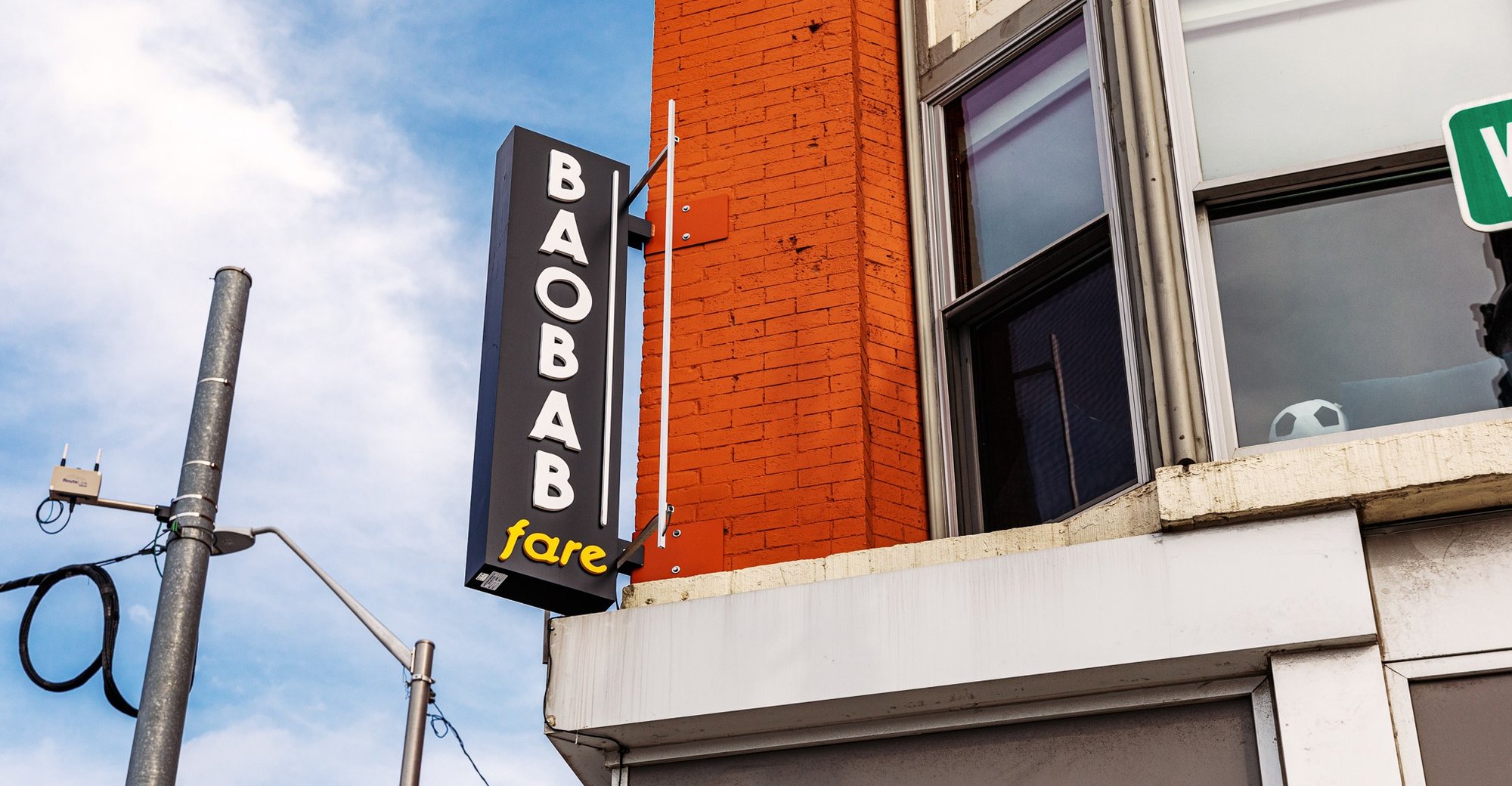
About Baobab Fare
Baobab Fare sits on Woodward Avenue in Detroit's New Center neighbourhood, bringing East African cooking into a dining conversation the city has been slow to host. The restaurant represents a strand of American dining that treats the progression of a meal as a vehicle for introducing unfamiliar ingredients and techniques to a broad audience, without flattening the source material in the process.
Woodward Avenue's East African Table
Detroit's Woodward Avenue corridor has long functioned as a kind of stratigraphic record of the city's ambitions: Midtown galleries giving way to New Center institutions, then stretches of neighbourhood commerce that reward attention. At 6568 Woodward, Baobab Fare occupies that middle register, in a building that sits between the cultural infrastructure of Wayne State's orbit and the residential density further north. The approach is matter-of-fact. There is no elaborate threshold to cross, no theatrical entrance. The room positions itself as a place to eat seriously, not to perform eating.
East African cooking, and specifically the food traditions of the Great Lakes and Horn regions, has found a foothold in American cities largely through community-anchored restaurants rather than fine-dining translation. Baobab Fare belongs to that tradition: the cooking is grounded in recognisable reference points for those who know the cuisine, and accessible enough in its structure to function as a genuine introduction for those who do not. In the context of Detroit's dining scene, which has deepened considerably over the past decade across its midtown and new centre corridors, a restaurant working in this register represents something the city's food geography was missing.
The Architecture of the Meal
East African cooking does not lend itself to a strict first-course, main-course, dessert framework. The meal at a table like this tends to arrive in phases that overlap and accumulate: smaller dishes that establish a spice vocabulary, then a central presentation that rewards the preparation. For diners accustomed to European sequencing, the experience of eating communally from a shared platter, or of working through dishes designed to be combined rather than isolated, carries its own logic that becomes apparent quickly.
The teff injera — the sourdough flatbread central to East African table culture — is the instrument through which a meal like this is read. Its fermented sourness functions as a counterweight to the warmth of berbere-spiced proteins and the richness of clarified butter used in many preparations. This is not incidental; the interplay between the bread and what it carries is the structural argument of the meal. Restaurants working in this tradition live or die by whether that relationship is calibrated correctly. When it is, the progression through the table has a coherence that lingers past the eating itself.
Detroit's comparison set in this category is thin, which places Baobab Fare in a position that requires it to function simultaneously as introduction and destination. That double function is rarely comfortable for a kitchen, but it tends to produce menus with a certain editorial clarity: nothing is there by accident, because the kitchen cannot rely on the city already knowing the reference points. Elsewhere in the American Midwest and mid-Atlantic, East African restaurants have had the benefit of established diaspora communities to provide both an informed customer base and a competitive pressure that sharpens kitchens. Detroit's version of this equation is still forming.
Detroit's Dining Position and What It Means Here
Detroit's restaurant scene in 2024 sits in a productive transitional moment. The rebuilding of the city's hospitality infrastructure, which accelerated through the mid-2010s, has produced a peer set of independent restaurants in the Midtown, Corktown, and New Center corridors that compete with one another on quality rather than novelty. Bars like 1459 Bagley St, 3Fifty Terrace, Andrews on the Corner, and Atwater Brewery & Tap House have helped establish a bar culture that runs alongside the city's food ambition. See our full Detroit restaurants guide for a broader map of how these pieces fit together.
What Baobab Fare does within this environment is occupy a category that the city's other independent restaurants are not addressing. The closest competitive pressure comes not from neighbouring restaurants but from the broader national conversation about African diaspora cooking, a conversation that has intensified as restaurants in other American cities have pushed it into mainstream critical view. For comparative reference, the technical seriousness that marks the better programmes in American cocktail and hospitality , places like Kumiko in Chicago, Jewel of the South in New Orleans, Julep in Houston, Bar Leather Apron in Honolulu, Superbueno in New York City, ABV in San Francisco, and The Parlour in Frankfurt , reflects how seriously American hospitality has begun treating cuisines and drinking cultures outside its traditional European reference frame. Baobab Fare participates in that shift at the kitchen level.
Planning a Visit
Baobab Fare is located at 6568 Woodward Avenue, Suite 100, in Detroit's New Center neighbourhood, accessible by the QLINE streetcar which runs along Woodward and connects New Center to Midtown and Downtown. The restaurant's position on a major transit corridor makes it more direct to reach than many of Detroit's independent dining destinations, which are often spread across the city's wider geography. Given the restaurant's profile and the relative scarcity of comparable cooking in the city, checking current reservation availability ahead of any planned visit is advisable, particularly for weekend evenings. Specific booking details, current hours, and pricing are leading confirmed directly through the restaurant, as these can shift with seasonal demand.
Frequently Asked Questions
- What's the atmosphere like at Baobab Fare?
- Baobab Fare reads as a neighbourhood restaurant with a focused culinary identity rather than a destination built around spectacle. The room on Woodward Avenue is functional and unpretentious, which fits the cooking: East African food traditions are communal and direct, and the setting supports that without adding theatrical distance. Detroit's New Center location places it in a stretch of the city that rewards diners who are willing to travel slightly beyond the Midtown concentration.
- What's the signature drink at Baobab Fare?
- Specific drink programme details are not confirmed in available data for this venue. East African dining traditions do not centre on a cocktail culture in the way that, say, a New Orleans bar like Jewel of the South might. If beverages are a priority, confirm the current offering directly with the restaurant before visiting.
- What should I know about Baobab Fare before I go?
- The cooking is grounded in East African food tradition, which means communal eating formats, injera as the central bread, and spice profiles built around berbere and related blends. For diners new to this cuisine, approaching the meal as a shared, accumulative experience rather than a sequence of individual plates produces a better result. Detroit has few direct competitors in this category, which means Baobab Fare is doing double work as both community restaurant and public introduction to the cuisine.
- How far ahead should I plan for Baobab Fare?
- Given the restaurant's position as the primary venue for this cuisine type in the Detroit market, and the broader growth of interest in East African cooking nationally, planning ahead is sensible. Specific booking windows are not confirmed in available data, but checking availability at least a week in advance for weekend visits is a reasonable baseline. Contact the restaurant directly for current reservation procedures.
- Is Baobab Fare good value for a bar?
- Baobab Fare is a restaurant, not a bar, so bar-value comparisons are not the relevant frame. In the context of Detroit's independent restaurant scene, East African restaurants in comparable American markets typically occupy a mid-range price position. Specific pricing for Baobab Fare is not confirmed in available data; verify current menu pricing before visiting.
- Does Baobab Fare serve food that works for diners unfamiliar with East African cuisine?
- East African cooking, and specifically the Ethiopian and Burundian traditions that inform restaurants in this category, is structured in a way that tends to be accessible to first-time diners: shared platters, communal eating, and a bread-centred format make the meal self-explanatory at the table. Baobab Fare, operating in a Detroit market where the cuisine has limited prior exposure, occupies a position that effectively requires it to function as an introduction as well as a destination for those already familiar with the food. That dual function is a reasonable indicator that the restaurant is oriented toward an inclusive dining experience.
More bars in Detroit
- 1459 Bagley St1459 Bagley St is a Corktown address worth watching, but confirmed details on pricing, hours, and programming aren't yet on record. Walk-ins appear to be the only booking option. For now, pair any visit with a confirmed nearby spot — Andrews on the Corner or Bad Luck Bar — rather than treating this as a standalone destination.
- 3Fifty Terrace3Fifty Terrace is a rooftop venue in downtown Detroit at 350 Madison St, best suited to date nights and milestone occasions when the city skyline earns its keep. Booking is straightforward with no significant lead time required. For a celebratory evening that gets better as the night deepens, it competes on setting where most Detroit bars compete on program.
Related editorial
- Best Fine Dining Restaurants in ParisFrom three-Michelin-star icons to the next generation of Parisian chefs pushing boundaries, these are the restaurants that define fine dining in the world's culinary capital.
- Best Luxury Hotels in RomeFrom rooftop terraces overlooking ancient ruins to Michelin-starred hotel dining, these are the luxury hotels that make Rome unforgettable.
- Best Cocktail Bars in KyotoFrom sleek lounges to hidden speakeasies, Kyoto's cocktail scene blends Japanese precision with global influence in ways you won't find anywhere else.
Save or rate Baobab Fare on Pearl
Keep this venue in your Pearl passport, rate it after you visit, and track it alongside every other place you collect.