
Bar in Dallas, United States
Uchi Dallas
100ptsIngredient-Rotation Japanese
About Uchi Dallas
Uchi Dallas on Maple Ave sits inside Uptown's densest block of serious dining, where Japanese-influenced cooking has carved a permanent place in the city's premium tier. The kitchen works a format that pairs technical precision with ingredient sourcing drawn from sustainable and ethical supply chains, placing it in a cohort of American restaurants that treat environmental accountability as a baseline rather than a marketing angle.
Uptown's Benchmark for Ingredient-Led Japanese Cooking
Maple Avenue in Uptown Dallas runs through one of the city's most concentrated strips of destination dining, where the competition for serious evening meals is real and the clientele largely knows the difference between a polished room and a thoughtful one. Uchi Dallas, at 2817 Maple Ave, occupies that stretch not as a novelty but as an established presence in a category that has grown considerably across American cities over the past decade: Japanese-influenced, chef-driven restaurants that treat sourcing and sustainability as structural commitments rather than seasonal talking points.
The Uchi brand has its roots in Austin, where the original location established a reputation for Japanese cooking interpreted through the lens of American ingredients and technique. That framework — rigorous fish sourcing, seasonal produce, a kitchen culture attentive to waste — translates to Dallas with the added pressure of a city that has developed genuine sophistication in its dining expectations. Uptown in particular draws a crowd that has eaten at serious restaurants in Tokyo, New York, and Houston, which means the context for evaluation is broader than the local scene alone.
A Kitchen Philosophy Grounded in Sourcing, Not Spectacle
The conversation around sustainability in fine dining often collapses into vague language about local farms and responsible fishing without any structural accountability behind it. The more rigorous version of that conversation, which has been taking place across serious American kitchens for roughly fifteen years, concerns how a restaurant makes sourcing decisions when the ethical option is harder to obtain, more expensive, or less consistent. Uchi's approach across its locations has been associated with exactly this harder version: working with suppliers whose practices can be verified, reducing dependency on species under pressure, and maintaining a menu that responds to what is actually available rather than what a printed card promises year-round.
In Dallas, that philosophy intersects with a regional supply base that is more varied than the city's beef-and-barbecue identity might suggest. Texas coastal waters, Gulf fisheries, and a growing network of farm operators in Central Texas and the Hill Country provide a sourcing geography that rewards kitchens willing to build relationships rather than order from a commodity distributor. For a Japanese-influenced restaurant, this creates an interesting tension: classical Japanese technique is deeply tied to specific ingredients and seasons, yet the American context demands adaptation. The kitchens that resolve this tension well , and Uchi has consistently been cited among them , do so by treating American ingredients with the same precision and respect that Japanese tradition applies to its own.
The Room and What to Expect on Arrival
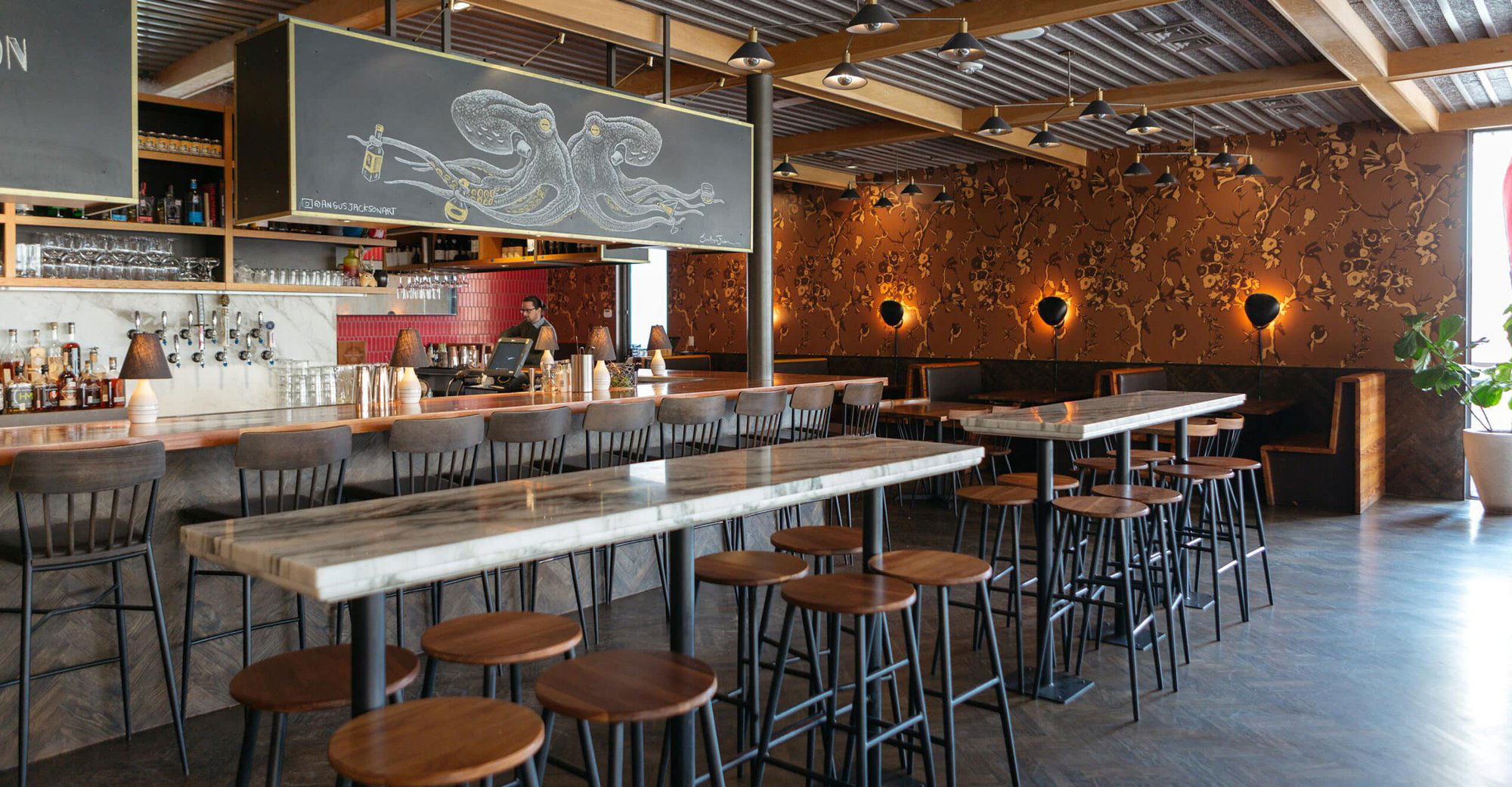
Maple Avenue at night has a particular energy: Uptown's pedestrian traffic, the proximity of the Design District a few blocks south, and the mix of residential and commercial use create a street that feels active without tipping into the transactional noise of a pure entertainment district. Arriving at Uchi Dallas, the transition from street to interior is the kind that good restaurants in this tier manage carefully , a shift in light, volume, and pace that signals you've moved into a different register of evening without overplaying the drama.
The format at Uchi sits in the shared-plates Japanese tradition, where a meal is constructed from multiple smaller courses rather than a single protein-and-sides plate. This format has practical sustainability advantages: it allows the kitchen to work with a wider range of ingredients in smaller quantities, reducing the over-ordering that drives food waste in more conventional formats. It also gives the kitchen more flexibility to substitute based on what arrived that morning from the fish market or farm delivery, without the diner experiencing it as a disruption.
Planning a visit benefits from some advance thought. Uchi Dallas is located in one of Uptown's busier corridors, and the restaurant draws from both the neighborhood's residential base and the broader Dallas dining public. For those building an evening around more than dinner, the bars along and near Maple Ave offer a logical pre- or post-meal option: 4525 Cole Ave and Alcove Wine Bar are within the Uptown corridor, while Ampelos Wines and Adair's Saloon represent two entirely different registers of Dallas drinking culture worth knowing about. For a full orientation to the city's dining and bar scene, the EP Club Dallas guide covers the range from Deep Ellum to Uptown to the Design District.
How Uchi Fits the Broader American Sustainability Conversation
The restaurants that have made sustainability a genuine operational commitment rather than a branding exercise share certain structural characteristics: they tend to have menus that change more frequently than competitors, they build closer relationships with a smaller number of suppliers, and they accept the operational complexity that comes with ingredient variability. This places them in a peer set that cuts across cuisine type and geography.
Across American cities, the bars and restaurants taking this approach most seriously tend to cluster in places where the cultural and economic conditions support it. In New York, Superbueno represents the kind of ingredient-conscious approach applied to a different culinary tradition. In Chicago, Kumiko has built a program around Japanese-inflected spirits and produce sourcing that parallels some of what Uchi does with food. On the West Coast, ABV in San Francisco applies similar rigor to its drinks program. In the South, Jewel of the South in New Orleans and Julep in Houston demonstrate that the Gulf South has its own version of this conversation underway. Even internationally, the thread connects: Bar Leather Apron in Honolulu and The Parlour in Frankfurt each operate within local sourcing frameworks that reflect similar values applied to entirely different contexts.
Uchi Dallas sits inside this broader movement as one of its more established American representatives in the Japanese-influenced category, with a track record long enough to be evaluated on outcomes rather than intentions.
Planning Your Visit
Uchi Dallas operates at 2817 Maple Ave in Uptown, a neighborhood well-served by rideshare from downtown Dallas and walkable from several Uptown hotels. Given the shared-plates format, tables of two to four tend to move through the menu most flexibly, with enough dishes ordered to cover the range of the kitchen's current sourcing. The cocktail program at Uchi locations has historically complemented the food's Japanese-American framework, with drinks built around clean, precise flavor profiles rather than heavily sweet or tropical constructions. Specific reservation and booking details are leading confirmed directly with the restaurant, as policies and availability at this tier of Uptown dining shift with demand.
Frequently Asked Questions
What is Uchi Dallas known for?
Uchi Dallas is known as one of Uptown's anchors for Japanese-influenced American cooking, with a format built around shared plates and an ingredient sourcing approach that has been associated with the Uchi brand across multiple cities. In Dallas, it occupies a distinct position in the premium dining tier on Maple Ave, drawing a crowd that ranges from neighborhood regulars to visitors benchmarking the city's serious restaurant scene against peers in Austin, Houston, and beyond.
What cocktail do people recommend at Uchi Dallas?
Uchi's cocktail programs across its locations have built a reputation for restraint and precision, favoring Japanese whisky, sake-adjacent spirits, and clean citrus-driven builds over heavily sweetened or theatrically garnished drinks. Specific current menu items are leading confirmed on arrival, as the drinks list at Uchi tends to rotate in parallel with the food, responding to seasonal ingredient availability. The overall program aligns with the kitchen's sourcing philosophy rather than operating as a separate entity. For a broader sense of the Dallas cocktail scene, the EP Club Dallas guide covers the range from craft-focused to neighborhood bars.
Do they take walk-ins at Uchi Dallas?
Uchi Dallas, at 2817 Maple Ave in Uptown, operates in a dining tier where advance reservations are the practical default. Walk-in availability depends on the night and time, with earlier seatings on weeknights offering the most realistic chance at a same-day table. The restaurant's position in one of Uptown's most active dining corridors means demand is consistent rather than seasonal. Confirming current reservation policy directly with the venue is advisable before arriving without a booking.
How does Uchi Dallas approach sustainable sourcing compared to other Japanese-influenced restaurants in Texas?
Uchi's approach across its locations has been characterized by working with verifiable suppliers, rotating menu items based on ingredient availability, and avoiding over-reliance on species under commercial pressure. In the Texas context, this means drawing on Gulf Coast fisheries and Central Texas farm networks rather than defaulting to commodity-distributed seafood, which places Uchi in a narrower peer set than the broader category of upscale Japanese restaurants in Dallas and Houston. The shared-plates format supports this operationally, allowing the kitchen to absorb daily sourcing variability without structural disruption to the guest experience.
Related editorial
- Best Fine Dining Restaurants in ParisFrom three-Michelin-star icons to the next generation of Parisian chefs pushing boundaries, these are the restaurants that define fine dining in the world's culinary capital.
- Best Luxury Hotels in RomeFrom rooftop terraces overlooking ancient ruins to Michelin-starred hotel dining, these are the luxury hotels that make Rome unforgettable.
- Best Cocktail Bars in KyotoFrom sleek lounges to hidden speakeasies, Kyoto's cocktail scene blends Japanese precision with global influence in ways you won't find anywhere else.
Save or rate Uchi Dallas on Pearl
Keep this venue in your Pearl passport, rate it after you visit, and track it alongside every other place you collect.