
Bar in Burnaby, Canada
Pear Tree Restaurant
100ptsBurnaby Neighbourhood Anchor
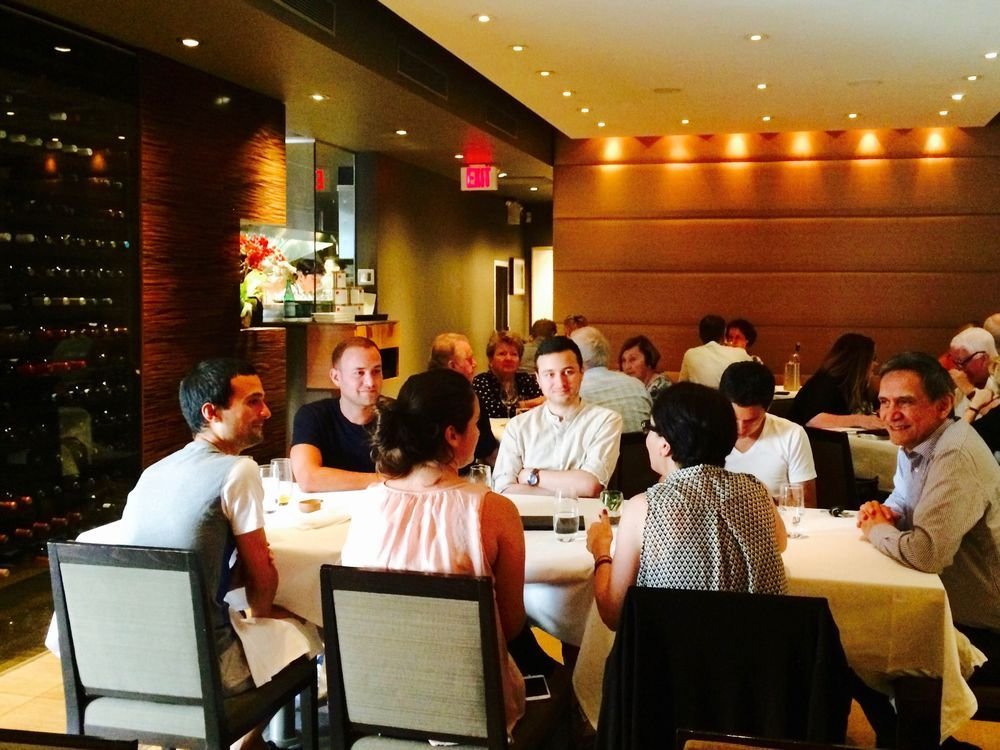
About Pear Tree Restaurant
Pear Tree Restaurant sits on East Hastings Street in Burnaby, occupying a stretch of the corridor that has quietly accumulated more serious dining options than its postal code might suggest. Without the volume or profile of Vancouver's downtown bar scene, it operates at a remove that rewards those who seek it out rather than stumble across it.
East Hastings and the Case for Looking Past Vancouver's Core
The stretch of East Hastings that runs through Burnaby's Hastings-Sunrise fringe has never carried the profile of Gastown or Mount Pleasant, and that gap in attention is largely what defines its dining character. Restaurants here don't compete on neighbourhood cachet. They compete on the room itself, on what's poured, and on whether the experience justifies the deliberate trip across the boundary from Vancouver proper. Pear Tree Restaurant, at 4120 E Hastings St, sits squarely in that context: a Burnaby address that asks guests to make a considered choice rather than an opportunistic one.
That dynamic shapes what a serious drinks program means in this part of the city. In downtown Vancouver, a well-stocked bar benefits from foot traffic, from the overflow of hotel guests, from proximity to theatre crowds. On East Hastings in Burnaby, the back bar has to do heavier editorial work. The bottles on the shelf are a statement of intent, not a passive amenity. Venues that invest in spirits depth here are signalling something specific about their guest and about their own ambitions. For a fuller map of where Pear Tree sits relative to its Burnaby peers, the our full Burnaby restaurants guide provides useful orientation.
Spirits Depth as an Editorial Statement
Across Canada's premium bar scene, the past decade has produced a clear bifurcation: high-volume venues that rotate stock quickly and keep the back bar commercially predictable, and lower-capacity rooms that treat spirit selection as a curatorial discipline. The latter category is where the most interesting drinking happens, and where the back bar becomes a record of taste rather than a logistics decision.
Burnaby is not the obvious geography for this kind of program. The comparison cities are instructive. Atwater Cocktail Club in Montreal has built its reputation on precisely this model: a focused, thoughtful pour list that operates as an argument about what cocktails should be. Botanist Bar in Vancouver, within a luxury hotel context, applies serious curation to both spirits and botanical ingredients. Bar Mordecai in Toronto runs a tightly edited program built around depth over breadth. What connects them is the understanding that a curated back bar is an argument, not a catalogue.
The question worth asking of any room that positions itself in this tier is whether the curation reflects genuine knowledge or surface-level aesthetics. Rare bottles without provenance context, extensive menus without a discernible point of view, or a back bar assembled for Instagram rather than for drinking are the tells that separate serious programs from their imitators. The venues that hold up over time are those where the pour list tells a coherent story.
Placing Pear Tree in the Regional Conversation
British Columbia's premium drinking scene is concentrated in Vancouver proper, with outliers that punch above their weight in Whistler and Victoria. Bearfoot Bistro in Whistler has long operated as a case study in how a resort context can support serious spirits depth, including one of Canada's more documented Champagne and spirits collections. Humboldt Bar in Victoria demonstrates that capital-city scale doesn't preclude focused craft programming. Burnaby operates in neither of those contexts. It's a mid-sized suburb adjacent to a major city, which means a venue like Pear Tree competes partly against Vancouver's pull and partly against local alternatives like Green Leaf Sushi in Burnaby, which occupies a different format but speaks to the same neighbourhood audience.
What the East Hastings address does offer is a certain kind of guest loyalty. In cities where the bar scene is dense and competitive, turnover is high and regulars are hard to cultivate. In Burnaby, a room that develops a reputation for consistent quality tends to hold its audience more durably. That dynamic favours the kind of program built on depth: a guest who returns fortnightly for the same well-sourced whisky or the same carefully made stirred drink is a different kind of audience than the first-time tourist working through a list of Gastown bars.
What the Room Implies About the Occasion
Dining and drinking on East Hastings in Burnaby implies a specific kind of occasion. It is not the spontaneous after-work drink, not the tourist iteration through a city's highlights, and not the special-occasion splurge anchored by a Michelin footnote. It is, more precisely, the choice of someone who has either a neighbourhood attachment or a specific reason to make the trip. That context shapes what a well-executed evening looks like here versus what it looks like at, say, Bar Leather Apron in Honolulu or Missy's in Calgary, both of which operate within distinct local drinking cultures that carry their own gravitational pull.
For comparison points further east, Grecos in Kingston and Kenzington Burger Bar in Barrie both illustrate how mid-market Canadian cities develop their own hospitality identities independent of Toronto or Montreal's dominant influence. Burnaby's situation is analogous: defined partly by proximity to Vancouver, but increasingly asserting its own dining character. Auberge Saint-Antoine in Quebec represents the opposite end of the positioning spectrum, where heritage property status and Relais and Châteaux membership do the contextual work automatically. Pear Tree operates without those external validators, which means the room itself carries the full weight of the argument.
Planning a Visit
Pear Tree Restaurant is located at 4120 E Hastings St, Burnaby, BC V5C 2J4, accessible by transit along the East Hastings corridor from Vancouver. Given the absence of a listed website or phone number in the public record, the most reliable approach is to visit in person or use a third-party reservation platform to check current availability and hours before making the trip. As with most independent restaurants operating outside Vancouver's core, availability and format details can shift seasonally, so confirming ahead is the practical default.
Frequently Asked Questions
What cocktail do people recommend at Pear Tree Restaurant?
Without a confirmed cocktail menu in the public record, specific drink recommendations can't be verified. What the East Hastings context suggests is that a room positioning itself at this address tends to lean toward considered, spirit-forward pours rather than high-volume trend-chasing. Asking the bar staff directly for what's currently being made well is the most reliable approach in a room of this type.
What's the defining thing about Pear Tree Restaurant?
Its Burnaby address on East Hastings places it outside Vancouver's main dining orbit, which means it functions on the basis of repeat local loyalty rather than tourist foot traffic or neighbourhood cachet. In a city-suburb relationship where the major dining credentials cluster in Vancouver proper, a room that holds a consistent audience in Burnaby is doing something specific right.
Is Pear Tree Restaurant reservation-only?
No booking method, phone number, or website is confirmed in the public record for Pear Tree Restaurant. The practical recommendation is to check a third-party platform or visit the address directly to confirm current reservation policy. This is especially relevant for weekend evenings, when demand at independent East Hastings restaurants tends to exceed walk-in capacity.
When does Pear Tree Restaurant make the most sense to choose?
It makes the most sense when you're already in the Burnaby or East Hastings area and want a sit-down meal with more intention than a casual neighbourhood spot, or when you're making a deliberate trip across from Vancouver to a room that has built a local reputation. It is less suited to the spontaneous night out anchored by Vancouver's denser, more navigable downtown bar and restaurant grid.
Does Pear Tree Restaurant live up to the hype?
The absence of major documented awards or formal critical recognition in the public record means the hype, such as it is, operates through word of mouth and neighbourhood loyalty rather than external validation. That is not a negative signal in itself: some of the most consistent independent restaurants in Canadian mid-market suburbs operate exactly this way, holding their audience through quality rather than accolades. The honest answer is that the experience will depend on what you're calibrating against.
Is Pear Tree Restaurant associated with any particular cuisine style or regional cooking tradition?
No cuisine type is confirmed in the public record, which is itself a data point: independent restaurants on the Burnaby stretch of East Hastings often occupy a generalist or continental format rather than a tightly defined single-cuisine identity. This is a common pattern in suburban Canadian dining, where neighbourhood breadth tends to outweigh specialist depth. Checking current menus through a third-party platform before visiting will give the clearest picture of where the kitchen is currently focused.
Related editorial
- Best Fine Dining Restaurants in ParisFrom three-Michelin-star icons to the next generation of Parisian chefs pushing boundaries, these are the restaurants that define fine dining in the world's culinary capital.
- Best Luxury Hotels in RomeFrom rooftop terraces overlooking ancient ruins to Michelin-starred hotel dining, these are the luxury hotels that make Rome unforgettable.
- Best Cocktail Bars in KyotoFrom sleek lounges to hidden speakeasies, Kyoto's cocktail scene blends Japanese precision with global influence in ways you won't find anywhere else.
Save or rate Pear Tree Restaurant on Pearl
Keep this venue in your Pearl passport, rate it after you visit, and track it alongside every other place you collect.