
Bar in Barnard, United States
Twin Farms
100ptsAll-Inclusive Seclusion
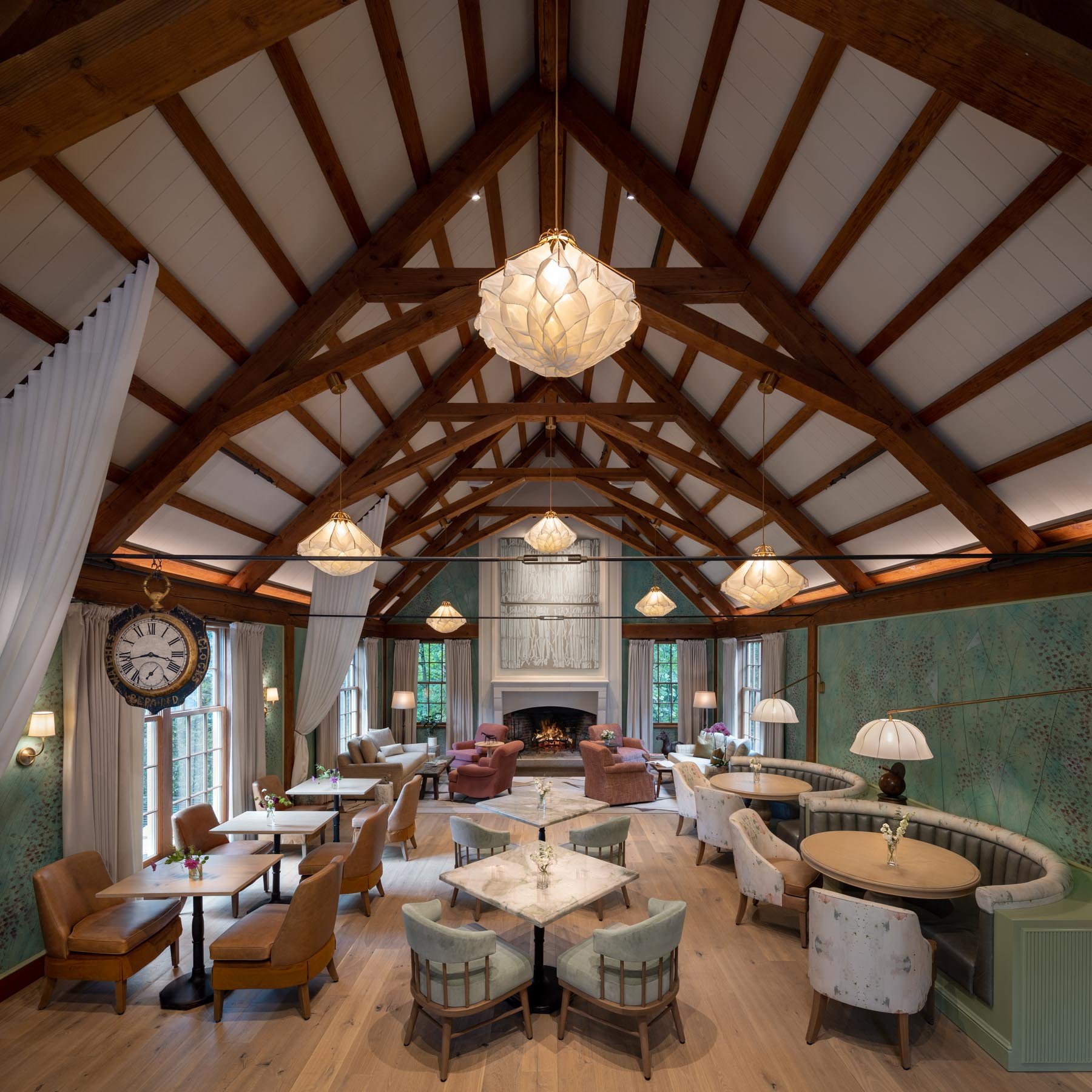
About Twin Farms
Twin Farms occupies a converted farmstead in Barnard, Vermont, where the all-inclusive format and deep cellar program set it apart from conventional New England retreats. The property's approach to hospitality leans heavily on what's in the glass as much as what's on the plate, making it a reference point for guests who treat the drinks program as seriously as the accommodation itself.
Vermont's All-Inclusive Tier and Where Twin Farms Sits Within It
The upper end of New England resort hospitality has long operated on a simple premise: remove friction entirely. No per-night add-ons, no menu surcharges, no choosing between the good bottle and the house pour. Twin Farms, situated on 300 acres of farmland and forest in Barnard, Vermont, belongs to that specific tier of American all-inclusive property where the drinks program is not an afterthought but a structural commitment. The cellar, the cocktail list, and the spirits selection are folded into the base rate, which positions the property in a peer set that includes only a handful of American resorts operating at comparable depth. For guests who measure a stay partly by what's available to drink, that architecture matters more than any room specification.
Barnard sits in Windsor County, roughly 25 miles southeast of Woodstock, along roads that wind through hardwood forest and past farms that have been operating since the 18th century. The landscape is not decorative backdrop; it shapes the pace of arrival. By the time guests reach the main house at 452 Royalton Turnpike, the transition from highway speed to genuine stillness has already happened. That context matters for understanding why the drinks program here operates differently from an urban bar: there is no competition for attention, no neighboring venue to drift toward, no last-call pressure. The bar at Twin Farms is, effectively, the only bar its guests will use during a stay, which creates both a responsibility and an opportunity for depth that city programs rarely face.
The Drinks Program as a Full-Stay Architecture
All-inclusive drinks programs at properties of this caliber tend to split into two approaches. The first is breadth: a large selection of spirits, wines by the case, and a cocktail list designed to satisfy every preference without committing to any particular point of view. The second is curation: a smaller, more deliberate selection built around a clear perspective on what belongs in a glass in this particular place. Twin Farms, from what the property's positioning signals, operates closer to the second model. The inclusion of premium spirits and an active cellar within a flat-rate structure suggests a program that has been assembled with genuine editorial intent rather than simply stocked to volume.
For context on what a program like this can achieve, consider what cocktail programs at properties with similar ambitions have done in other parts of the country. Kumiko in Chicago built its reputation on Japanese-inflected technique applied to spirits sourced with the same rigor as fine wine. Canon in Seattle assembled one of the deepest whisky collections in North America and structured its menu around historical reference. Bar Leather Apron in Honolulu demonstrated that serious cocktail craft translates into resort and hotel contexts without losing precision. At Twin Farms, the setting demands something analogous: drinks that feel appropriate to a Vermont autumn or a January snowfall, not transplanted from a city bar program.
Vermont's agricultural calendar provides the obvious framework. Apples from local orchards, maple from the county's sugar operations, foraged botanicals, and the state's growing craft spirits sector give a program here raw material that no city bar can replicate directly. Whether Twin Farms fully exploits that local supply chain is something the property's reputation for serious hospitality strongly implies, even if the specific menu details are not catalogued here. The broader point is that the category of resort where drinks are included at this price tier tends to attract properties that treat the bar with corresponding seriousness, because the bar is always the last thing a guest does before sleep and the first thing they return to after an afternoon outside.
Comparative Positioning: What the All-Inclusive Format Signals
The American all-inclusive resort market at the luxury end operates very differently from Caribbean mass-market properties. Properties like Twin Farms price the experience to include nearly everything, which shifts the competitive question from nightly rate to total-stay value. That model works leading when the included elements are genuinely premium, because guests who can afford this tier will notice immediately if the cellar is shallow or the cocktail list is perfunctory.
Among the bars and drink programs that EP Club covers, the ones that succeed at this level share certain structural features: a spirits range that goes beyond category defaults, a cocktail list that reflects the bartender's judgment rather than trend-chasing, and a wine selection that offers genuine discovery rather than safe commercial labels. Jewel of the South in New Orleans brings a historically grounded approach to classic cocktails. Allegory in Washington, D.C. built its identity around narrative-led menus with botanical sourcing. ABV in San Francisco treats spirits with the taxonomic seriousness of a wine list. These programs succeed because they commit to a position. Twin Farms, operating as a complete destination rather than a standalone bar, faces a harder editorial challenge: the drinks program must work across multiple moods, times of day, and guest profiles without losing coherence.
Other programs worth referencing for comparison include Julep in Houston, which brought regional American spirits into serious focus, Superbueno in New York City with its Latin-influenced approach to technique, Bitter and Twisted in Phoenix known for its encyclopedic cocktail catalogue, Bar Kaiju in Miami for its creative precision in a resort market, and The Parlour in Frankfurt as an example of how serious bar programs translate across cultural contexts. Each of these demonstrates that a coherent editorial point of view in a drinks program is a differentiator regardless of setting.
Planning a Stay: Timing, Access, and Practical Orientation
Twin Farms is a seasonal property in the sense that Vermont's calendar imposes genuine seasonal character: foliage in October draws the highest demand, mud season in early spring the lowest. Winter guests arrive for skiing at nearby Suicide Six and for the specific atmosphere of a snowbound Vermont property with an open bar and no obligation to leave the grounds. Summer brings hiking, fly fishing on the property, and long evenings on the terraces. Each season produces a different relationship to the drinks program: heavy red wines and whisky-forward cocktails in winter, lighter pours and anything local-fruit-adjacent in summer.
Guests driving from Boston should allow approximately three hours. From New York City, the drive runs closer to four and a half hours depending on route and conditions. The property does not operate as a drop-in or day-visit destination; it is a multi-night stay by design, and the all-inclusive format is structured around a minimum booking. Prospective guests should contact the property directly for current availability and pricing, as the rate structure and room categories are not published through third-party channels in a way that makes comparison direct. For broader context on what the Barnard area offers beyond the property itself, see our full Barnard restaurants guide.
Frequently Asked Questions
- Is Twin Farms more formal or casual?
- Twin Farms occupies a specific register in Vermont hospitality: expensive and attentive without the stiff formality of a traditional grand hotel. The setting is a working farmstead, which imposes its own version of dress code, and the guest demographic at this price point tends toward affluent and relaxed rather than corporate and formal. Barnard is not a town with a fine-dining scene that demands jackets; the property's own atmosphere sets the tone, and that tone is consistently described as comfortable rather than ceremonial.
- What should I drink at Twin Farms?
- The all-inclusive format means the answer is: whatever the bar team has selected as worth including at this level. Given the Vermont setting, anything drawing on local spirits production, maple-based modifiers, or apple-derived ingredients represents the most site-specific choice. The cellar inclusion at this price tier typically means the wine selection is serious enough to reward guests who approach it with genuine curiosity rather than defaulting to familiar labels.
- What is the main draw of Twin Farms?
- The combination of complete seclusion, genuine acreage, and an all-inclusive model that folds premium drinks into the rate is what separates Twin Farms from other Vermont properties. At this price point in Barnard, you are paying for the absence of decisions as much as for the presence of luxury: the bar is always open, the cellar is always available, and the grounds extend far enough that the rest of the world genuinely recedes.
- What is the leading way to book Twin Farms?
- Direct contact with the property is the appropriate channel. Twin Farms does not operate through conventional third-party booking platforms in a way that makes last-minute availability transparent. For a property at this price and exclusivity level, foliage season in October and the Christmas-to-New-Year window book earliest; spring and early summer tend to offer more flexibility. Lead time of several months is standard practice for peak periods.
- Is Twin Farms worth the price?
- The value calculation at Twin Farms depends on how you account for inclusions. When the bar, cellar, meals, activities, and accommodation are bundled into a single rate, the per-element cost looks different than when compared against a standard nightly hotel rate. Guests who would otherwise spend meaningfully on wine and cocktails at dinner, and who would factor in activity costs separately, will find the arithmetic more favorable than those who travel light on food and drink expenditure.
- Does Twin Farms have a distinctive approach to wine compared to other Vermont properties?
- Vermont is not a significant wine-producing state, which means properties at this level source their cellars entirely from elsewhere. What distinguishes Twin Farms within New England hospitality is the commitment to including premium selections within the all-inclusive rate rather than treating the cellar as a revenue center. That structural choice positions the property closer to a European country-house model than to the standard American resort, where beverage margins are a significant profit component. Guests with serious wine interest should communicate preferences in advance.
Related editorial
- Best Fine Dining Restaurants in ParisFrom three-Michelin-star icons to the next generation of Parisian chefs pushing boundaries, these are the restaurants that define fine dining in the world's culinary capital.
- Best Luxury Hotels in RomeFrom rooftop terraces overlooking ancient ruins to Michelin-starred hotel dining, these are the luxury hotels that make Rome unforgettable.
- Best Cocktail Bars in KyotoFrom sleek lounges to hidden speakeasies, Kyoto's cocktail scene blends Japanese precision with global influence in ways you won't find anywhere else.
Save or rate Twin Farms on Pearl
Keep this venue in your Pearl passport, rate it after you visit, and track it alongside every other place you collect.