
Bar in Barcelona, Spain
Bodega 1900
100ptsVermut Revival Format
About Bodega 1900
Bodega 1900 sits on Carrer de Tamarit in Barcelona's Eixample, operating as a modern vermouth bar and kitchen rooted in the Catalan tradition of the old-fashioned neighbourhood bodega. The format centres on house vermouth, conservas, and updated tapas that stay close to early twentieth-century Catalan bar culture. It draws a crowd that ranges from local regulars to international visitors tracking the broader Albert Adrià restaurant group.
The Bodega Tradition, Revisited in Eixample
Barcelona's vermouth culture predates the city's modern restaurant boom by several generations. The late-morning ritual of vermut — a glass of house vermouth with a small plate of olives or anchovies, taken standing at a zinc bar — was once the default Saturday rhythm of working-class neighbourhoods from Barceloneta to Sant Antoni. By the early 2000s, that format had largely retreated to a handful of holdouts in the Eixample and Poble Sec, kept alive more by habit than by any deliberate curation. What has shifted in the past decade is the arrival of kitchens willing to treat that tradition as a serious culinary reference point rather than nostalgia. Bodega 1900, on Carrer de Tamarit 91 in the Eixample, sits inside that shift, reframing the neighbourhood bodega format through the lens of a professional kitchen team with the infrastructure and sourcing reach of the broader Albert Adrià group behind it.
What the Room Signals Before You Order
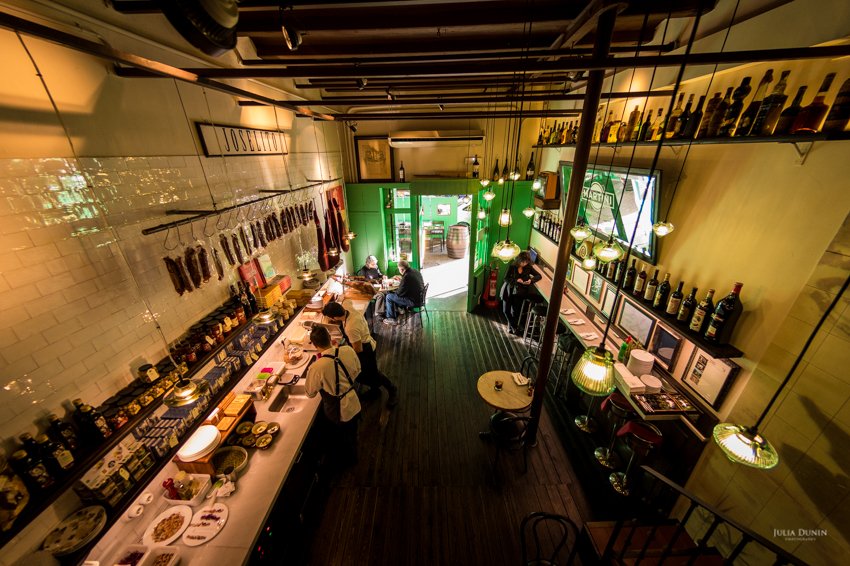
The physical language of Bodega 1900 borrows from early twentieth-century Catalan bar design , tiled walls, dark wood shelving stacked with bottles, marble surfaces , without tipping into themed reconstruction. The effect is closer to a working bar that has simply survived well than to a period-accurate pastiche. That distinction matters, because it sets the register for what follows: this is not a heritage project, it is a functioning bar and kitchen that uses historical reference as a design brief rather than an identity statement. The dining room runs at a pace that sits somewhere between a proper sit-down meal and the standing-room informality of a traditional bodega, which means service tends to move dishes out with more rhythm and less ceremony than you would find at a full tasting-menu restaurant. For a venue operating inside the Adrià orbit, that informality is deliberate and closely managed.
The Team Dynamic: Kitchen, Bar, and Floor
In Barcelona's more ambitious bar-kitchen formats, the relationship between the bar programme and the kitchen is often where the concept either holds together or fragments. At venues where the drinks list is treated as a separate operation from the food, the result tends to be competent in both departments but incoherent as an experience. Bodega 1900's format is built around the premise that the vermouth and the food are the same argument , that the house aperitivo and the conservas or small plates exist in the same early twentieth-century Catalan register and should be ordered and consumed together. That alignment requires the floor team to work as interpreters between the bar and the kitchen rather than simply taking orders, steering guests toward pairings and timing dishes to arrive when the glass needs company. The group's experience running multiple restaurant formats across Barcelona means the front-of-house operation here is more practised at that choreography than most single-site venues attempting the same format. For comparison, Dry Martini runs its bar programme with considerable precision but within a more formal cocktail-bar framework, while Boadas operates as a pure bar with no kitchen dimension. Bodega 1900 occupies a different category: a bar-kitchen where the two departments are meant to read as one programme.
Vermouth as the Anchor
Spain's vermouth revival over the past fifteen years has produced two distinct strands. The first is the craft-production route, with small producers in Reus, the Priorat, and Tarragona reviving regional styles with traceable grape sourcing and botanical recipes drawn from archival records. The second is the bar-programme route, where venues build their identity around house vermouth served with precision and treated with the same attention a cocktail bar might apply to its signature serves. Bodega 1900 sits firmly in the second strand. The house vermouth is the central drink, served in the traditional style with a twist and ice, and the conservas and small plates are selected to work alongside it rather than around it. For visitors tracking the broader evolution of Barcelona's aperitivo culture, this venue functions as a useful reference point alongside technically focused bars like Dr. Stravinsky and Foco, each of which approaches the drink-first format from a different angle. Across Spain more broadly, the same bar-kitchen integration can be seen at Angelita in Madrid and at smaller regional venues like Bar Sal Gorda in Seville and Bar Gallardo in Granada, though the specific vermouth-and-conservas format remains most developed in Catalonia.
The Food Programme: Conservas and Updated Tapas
The kitchen at Bodega 1900 works within a deliberately narrow brief. The reference points are early twentieth-century Catalan bar food , tinned fish, pickles, cured meats, eggs, fried snacks , updated with the sourcing standards and technical precision that the Adrià group applies across its restaurants. That constraint is the interesting editorial choice. Rather than expanding into a full tasting menu or chasing the modernist register that made El Bulli's legacy so widely imitated, the kitchen here commits to the modest format and treats refinement as a matter of sourcing and execution rather than complexity. The result is a menu that reads simply but depends on the quality of raw material for its impact. This is a model that has become increasingly common in Barcelona's mid-tier restaurant scene, where provenance-led simplicity has replaced technique-display as the dominant mode of signalling seriousness, but Bodega 1900 operates at a level of sourcing depth that most single-site venues in that bracket cannot match. Visitors interested in how the same logic plays out in island contexts can find related approaches at La Margarete in Ciutadella and Garden Bar in Calvia, both of which work within similar Balearic and Mediterranean ingredient traditions.
Planning Your Visit
Bodega 1900 is on Carrer de Tamarit 91, in the Sant Antoni edge of the Eixample, a neighbourhood that has become one of Barcelona's more concentrated areas for serious eating and drinking over the past decade. The format works leading approached as a late-morning or early-afternoon session rather than a formal dinner, following the rhythm of the original bodega tradition the venue references. Booking ahead is advisable, particularly for weekend lunch, as the Adrià group's venues attract both local regulars and international visitors who plan ahead. The dress code is informal , in keeping with the bodega register , and the pace of a visit tends to run ninety minutes to two hours when taken at the intended rhythm of vermouth, conservas, and small plates in sequence. For a broader map of where Bodega 1900 sits within Barcelona's eating and drinking offer, see our full Barcelona restaurants guide. For international reference, the bar-kitchen format Bodega 1900 operates within has parallels as far as Bar Leather Apron in Honolulu, which similarly treats the bar programme and the food as a single integrated argument rather than parallel operations.
Frequently Asked Questions
What drink is Bodega 1900 famous for?
House vermouth is the central serve at Bodega 1900, served in the traditional Catalan style over ice with a citrus twist. The bar's identity is built around the aperitivo format, positioning vermouth as the drink around which the conservas and small plates are structured. This places Bodega 1900 within a specific strand of Barcelona's aperitivo culture that treats vermouth with the same seriousness that a cocktail bar would apply to its signature programme. The awards recognition the broader Albert Adrià group has received across its Barcelona portfolio signals the level of intent behind what might otherwise read as a direct bar concept.
What is Bodega 1900 known for?
Bodega 1900 is known for reviving the Catalan neighbourhood bodega format within the production standards and sourcing infrastructure of the Albert Adrià restaurant group, operating from Eixample in Barcelona. The combination of house vermouth, high-quality conservas, and updated early twentieth-century tapas has given the venue a clear identity in a city with considerable competition at the mid-price bar-kitchen tier. Its position within one of Spain's most recognised restaurant groups means the concept carries a level of execution consistency that distinguishes it from independent venues attempting the same format.
Is Bodega 1900 suitable for a full dinner, or is it better as an aperitivo stop?
The format at Bodega 1900 is designed around the aperitivo and vermut tradition, making it most coherent as a late-morning or early-afternoon session rather than a conventional dinner. The menu of conservas and small plates is built to accompany vermouth rather than to function as a multi-course meal in the restaurant sense. That said, visitors who arrive at the right time and work through several plates in sequence will find the experience closer to a full sitting than a quick drink, particularly given the sourcing depth behind the kitchen's output. Booking ahead for weekend lunch slots is the most practical approach, as those sessions attract both the local aperitivo crowd and international visitors tracking the Adrià group's Barcelona portfolio.
Related editorial
- Best Fine Dining Restaurants in ParisFrom three-Michelin-star icons to the next generation of Parisian chefs pushing boundaries, these are the restaurants that define fine dining in the world's culinary capital.
- Best Luxury Hotels in RomeFrom rooftop terraces overlooking ancient ruins to Michelin-starred hotel dining, these are the luxury hotels that make Rome unforgettable.
- Best Cocktail Bars in KyotoFrom sleek lounges to hidden speakeasies, Kyoto's cocktail scene blends Japanese precision with global influence in ways you won't find anywhere else.
Save or rate Bodega 1900 on Pearl
Keep this venue in your Pearl passport, rate it after you visit, and track it alongside every other place you collect.