
Bar in Atlantic City, United States
Knife and Fork Inn
100ptsOld Atlantic City Continuity
About Knife and Fork Inn
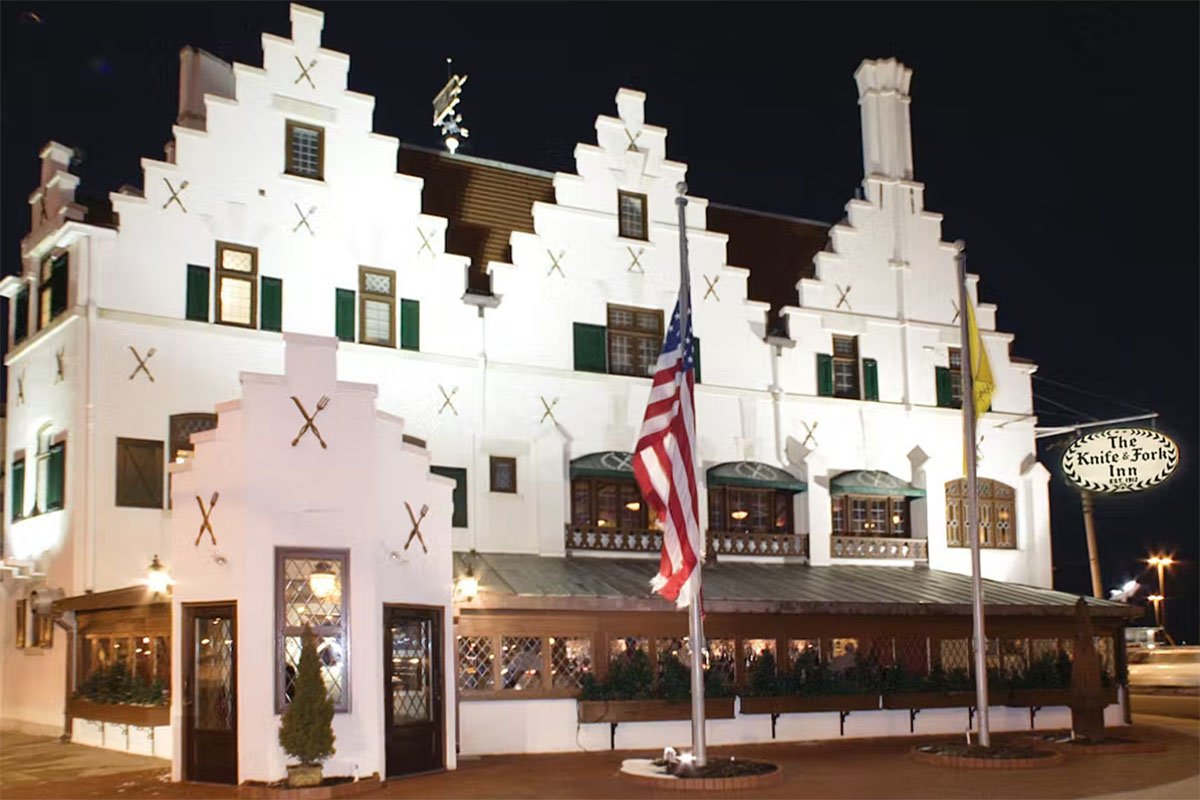
One of Atlantic City's oldest surviving dining institutions, the Knife and Fork Inn at 3600 Atlantic Ave has anchored the city's hospitality scene for over a century. Its Tudor-Gothic building alone signals a different era of American dining, and the address remains a reference point for anyone mapping Atlantic City's restaurant history against its present casino-dominated reality.
A Century of Atlantic City Drinking Culture, Compressed Into One Address
Atlantic City's hospitality history runs in two distinct tracks: the casino-resort infrastructure that reshaped the Boardwalk from the late 1970s onward, and the older civic dining culture that predated it. The Knife and Fork Inn, at 3600 Atlantic Ave, belongs firmly to the second track. The Tudor-Gothic building, with its steeply pitched rooflines and corner tower, reads as an architectural argument for a version of Atlantic City that operated before the slot machine became the city's defining economic unit. Walking toward the entrance, the building's mass communicates something most Atlantic City dining rooms cannot: institutional age.
That age matters more than nostalgia would suggest. American bars and restaurants that survive more than a century do so by accumulating something — a cellar, a regulars culture, a spirits program built through acquisition rather than curation-by-committee. The Knife and Fork Inn's back bar history reflects that accumulation. Prohibition-era establishments that survived by pivoting, then reopened with serious intent once repeal came, often developed spirits collections that grew organically over decades rather than being assembled for a launch menu. That distinction shows in the depth of what older American institutions carry behind the bar versus what newer programs, however technically accomplished, can reasonably source.
The Spirits Dimension: What Age Does to a Back Bar
American cocktail culture in the 2020s has stratified clearly. At one end sit the technically precise programs — clarified spirits, nitrogen-pressured dilution, ingredient-sourced menus , at venues like Kumiko in Chicago or Bar Leather Apron in Honolulu. At the other end sit the institutional bars where depth comes from age: bottles acquired before categories became collectible, house pours with genuine provenance, a relationship with American whiskey that precedes the bourbon boom. The Knife and Fork Inn's spirits history places it closer to the latter model.
Contrast this with the curatorial approach at newer programs. Jewel of the South in New Orleans or Julep in Houston build their back bars through deliberate research into American drinking tradition , admirable work, and the results show. But research-led curation and century-long accumulation produce different things. The former gives you intellectual precision; the latter gives you bottles that were already old when most contemporary bar programs were conceived. For spirits collectors and serious whiskey drinkers, the distinction is not academic.
Older East Coast dining institutions tend to carry American rye and bourbon in configurations that reflect purchasing patterns from multiple decades. Pre-embargo rums, dusty American whiskies, bottles from distilleries that no longer operate , these appear in institutional back bars precisely because nobody made a deliberate acquisition strategy. They were simply bought, stored, and not consumed. The Knife and Fork Inn's longevity creates the conditions under which that kind of depth is possible, even if the current program's specifics require direct verification on arrival.
Atlantic City's Dining Institutions: A Compressed Peer Set
Atlantic City's non-casino dining scene is smaller and more historically coherent than the city's resort reputation suggests. A handful of addresses anchor that scene with genuine age credentials. Dock's Oyster House, operating since 1897, holds the longest continuous record. Tony's Baltimore Grill occupies a different register entirely , cash-only, late-night, pizza-and-pitcher , but shares the credential of institutional survival across decades of city transformation.
The Knife and Fork Inn sits between those poles: more formally dressed than Tony's, older than most casino-attached dining rooms, and carrying a physical presence that makes it a useful anchor for any serious engagement with the city's pre-resort history. For anyone building an Atlantic City itinerary around the city's older hospitality layer rather than its gaming infrastructure, these three addresses form the core of a coherent route. The broader context for that planning sits in our full Atlantic City restaurants guide.
Placing Knife and Fork Inn in the American Bar Continuum
American bar culture in 2024 has moved decisively toward transparency: ingredient sourcing disclosed, technique explained, seasonal rotations announced. Programs at ABV in San Francisco, Allegory in Washington, D.C., and Superbueno in New York City operate in that mode, with menus that communicate intent before the first drink arrives. Bar Kaiju in Miami and The Parlour in Frankfurt each push further into distinct conceptual territory.
The Knife and Fork Inn does not compete in that conceptual tier. Its claim is different: the authority of duration, the physical evidence of a building that has housed serious American eating and drinking for over a century, and a location in a city whose dining history is underread relative to its size and age. That is a distinct kind of bar identity, and one that the current wave of technically sophisticated programs cannot replicate regardless of budget or talent.
Planning a Visit
The Knife and Fork Inn sits at 3600 Atlantic Ave, roughly a mile inland from the Boardwalk casino strip, which positions it within Atlantic City's older residential and commercial grid rather than the resort perimeter. That address places it in walking distance of the city's historic district and a short drive or rideshare from any of the major casino hotels. Phone and hours data should be confirmed directly before visiting, as institutional restaurants of this age occasionally operate on schedules that differ from standard dining windows. Reservations for dinner service at addresses with this kind of civic profile in Atlantic City are advisable, particularly on weekends when the city draws significant visitor volume from the Philadelphia and New York metropolitan areas.
For spirits-focused visitors, the practical approach is to arrive with time before or after a main meal to work through what the back bar actually holds. Older American dining institutions reward unhurried engagement at the bar rather than a transactional drink before being seated.
Frequently Asked Questions
- What drink is Knife and Fork Inn famous for?
- The Knife and Fork Inn's reputation is grounded in its age and institutional depth rather than a single signature serve. As one of Atlantic City's oldest surviving dining addresses, the back bar carries the weight of decades of accumulation, making American whiskey and classic cocktails the natural focus for first-time visitors. The building's history as a pre-Prohibition establishment, later reopened after repeal, shaped a spirits culture oriented around American traditions rather than contemporary cocktail innovation.
- What's the standout thing about Knife and Fork Inn?
- In a city whose dining identity is now largely defined by casino-attached restaurants and resort dining rooms, the Knife and Fork Inn's Tudor-Gothic building at 3600 Atlantic Ave represents something genuinely scarce: a physical address with over a century of continuous hospitality history in Atlantic City. No current casino-attached dining room in the city can match that institutional depth, and no amount of investment recreates a building that was already old before the resort era began. For visitors mapping the city's pre-casino dining layer, it remains the most architecturally and historically coherent point of reference.
- Is the Knife and Fork Inn worth visiting for serious spirits drinkers making a trip from Philadelphia or New York?
- Atlantic City sits approximately 60 miles from Philadelphia and roughly 130 miles from midtown Manhattan, making it a viable day or overnight trip for drinks-focused travellers willing to move beyond the casino dining circuit. The Knife and Fork Inn's century-plus operating history creates the conditions for a back bar with genuine depth in American whiskey and spirits categories, a quality that newer programs in larger markets like those found in New York or Chicago's cocktail scenes cannot replicate through curation alone. Serious visitors should treat the bar as the primary destination and plan enough time to explore what the house actually carries rather than defaulting to a standard dinner-and-one-drink format.
Related editorial
- Best Fine Dining Restaurants in ParisFrom three-Michelin-star icons to the next generation of Parisian chefs pushing boundaries, these are the restaurants that define fine dining in the world's culinary capital.
- Best Luxury Hotels in RomeFrom rooftop terraces overlooking ancient ruins to Michelin-starred hotel dining, these are the luxury hotels that make Rome unforgettable.
- Best Cocktail Bars in KyotoFrom sleek lounges to hidden speakeasies, Kyoto's cocktail scene blends Japanese precision with global influence in ways you won't find anywhere else.
Save or rate Knife and Fork Inn on Pearl
Keep this venue in your Pearl passport, rate it after you visit, and track it alongside every other place you collect.