
Bar in Atlantic City, United States
Dock's Oyster House
100ptsPre-Casino Shellfish Tradition
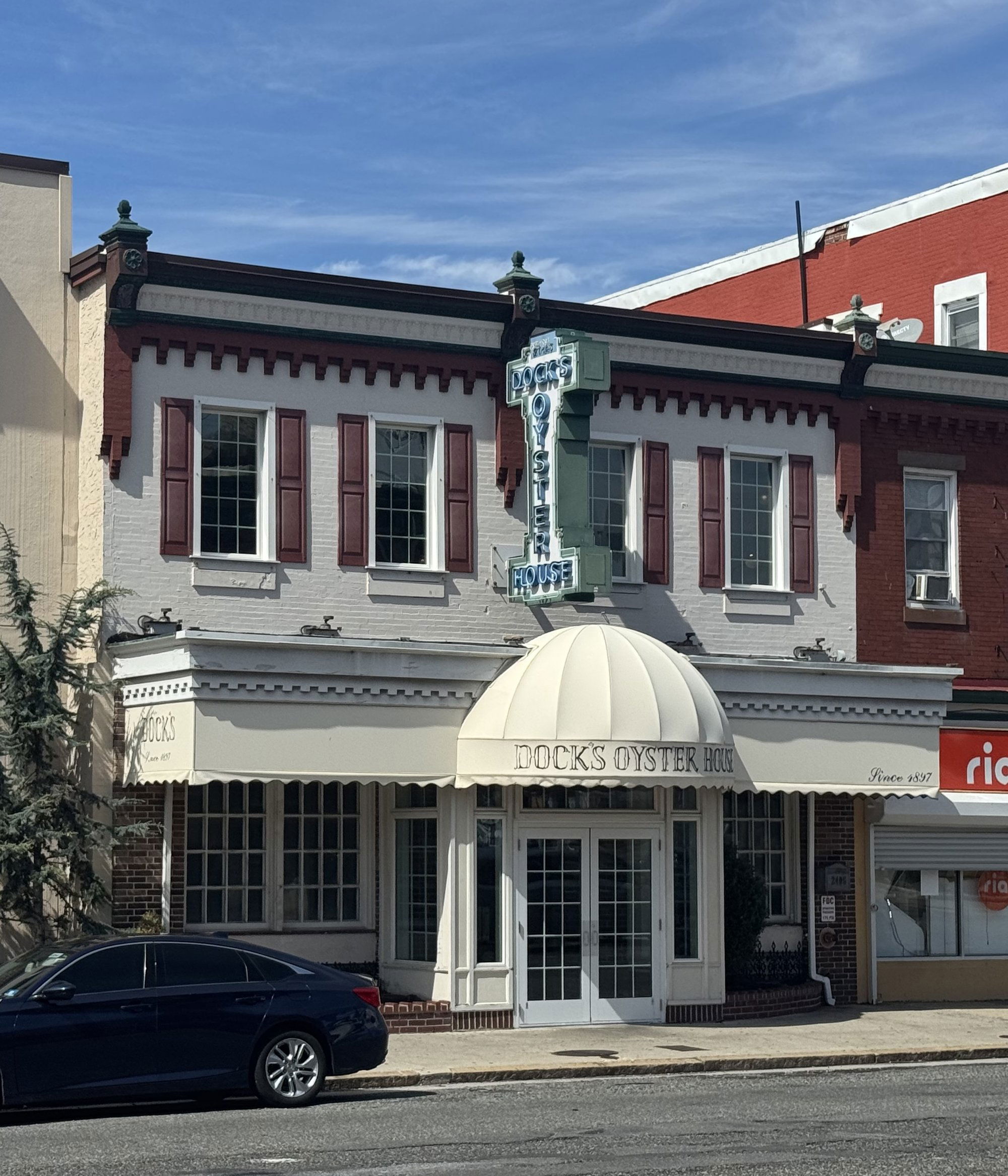
About Dock's Oyster House
One of Atlantic City's oldest continuously operating dining establishments, Dock's Oyster House at 2405 Atlantic Ave occupies a particular position in a city better known for casino buffets than serious seafood. The room carries the weight of that history, and the kitchen's focus on shellfish and classic preparations places it in a different conversation than the resort strip's mainstream dining options.
Where Atlantic City's Seafood History Sits Down
Atlantic City has always operated on two tracks simultaneously: the casino-floor spectacle aimed at volume, and a quieter, older dining culture that predates the boardwalk's current form by generations. Dock's Oyster House, at 2405 Atlantic Ave, belongs firmly to the second track. The address alone carries weight. While much of the city's restaurant scene has cycled through hotel-group concepts and celebrity-name imports over the past three decades, this stretch of Atlantic Avenue has maintained a continuity that the resort corridor largely abandoned. Walking through the door here, you are not entering a casino dining annex. You are entering a room shaped by accumulated time.
That temporal quality matters in Atlantic City more than in most American cities. The resort's dining scene was substantially reset by the casino era, and again, differently, by the period of casino closures and contraction that followed. Venues with genuine pre-casino roots occupy a category of their own in the local context, functioning as reference points against which newer arrivals are measured. Dock's Oyster House holds that kind of position. For the kind of editorial context that frames Atlantic City's full dining picture, our full Atlantic City restaurants guide maps the broader scene.
The Shellfish Tradition This Room Represents
Oyster houses as a formal American dining category reached their peak in the late nineteenth and early twentieth centuries, particularly in coastal cities where raw bar culture served as the anchor of a broader seafood-forward meal. The format was specific: a serious selection of bivalves by provenance, simply prepared fish as the backbone of the menu, and a dining room ethos that prized repetition and reliability over novelty. Atlantic City, as a major East Coast resort destination during that era, supported that culture natively. The city's proximity to productive shellfish waters in the Delaware Bay and along the Jersey Shore made oyster-focused restaurants a logical speciality rather than an affectation.
What separates an oyster house from a general seafood restaurant is the primacy of the raw bar. The cold, briny logic of a properly kept oyster requires temperature discipline, sourcing relationships, and staff fluency with regional varieties, not creative reinterpretation. In the broader American dining context, the raw bar has seen a revival over the past fifteen years, driven partly by sustainable aquaculture growth and partly by a preference for direct, ingredient-forward formats. Venues like Jewel of the South in New Orleans demonstrate how historic hospitality formats can be reactivated with contemporary precision. Dock's Oyster House operates from the original version of that tradition rather than a revival of it.
The Drinks Programme in a Seafood Context
The cocktail programme at a classic seafood house serves a different function than the creative bar programmes at venues like Kumiko in Chicago, Bar Leather Apron in Honolulu, or ABV in San Francisco, where the cocktail is the primary editorial statement of the room. At an oyster house, the bar exists in service to the food: the drinks are meant to complement cold shellfish and simply cooked fin fish rather than compete with them. That means the selection logic tends toward high-acid, lower-sugar formats, classic structures that have worked alongside bivalves for a century or more.
The canonical pairings are worth understanding in their own right. A well-made Martini, kept cold and stirred long, cuts through the minerality of a raw oyster in a way that sweeter or fruit-forward cocktails do not. A simple Bloody Mary, built with restraint on the Worcestershire and heat, amplifies rather than drowns briny shellfish character. These are not arbitrary traditions. They reflect accumulated knowledge about how alcohol interacts with the specific flavour compounds in raw seafood. The broader American cocktail scene has moved significantly toward technical programmes and high-concept presentation, as seen at venues like Superbueno in New York City, Allegory in Washington, D.C., and Bar Kaiju in Miami. A traditional seafood house bar programme operates from a different premise entirely: the question is not what is technically innovative, but what makes the food taste better.
Classic beer choices, particularly crisp lagers and dry pilsners, occupy the same functional role alongside oysters that they have for generations in American coastal dining. A focused wine list leaning toward Muscadet, Chablis, and dry domestic whites serves the same logic. The drinks programme here is not an afterthought; it is an expression of a specific and coherent philosophy about what a bar at a seafood restaurant is for. That restraint-as-position argument is one that venues like Julep in Houston and The Parlour in Frankfurt on the Main make in their own contexts, though from very different starting points.
Atlantic City's Older Dining Layer
Dock's Oyster House sits within a small cluster of Atlantic City establishments that predate the casino era and have maintained operational continuity through the city's various economic cycles. The Knife and Fork Inn occupies a similar position at the leading end of that historic tier. Tony's Baltimore Grill represents yet another strand of the city's durable dining culture. Each venue in this cohort carries a different character, but they share the quality of having survived through periods when survival was not guaranteed. That kind of longevity is a form of local credibility that cannot be manufactured by a casino-group restaurant concept, regardless of budget or celebrity attachment.
For visitors arriving in Atlantic City primarily for the casino experience, this older dining layer requires a deliberate detour. The resort corridor's dining infrastructure is designed for capture, keeping guests within the property ecosystem. Reaching Atlantic Avenue requires intention. That friction is part of what preserves the character of these rooms. They are not convenient, and they are not trying to be.
Planning a Visit
Dock's Oyster House is located at 2405 Atlantic Ave, Atlantic City, NJ 08401, on the inland avenue that runs parallel to the boardwalk. Visitors staying at casino properties should account for the walk or short drive from the resort strip. Given the venue's age and local reputation, reservations are advisable, particularly on weekends and during summer months when Atlantic City's seasonal visitor numbers peak. The surrounding neighbourhood on Atlantic Avenue rewards some attention: this stretch of the city reads differently from the casino corridor and gives a clearer picture of Atlantic City's residential and commercial character beyond the resort layer.
Frequently Asked Questions
What should I try at Dock's Oyster House?
The raw bar is the operational and philosophical core of any serious oyster house, and that is where attention should go first. A selection of East Coast oysters, ideally spanning more than one growing region to illustrate how salinity and finish vary by provenance, gives the clearest read on what the kitchen is doing well. Classic accompaniments, mignonette and horseradish prepared to order rather than pre-portioned, are a practical signal of kitchen discipline. Cooked shellfish preparations and simply finished fin fish are the logical extensions of the same raw-bar logic.
Why do people go to Dock's Oyster House?
Atlantic City's dining reputation has long been defined by casino-scale operations, which makes a venue with genuine historical roots and a seafood-specific identity a counterpoint that draws both locals and visitors who want something outside the resort ecosystem. The draw is partly the food, partly the room's accumulated history, and partly the rarity of finding a dining format this specific and this consistent in a city that has cycled through so many restaurant concepts. In a market where price points are frequently distorted by resort economics, an independently positioned seafood house with a fixed identity represents a different kind of value proposition.
Is Dock's Oyster House one of the oldest restaurants in Atlantic City?
Dock's Oyster House is widely cited among Atlantic City's oldest continuously operating restaurants, placing it in a small cohort of pre-casino-era establishments that have maintained presence through the city's multiple economic phases. That longevity gives it a local reference status that newer arrivals, regardless of quality or investment level, cannot replicate. For visitors interested in the city's culinary history beyond the resort strip, it functions as a primary source rather than a period recreation.
Related editorial
- Best Fine Dining Restaurants in ParisFrom three-Michelin-star icons to the next generation of Parisian chefs pushing boundaries, these are the restaurants that define fine dining in the world's culinary capital.
- Best Luxury Hotels in RomeFrom rooftop terraces overlooking ancient ruins to Michelin-starred hotel dining, these are the luxury hotels that make Rome unforgettable.
- Best Cocktail Bars in KyotoFrom sleek lounges to hidden speakeasies, Kyoto's cocktail scene blends Japanese precision with global influence in ways you won't find anywhere else.
Save or rate Dock's Oyster House on Pearl
Keep this venue in your Pearl passport, rate it after you visit, and track it alongside every other place you collect.